Vegetarian, Vegan and Halal Food in Seoul
14 temple food, vegan and halal Korean restaurants, a cooking class, hidden fish and meat in Korean food, prayer rooms
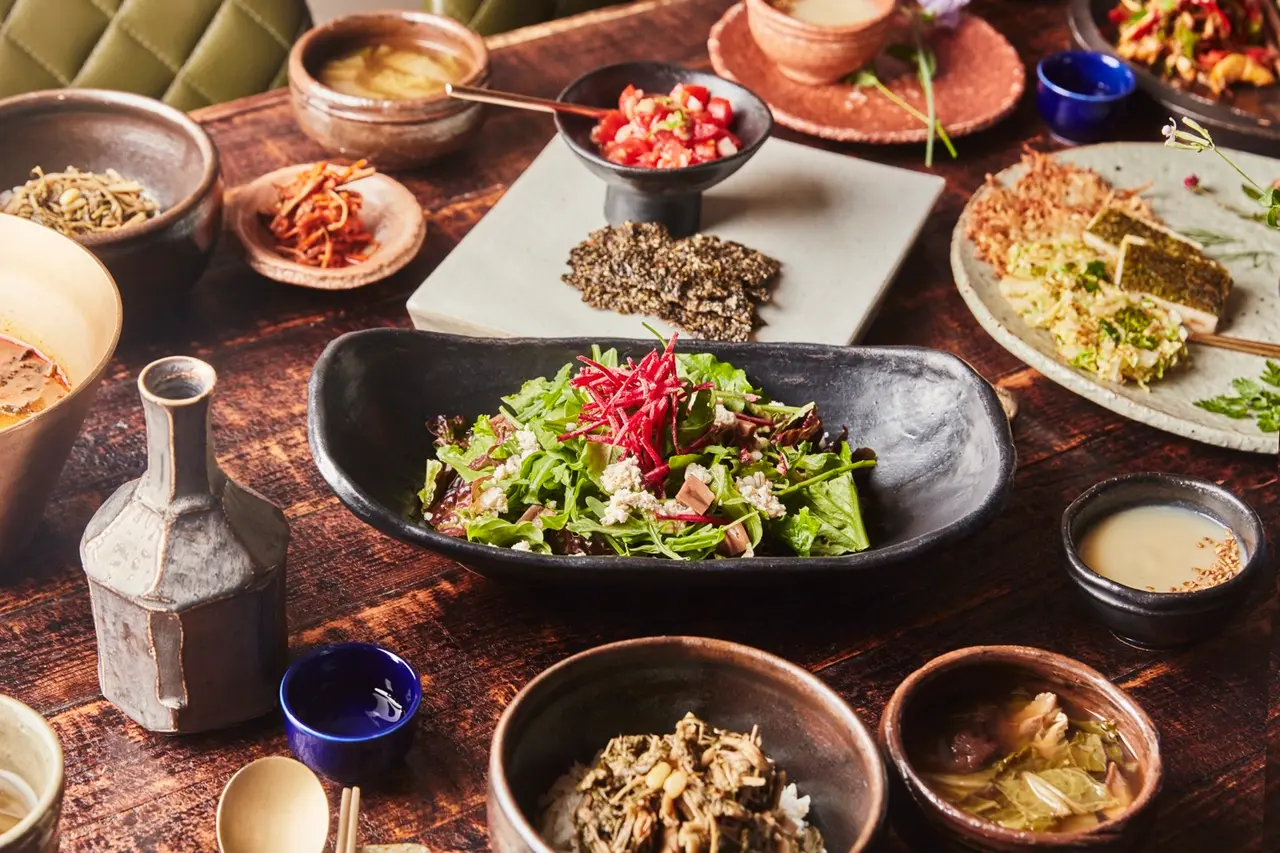
Intro
Korean food looks friendly to vegetarians, with all its vegetable side dishes, but fish and meat are often hidden in the base: anchovy or beef stock in a stew, salted shrimp in the kimchi, fish sauce on the greens. For Muslim visitors the questions are pork, alcohol in the cooking and whether the meat is halal. The easy answer in Seoul is to eat where the whole kitchen is built for it. This page lists 14 restaurants (Buddhist temple food, vegan Korean and halal Korean) and a temple food cooking class, with prices, hours and which station to use. It also explains which ingredients to ask about, what halal labels in Seoul mean, and where to pray.
How these places were chosen
The restaurants come from official lists: the vegetarian list of Taste of Seoul 2026, the Seoul city government’s 100 restaurants; the Korea Tourism Organization’s Muslim-friendly restaurant list; the halal and vegetarian categories on Visit Seoul, the Seoul Tourism Organization’s site; and the Michelin Guide’s 2026 Bib Gourmand list. The halal cards are only for restaurants where the restaurant itself or Visit Seoul says it is halal certified or cooks with halal ingredients, and each card gives that claim in their words. The focus is Korean food; for halal food from other countries, see Itaewon and Hannam.
Animal ingredients hidden in Korean food
Writing in Pressian in November 2026, food scientist Moon Sang-yoon listed where animal ingredients hide in ordinary Korean meals:
- Stock. Doenjang-jjigae (soybean paste stew) and kalguksu (knife-cut noodles) may be made with anchovy or beef stock, even when you see no meat.
- Kimchi. Kimchi often has salted shrimp (saeujeot) or anchovy fish sauce (myeolchi aekjeot).
- Seasoned greens. Namul, the seasoned vegetable side dishes, are often dressed with fish sauce.
- Fat and alcohol. Stir-fries are sometimes made with pork fat, and meat marinades with cooking wine (matsul) or cheongju (rice wine). This matters to Muslim diners as well as vegetarians.
Restaurants that avoid these say so. Chorokddeul, for example, says it uses no salted seafood in its kimchi and kelp instead of anchovy in its broth. If a restaurant does not say, assume the stock and kimchi may not be vegetarian. When Seoul surveyed restaurants with vegetarian menus in 2020, it sorted them into vegan, lacto, ovo, lacto-ovo and pesco (with fish and seafood), so a restaurant labeled vegetarian may still use fish. For more on stock and kimchi, with figures from the national recipe database, see How to eat out in Korea.
Temple food
Temple food (sachal eumsik) is the cooking of Korean Buddhist temples. At Balwoo Gongyang, run by the Jogye Order, it means no meat, seafood or other animal ingredients, according to Visit Seoul, and none of the five pungent vegetables: green onion, garlic, wild chive (dallae), garlic chives (buchu) and asafoetida. Maji and Bium also cook without the five pungent vegetables. Because garlic and green onion are in most Korean food, temple food tastes milder than what you eat elsewhere in Seoul.
- For a full course: Balwoo Gongyang, from 36,000 won at weekday lunch to 120,000 won.
- For an everyday meal: Maji (from 9,000 won) or Sanchon (bibimbap 18,000 won, set menu 29,000 won).
- For fine dining: Bium, from 160,000 won.
- To cook it yourself: the class at the Korean Temple Food Center, 20,000 won.
Balwoo Gongyang, Sanchon, Osegyehyang, Kkotbap-e Pida and the Korean Temple Food Center are all a few minutes from Anguk Station, so Insadong is the easiest place to start.
Ordering in a vegan restaurant
- Look for 무오신채 (mu-osinchae). It means “without the five pungent vegetables”. Osegyehyang marks its dishes this way, with both versions on the menu.
- Read the dish names as styles, not ingredients. Vegan restaurants use ordinary dish names such as jajangmyeon, sundae, fried chicken or bulgogi for vegan versions. At Vegan Kitchen, which also lists donkatsu and meat dumplings, ask what each dish is made of.
- Check for dairy and eggs. Base Is Nice is vegetable-focused, not fully vegan; one of its current rice bowls is made with fermented butter.
- Mixed groups. Kkotbap-e Pida has a vegan course next to its meat courses, so one table can order both.
Halal food in Seoul: what the labels mean
There is no single, current official list of halal restaurants in Seoul, and the labels you see online mean different things.
- The Korea Tourism Organization’s list. Its Muslim-friendly travel page still shows a list of restaurants and prayer rooms, but the organization told a Korean news outlet in 2024 that its Muslim-friendly restaurant program ran only until 2021, and that it would no longer provide this information directly. Pressian reported in November 2026 that the remaining list had included more than 20 closed restaurants. The entries show no category. Use the list as a starting point only.
- Visit Seoul’s halal category. Many of its restaurant cards show whether alcohol is served and whether there are Muslim cooks. The category also includes ordinary Korean restaurants that serve alcohol and have no Muslim cooks, so being in it is not a certification. Read the card text and, where shown, the two marks.
- Certification claims. The cards on this page give each restaurant’s claim as it states it: Eid calls itself a certified halal Korean restaurant, Iftar says it holds Korea Muslim Federation certification, Jipbap Kimseonsaeng says its ingredients meet Halal Food Korea’s standards, and Kwanho’s halal certification covers its lamb.
Of the halal restaurants on this page, Eid and Iftar list no alcohol and Muslim cooks, Jipbap Kimseonsaeng lists no alcohol, and Kwanho serves alcohol. Visit Seoul says Balwoo Gongyang uses no meat, seafood or other animal ingredients and includes it in its guide for Muslim tourists, but no halal certification is given for it.
Questions to show staff. The Korea Tourism Organization’s Muslim visitors’ FAQ gives these questions in Korean, English and Arabic, so you can show the Korean on your phone: Are there pork-free dishes on the menu? Does this dish contain pork or any pork-based ingredients? Does this dish contain alcohol, including cooking wine like mirin? Do you have any shoyu-free dishes? Are alcoholic drinks served here? Do you use separate utensils and cookware for halal and non-halal items?
Prayer rooms
The Korea Tourism Organization lists prayer rooms in Seoul on its Muslim-friendly travel page. Most entries were written in 2018 or 2019, so check before you go. These are the ones on common visitor routes:
| Prayer room | Where | Hours (as listed) | Separate rooms for men and women | Wudu (washing) |
|---|---|---|---|---|
| Seoul Central Mosque | 39 Usadan-ro 10-gil, Itaewon | Daily 5:00 to 21:00 | Yes | Yes |
| COEX | 3F, 513 Yeongdong-daero, Gangnam | 24 hours (8:30 to 18:00 recommended) | No | Yes |
| Lotte World | 3F, 240 Olympic-ro, Jamsil | Sunday to Thursday 10:00 to 21:00, Friday and Saturday 10:00 to 22:00 | No | Not listed |
| Avenuel Jamsil (Lotte Department Store) | 6F, Avenuel, 300 Olympic-ro, Jamsil | Weekdays 10:30 to 20:00, weekends 10:30 to 20:30 | Yes | Yes |
| Novotel Ambassador Seoul Dongdaemun | 238 Eulji-ro | 24 hours | No | Not listed |
Novotel is a hotel; whether non-guests can use its prayer room is unconfirmed. For prayer times, see the timetable on the Korea Muslim Federation website (in Korean). For visiting the mosque and the street of halal shops below it, see Itaewon and Hannam.
Where to start
- Insadong and Anguk: Balwoo Gongyang, Sanchon, Osegyehyang and Kkotbap-e Pida, and the Korean Temple Food Center, all within a few minutes of Anguk Station. See Insadong and Ikseondong.
- Gyeongbokgung and Seochon: Maji and Iftar, both 4 to 5 minutes from Gyeongbokgung Station, after the palace. See Gyeongbokgung Palace and Seochon.
- Itaewon: Eid on the way up to Seoul Central Mosque, and Jipbap Kimseonsaeng by Noksapyeong Station. See Itaewon and Hannam.
- Myeongdong and Gwanghwamun: Vegan Kitchen, 3 minutes from Myeongdong Station, and Kwanho by Gwanghwamun Station.
- Sindang: Gosari Express. See Sindang-dong.
Hours and closing days
- Open every day: Vegan Kitchen (from 10:30), Eid, Iftar and Kkotbap-e Pida. Sanchon is open most days but may close on some holidays.
- Closed Sundays: Balwoo Gongyang and Jipbap Kimseonsaeng; Kwanho on its Naver listing.
- Closed Mondays: Base Is Nice and the Korean Temple Food Center; Bium and Gosari Express (also Sundays); Maji (also Tuesdays).
- Closed Thursdays: Osegyehyang. Closed Saturdays: Chorokddeul.
- Lunch only: Base Is Nice (11:00 to 15:00). Early close: Iftar at 19:30, Maji at 15:00 on Sundays.
- Afternoon breaks: Balwoo Gongyang, Bium, Maji, Osegyehyang, Kkotbap-e Pida and Gosari Express (weekdays) close for a few hours in the afternoon, between about 15:00 and 18:00.
- Holidays: Balwoo Gongyang closes on January 1, Lunar New Year and Chuseok, Kkotbap-e Pida on the day of Lunar New Year and of Chuseok, and Visit Seoul lists Osegyehyang as closed on holidays.
Prices
A meal at the vegan and vegetarian restaurants costs from 7,000 won (mukbap at Chorokddeul) to about 23,000 won (Maji’s set meal or Base Is Nice’s tray). Temple food courses run from 36,000 won at Balwoo Gongyang’s weekday lunch to 120,000 won, and Bium’s courses are 160,000 and 280,000 won. A halal Korean meal is 11,000 to 18,000 won at Iftar and Jipbap Kimseonsaeng, and lamb at Kwanho is 35,000 to 39,000 won a dish. The cooking class is 20,000 won.
More on our other pages
- ALT.a, by Itaewon Station: vegan Korean-Chinese food. See Where Seoul Locals Eat.
- Myeon Seoul, by Apgujeongrodeo Station: perilla oil noodles marked vegan. See Where Seoul Locals Eat.
- KOONG, in Insadong: mushroom dumplings labeled for vegetarians. See Insadong and Ikseondong.
- Kervan, by Itaewon Station: Turkish food, tagged halal certified by Visit Seoul. See Itaewon and Hannam.
- Seoul Central Mosque and the street of halal butchers, grocery stores and restaurants below it: Itaewon and Hannam.
- General rules for eating out, vegetarian and halal food anywhere in Korea: How to eat out in Korea.
Questions people ask
- Is kimchi vegan? Often not: kimchi is often made with salted shrimp or anchovy fish sauce. Chorokddeul says its kimchi has no salted seafood; elsewhere, ask.
- Is Korean barbecue halal? Not by default. Kwanho is the one barbecue restaurant on this page that says its meat (lamb) is halal certified, and it serves alcohol.
- Is Makan in Itaewon still open? Makan, a halal Korean restaurant near the mosque that appears in older guides, is marked closed in Visit Seoul’s guide for Muslim tourists.
- Is there Michelin-listed vegetarian food? Gosari Express and Base Is Nice are on the Michelin Guide’s 2026 Bib Gourmand list. Balwoo Gongyang says it held one star from 2017 to 2019.
Finding the restaurants
Every card has a Korean name to copy and a Google Maps button. A few names need care:
- Sanchon shares its name with many restaurants; add Insadong when you search.
- Eid appears on Google Maps as EID Halal Korean Food.
- Kwanho: search for the Gwanghwamun branch, 관호 광화문점.
- Gosari Express: map apps may lead you to the back door; the shop asks you to go straight on to the front door.
- Balwoo Gongyang is on the 5th floor of the Templestay Information Center, across from Jogyesa Temple, not in the temple itself.
See Map apps in Korea for using Naver Map alongside Google Maps.
Places by area
Temple food
Balwoo Gongyang
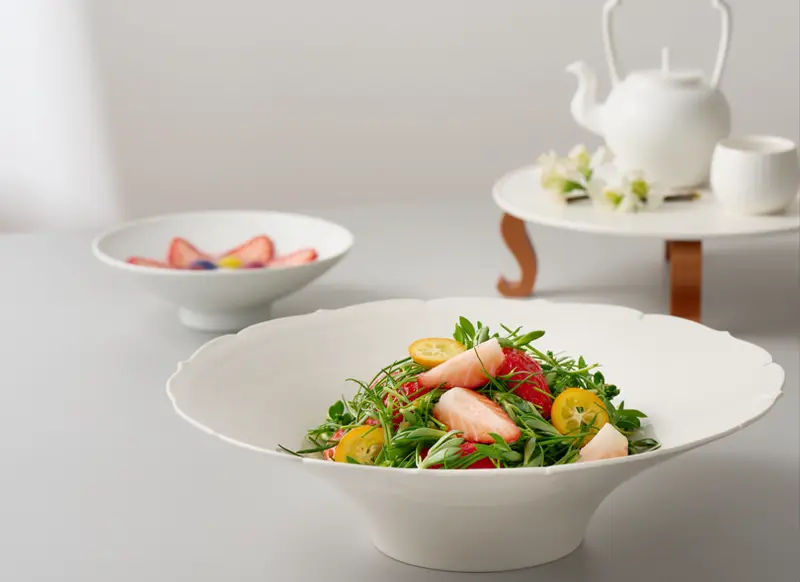
The temple food restaurant run directly by the Jogye Order of Korean Buddhism, on the 5th floor of the Templestay Information Center across from Jogyesa Temple. Courses are cooked without the five pungent vegetables (green onion, garlic, wild chive, garlic chives and asafoetida) or artificial seasoning, and Visit Seoul notes that it uses no meat, seafood or other animal ingredients. Most tables are in private rooms, and staff explain each course as it arrives. The restaurant says it held one Michelin star in 2017, 2018 and 2019.
- Hours
- Monday to Saturday 11:30 to 20:20, break 15:00 to 18:00 (last order 19:10). Visit Seoul gives two lunch seatings, 11:30 to 13:20 and 13:30 to 14:50, and dinner from 18:00. Closed Sundays, January 1, Lunar New Year and Chuseok
- Prices
- Seon-sik course 36,000 won (weekday lunch only), Won-sik 50,000 won, Maeum-sik 70,000 won, Hui-sik 120,000 won (order in advance)
- Nearest station
- Anguk Station (Line 3), Exit 6, 4 minutes on foot, or Jonggak Station (Line 1), Exit 3-1, about 300 m. Address: 5F, 56 Ujeongguk-ro
Foreigner access
- Korean name
- 발우공양
- Booking
- Naver Booking or phone (+82-2-733-2081). The Hui-sik course must be ordered in advance
Korean phone number needed: unconfirmed - English
- Menu: unconfirmed · Signs: unconfirmed · Staff: unconfirmed
Visit Seoul lists its website in Korean and English. - Queue app
- unconfirmed
Sanchon
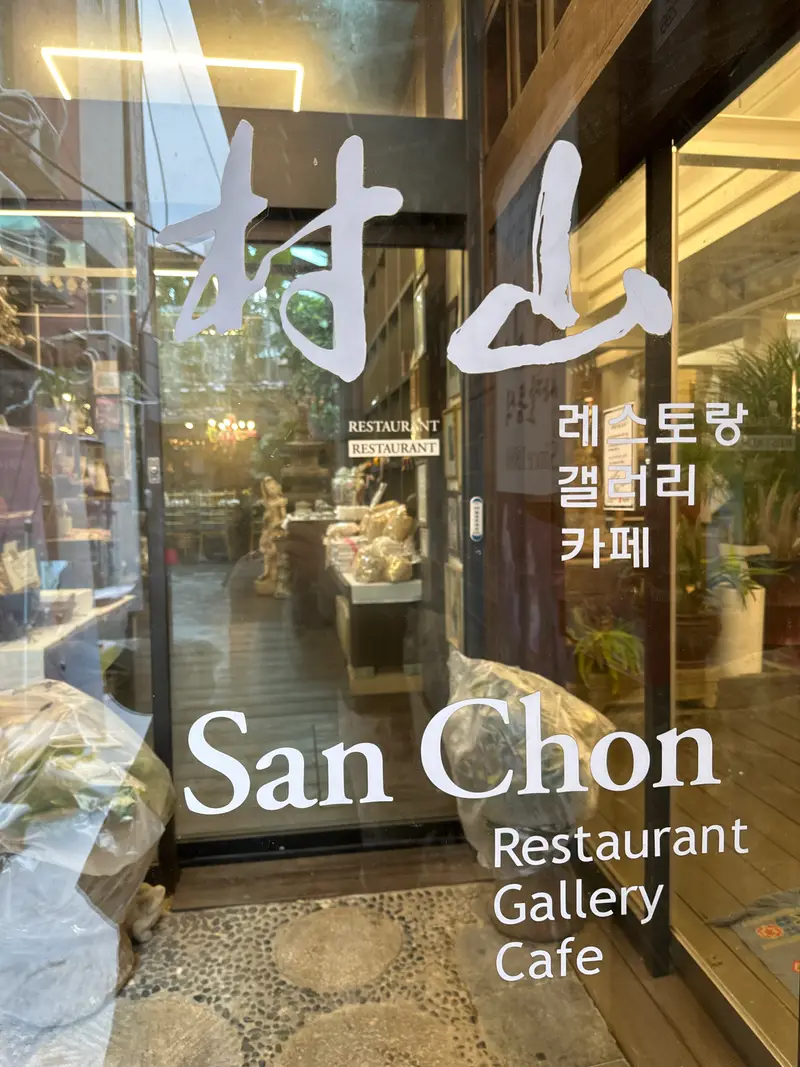
A temple food restaurant down an Insadong alley, run by Jeongsan (Kim Yeon-sik), who says its dishes of mountain greens and vegetables come from what he learned as a Buddhist monk, made without chemical additives. The menu has two choices: the set menu or bibimbap. It is on the vegetarian list of Taste of Seoul 2026, the Seoul city government's 100 restaurants. Open most days; it may close on some holidays, so check before you go.
- Hours
- 11:30 to 22:00 on its Naver listing and Taste of Seoul; Visit Seoul gives 11:30 to 21:00. Open most days; it may close on some holidays, so check before you go
- Prices
- Set menu 29,000 won, bibimbap 18,000 won
- Nearest station
- Anguk Station (Line 3), Exit 6, about 420 m, or Jongno 3-ga Station (Line 1), Exit 5, 7 minutes on foot. Address: 30-13 Insadong-gil
Foreigner access
- Korean name
- 산촌
- Booking
- Naver Booking
Korean phone number needed: unconfirmed - English
- Menu: Yes · Signs: unconfirmed · Staff: unconfirmed
The menu on its Naver listing gives the dishes in Korean and English. Many restaurants share the name Sanchon, so add Insadong when you search. - Queue app
- unconfirmed
Maji

A hanok restaurant in Seochon, 4 minutes from Gyeongbokgung Station, serving traditional Korean vegetarian food based on temple cooking, without the five pungent vegetables such as green onion and garlic (Taste of Seoul 2026). Single dishes start at 9,000 won (pumpkin porridge or tofu), the one-tray meal of the day is 11,000 won, and set meals and courses go up to 65,000 won. A recent visitor notes that the courses need a booking and that it also serves alcohol.
- Hours
- Wednesday to Saturday 11:30 to 20:00, break 15:00 to 17:30 (last order 19:10). Sunday 11:30 to 15:00 (last order 14:10). Closed Mondays and Tuesdays
- Prices
- Maji of the day 11,000 won (16,000 won with lotus leaf rice), Maji bibimbap 10,000 won, burdock japchae rice 11,000 won, perilla sujebi (hand-torn dough soup) 12,000 won, lunch or dinner set 23,000 won, courses 45,000 to 65,000 won per person
- Nearest station
- Gyeongbokgung Station (Line 3), Exit 2, 4 minutes on foot: 100 m straight ahead, left at the GS25 store, then 30 m. Address: 19 Jahamun-ro 5-gil
Foreigner access
- Korean name
- 마지
- Booking
- No Naver Booking. Book the courses ahead by phone (+82-507-1418-5228); walk in for the set meals
Korean phone number needed: unconfirmed - English
- Menu: unconfirmed · Signs: unconfirmed · Staff: unconfirmed
- Queue app
- unconfirmed
Bium
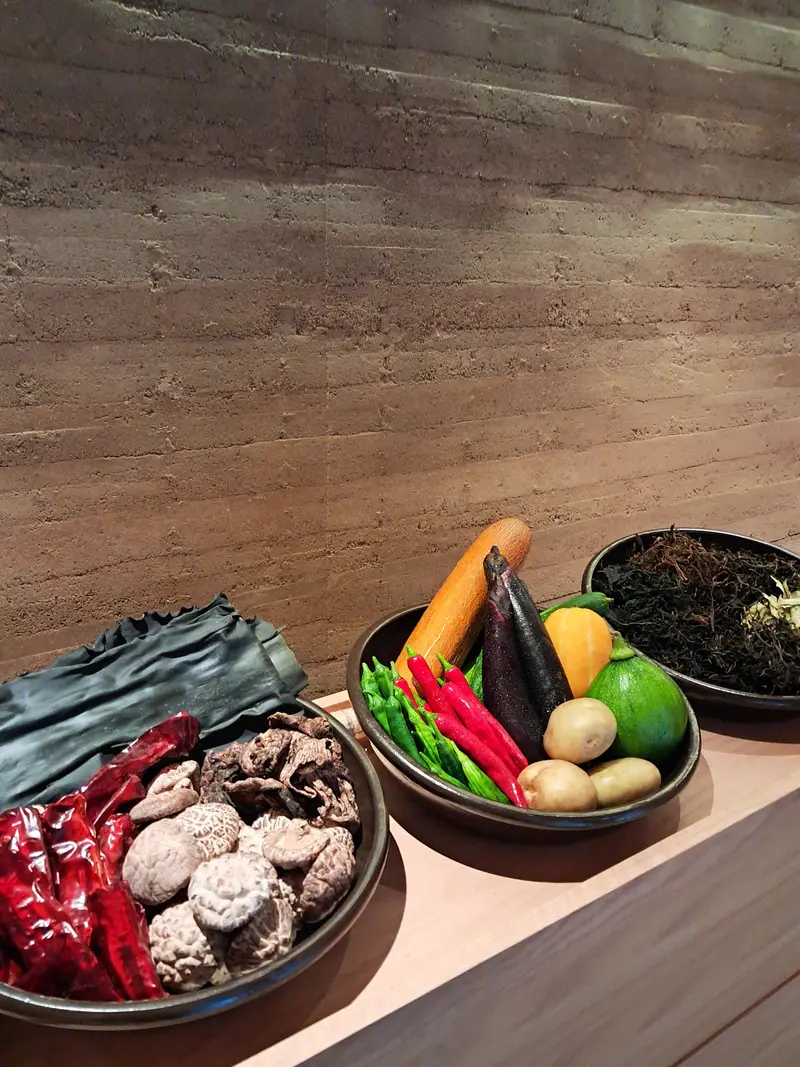
A Cheongdam fine dining restaurant cooking vegetable-based Korean courses from chef Kim Dae-cheon's experience of Korean and temple food (Taste of Seoul 2026). It avoids the five pungent vegetables, makes its own sauces and uses fermented foods aged from six months to more than five years, according to the restaurant. Courses start at 160,000 won, so it is for a special meal only.
- Hours
- Tuesday to Saturday 12:00 to 22:00, break 15:00 to 18:00. Closed Sundays and Mondays
- Prices
- Lunch course 160,000 won, dinner course 280,000 won
- Rules
- No children (its Naver listing marks it as a no-kids zone)
- Nearest station
- Cheongdam Station (Line 7), about 6 minutes on foot; the restaurant gives directions from Exit 12. Address: 1F, 41 Hakdong-ro 97-gil
Foreigner access
- Korean name
- 비움
- Booking
- CatchTable
Korean phone number needed: unconfirmed - English
- Menu: unconfirmed · Signs: unconfirmed · Staff: unconfirmed
- Queue app
- unconfirmed
Vegan and vegetarian Korean
Osegyehyang
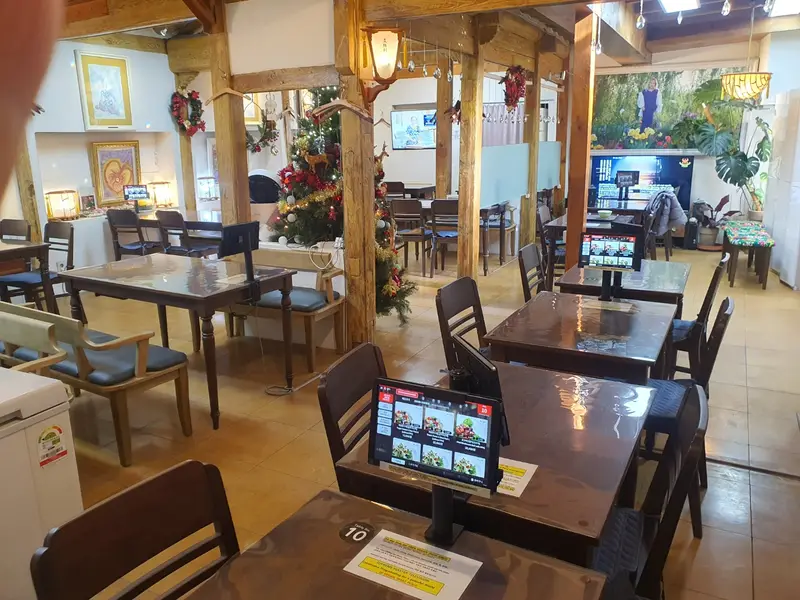
A vegan restaurant in Insadong, open since 2007, that Visit Seoul describes as using no animal ingredients, GMO ingredients or MSG. The long menu covers everyday Korean and Korean-Chinese dishes made vegan: jajangmyeon (black bean noodles) for 9,000 won, jjamppong, tteokbokki, sundae, bibimbap and stews, most around 13,000 won. Several dishes come in two versions, and the ones marked 무오신채 (mu-osinchae) are made without the five pungent vegetables.
- Hours
- 11:30 to 21:00 (last orders 15:00 and 20:00), break until 17:00: from 16:00 on weekends, and on weekdays from 15:30 or 16:00 (its listing gives both). Closed Thursdays; Visit Seoul adds holidays
- Prices
- Vegan jajangmyeon 9,000 won, vegan sundae 8,000 won, vegan tteokbokki (small) 11,000 won, bibimbap with homemade soft tofu and doenjang 12,000 won, vegan jjamppong 13,000 won, bulgui rice bowl 13,000 won, vegan steak set 16,000 won
- Nearest station
- Anguk Station (Line 3), Exit 6, 3 minutes on foot. Address: 14-5 Insadong 12-gil
Foreigner access
- Korean name
- 오세계향
- Booking
- No Naver Booking; walk in
- English
- Menu: unconfirmed · Signs: unconfirmed · Staff: unconfirmed
- Queue app
- unconfirmed
Gosari Express
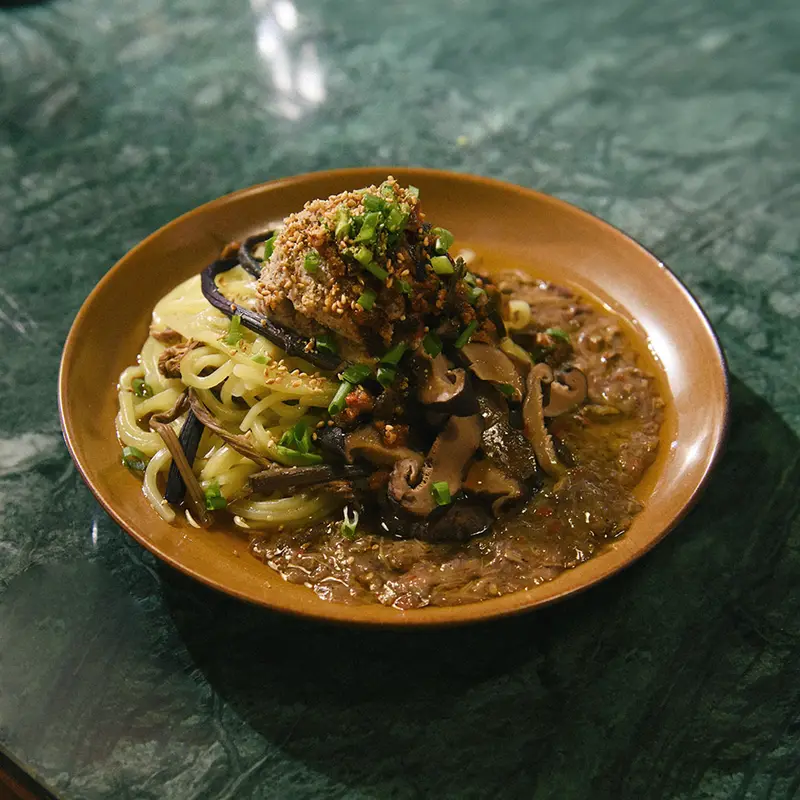
A small noodle shop on a Sindang-dong side street, 2 minutes from Sindang Station, where every dish is made from vegetables, built on the shop's own bracken (gosari) oil sauce. The shop calls itself a Korean noodle shop that mixes vegetarian food with the feel of an old Korean eatery, made for eating with a drink. It is on the Michelin Guide's 2026 Bib Gourmand list and the vegetarian list of Taste of Seoul 2026. The room is small, so the shop asks you to walk in rather than book; a recent visitor reports up to three people per table.
- Hours
- Tuesday to Friday 11:00 to 21:30, break 15:00 to 17:00 (Taste of Seoul gives the break from 14:30). Saturday 11:00 to 21:30 with no break. Last order 20:30. Closed Sundays and Mondays
- Prices
- Gosari Classic (warm noodles) 11,000 won, crown daisy bibim noodles 15,000 won, perilla bibim noodles with bracken 18,000 won, carrot momo (dumplings) 11,000 won, bracken butter rice 5,000 won, noodle tteokbokki 25,000 won
- Rules
- Its Naver listing marks gluten-free dishes as available
- Nearest station
- Sindang Station (Line 6), Exit 2, 2 minutes on foot. Go straight past the eel restaurant to the front door; map apps may send you to the back door. Address: 1F, 12-10 Toegye-ro 85-gil
Foreigner access
- Korean name
- 고사리 익스프레스 신당
- Booking
- Walk-in. The restaurant says booking is difficult because the room is small
- English
- Menu: Partly · Signs: unconfirmed · Staff: unconfirmed
Some dishes on its Naver menu have English names. - Queue app
- The shop's own waitlist
A live waitlist page is linked from its Naver listing, and the shop tells you when it is your turn. A recent visitor in a group of four or five had to register as two groups.
Base Is Nice
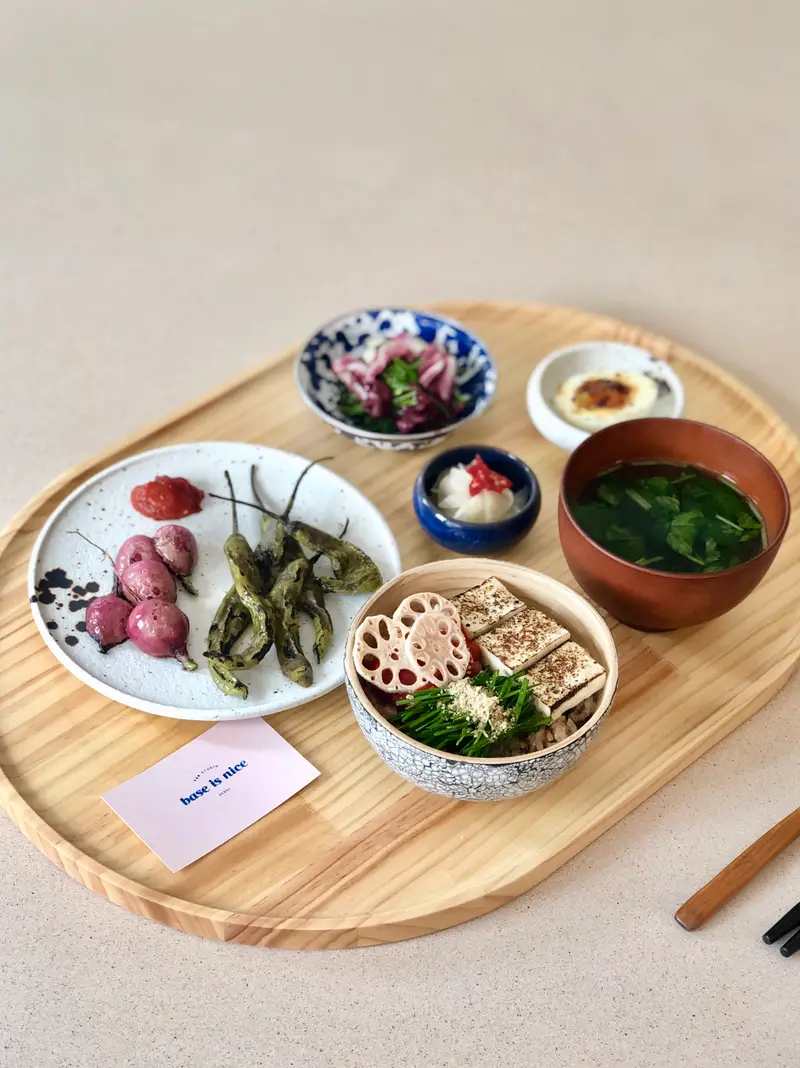
A lunch-only restaurant near Mapo Station serving a one-tray Korean meal built around seasonal vegetables and a rice bowl, 23,000 won, with the menu changing every three to four weeks (Taste of Seoul 2026). It is on the Michelin Guide's 2026 Bib Gourmand list. Not every dish is vegan: one of the current rice bowls is made with fermented butter, so ask.
- Hours
- Tuesday to Sunday 11:00 to 15:00 (lunch only). Closed Mondays
- Prices
- Vegetable rice tray 23,000 won (recent examples: crisp radish and corn rice, grilled tofu rice with red pepper puree, tofu confit rice with kale puree). Juices 7,500 won
- Nearest station
- Mapo Station (Line 5), Exit 3, 5 to 6 minutes on foot, or Gongdeok Station, Exit 9, 8 minutes. Address: 20 Dohwa 2-gil
Foreigner access
- Korean name
- 베이스이즈나이스
- Booking
- Its Naver listing says it takes reservations; how to book is unconfirmed
Korean phone number needed: unconfirmed - English
- Menu: unconfirmed · Signs: unconfirmed · Staff: unconfirmed
- Queue app
- unconfirmed
Vegan Kitchen
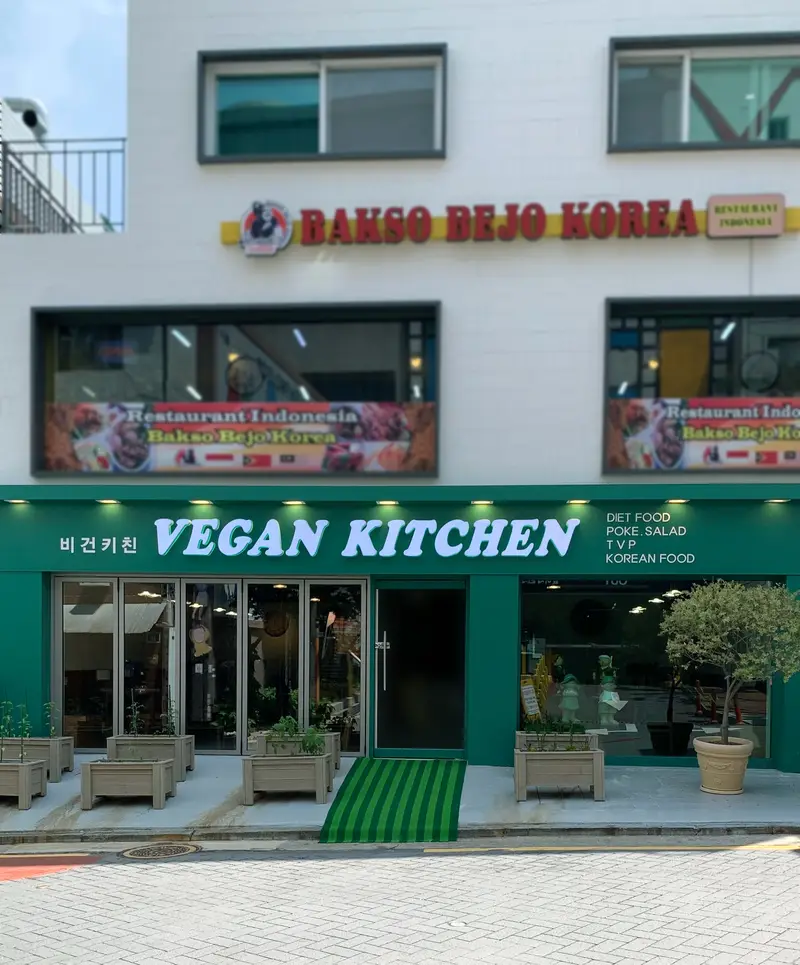
A vegan restaurant 3 minutes from Exit 3 of Myeongdong Station, on the Namsan side of Toegye-ro, open every day from 10:30. Visit Seoul describes it as a vegan restaurant known for japchae and iron-plate soft tofu rice. The menu also uses names such as donkatsu, fried chicken and meat dumplings; ask what each is made of. It serves alcohol.
- Hours
- 10:30 to 22:00, daily (last order 21:00; Visit Seoul gives 21:20)
- Prices
- Japchae 10,000 won, iron-plate soft tofu rice 10,000 won, dolsot bibimbap 12,000 won, tteokbokki 8,000 won, rice cake and dumpling soup 10,000 won, avocado poke 12,000 won, budae-jjigae (army stew) 25,000 won
- Nearest station
- Myeongdong Station (Line 4), Exit 3, 3 minutes on foot. Address: 1F, 21 Toegye-ro 20-gil
Foreigner access
- Korean name
- 비건키친
- Booking
- No Naver Booking; walk in
- English
- Menu: Partly · Signs: unconfirmed · Staff: unconfirmed
Some dishes on its Naver menu have English names. - Queue app
- unconfirmed
Kkotbap-e Pida
For mixed groups: a meat-based Korean restaurant with a vegan course. It is in Insadong, 3 minutes from Anguk Station, and cooks with organic and pesticide-free produce and traditional soy sauce and doenjang. Taste of Seoul 2026 lists it in its Korean category and notes a vegan option with each course, so vegetarians and meat-eaters can book one table. The other courses are beef, pork or rockfish.
- Hours
- 11:30 to 21:00, daily, break 15:00 to 17:30 (last orders 14:00 and 20:00). Two seatings at lunch (11:30 and 13:30) and two at dinner (17:30 and 19:30), about 1 hour 30 minutes each. Closed only on the day of Lunar New Year and of Chuseok, according to the restaurant
- Prices
- Vegan full course 62,000 won (Naver menu) or 69,000 won (Taste of Seoul), vegan half course 45,000 won, bojagi bibimbap set 28,000 won (lunch only)
- Rules
- Bookings need a deposit of 10,000 won per person, returned after the meal. Cancel 3 days ahead for a full refund, 2 days ahead for half; no refund from the day before or for no-shows
- Nearest station
- Anguk Station (Line 3), Exit 6, 3 minutes on foot. Address: 1F, 3-6 Insadong 16-gil
Foreigner access
- Korean name
- 꽃밥에피다
- Booking
- Naver Booking or CatchTable
Korean phone number needed: unconfirmed - English
- Menu: unconfirmed · Signs: unconfirmed · Staff: unconfirmed
- Queue app
- unconfirmed
Chorokddeul
A neighborhood restaurant near Hoegi Station, away from the sightseeing areas, where every dish is vegetarian. The restaurant says it puts no salted seafood in its kimchi and makes its broth with kelp instead of anchovy powder. Mushroom dumpling hot pot for two is 27,000 won and perilla kalguksu 9,000 won. It does not serve alcohol, according to Visit Seoul.
- Hours
- Sunday to Friday 11:00 to 20:00. Closed Saturdays
- Prices
- Mushroom dumpling hot pot (for 2) 27,000 won, perilla kalguksu 9,000 won, vegetable dumpling kalguksu 10,000 won, lotus leaf rice 13,000 won, acorn jelly rice (mukbap) 7,000 won
- Nearest station
- Hoegi Station (Line 1, Gyeongui-Jungang and Gyeongchun lines), Exit 2, 10 minutes on foot, next to the main gate of Seoul Adventist Hospital. Address: 36 Mangu-ro 18-gil
Foreigner access
- Korean name
- 초록뜰식당
- Booking
- No Naver Booking; walk in
- English
- Menu: unconfirmed · Signs: unconfirmed · Staff: unconfirmed
- Queue app
- unconfirmed
Halal and Muslim-friendly
Eid
A halal Korean restaurant on the way up to Seoul Central Mosque, 7 minutes from Exit 3 of Itaewon Station. Visit Seoul describes it as a Korean restaurant cooking with halal food, with no alcohol and Muslim cooks, and the restaurant calls itself Korea's first certified halal Korean restaurant. The menu is the Korean classics: bibimbap, bulgogi, samgyetang and dakgangjeong (sweet crispy chicken). On Google Maps it appears as EID Halal Korean Food.
- Hours
- 12:00 to 21:00, daily (last order 20:30)
- Prices
- Sources differ on bulgogi: 15,000 won (Visit Seoul, November 2026) or 10,000 won (Naver menu). Dakgangjeong 16,000 won (Visit Seoul). Naver menu: bibimbap 8,000 won, beef kimchi fried rice 8,000 won
- Nearest station
- Itaewon Station (Line 6), Exit 3, 7 minutes on foot uphill toward the mosque. Address: 1F, 15 Usadan-ro 10-gil
Foreigner access
- Korean name
- 이드
- Booking
- Naver Place lists reservations as available; how to book has not been confirmed
Korean phone number needed: unconfirmed - English
- Menu: unconfirmed · Signs: unconfirmed · Staff: unconfirmed
- Queue app
- unconfirmed
Iftar
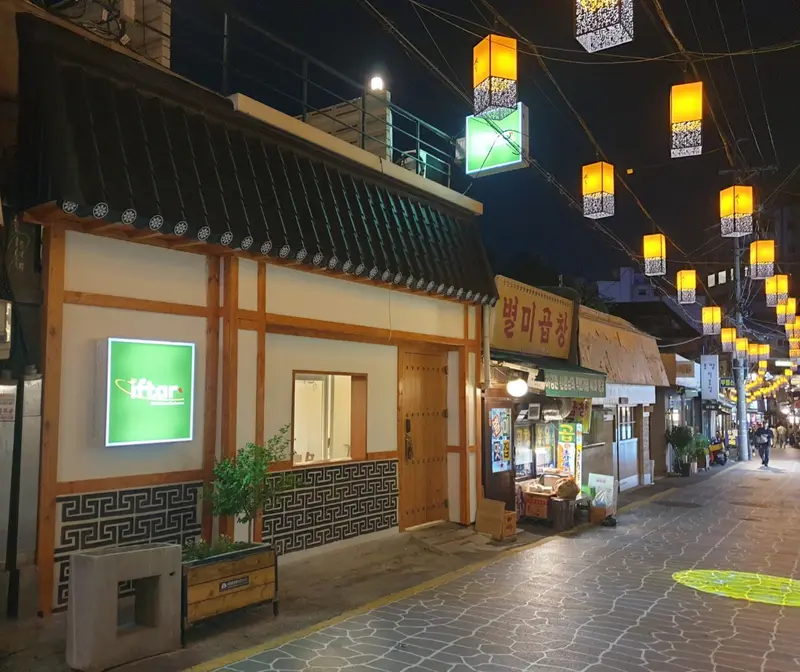
A halal Korean restaurant in a converted hanok on a lantern-lit street by Gyeongbokgung Palace, 5 minutes from Gyeongbokgung Station, so it fits a palace day. Visit Seoul describes it as serving Korean food made with strictly halal-certified ingredients, with no alcohol and Muslim cooks, and the restaurant says it holds halal certification from the Korea Muslim Federation. The menu is in English and runs from bibimbap and bulgogi to samgyetang. It closes at 19:30, so come for lunch or an early dinner.
- Hours
- Daily until 19:30. It opens at 11:30 on its Naver listing and at 11:00 on Visit Seoul
- Prices
- Kimchi jjigae 11,000 won, sundubu jjigae 12,000 won, bibimbap 13,000 won, beef bulgogi 15,000 won, galbi chicken 15,000 won, dakbokkeumtang (spicy braised chicken) 15,000 won, samgyetang 17,000 won
- Nearest station
- Gyeongbokgung Station (Line 3), Exit 1, 5 minutes on foot. Address: 1F, 50-1 Jahamun-ro 1-gil
Foreigner access
- Korean name
- 이프타르
- Booking
- No Naver Booking; walk in
- English
- Menu: Yes · Signs: unconfirmed · Staff: unconfirmed
Its Naver menu lists the dishes in English, and its Naver listing marks vegan dishes as available. - Queue app
- unconfirmed
Jipbap Kimseonsaeng
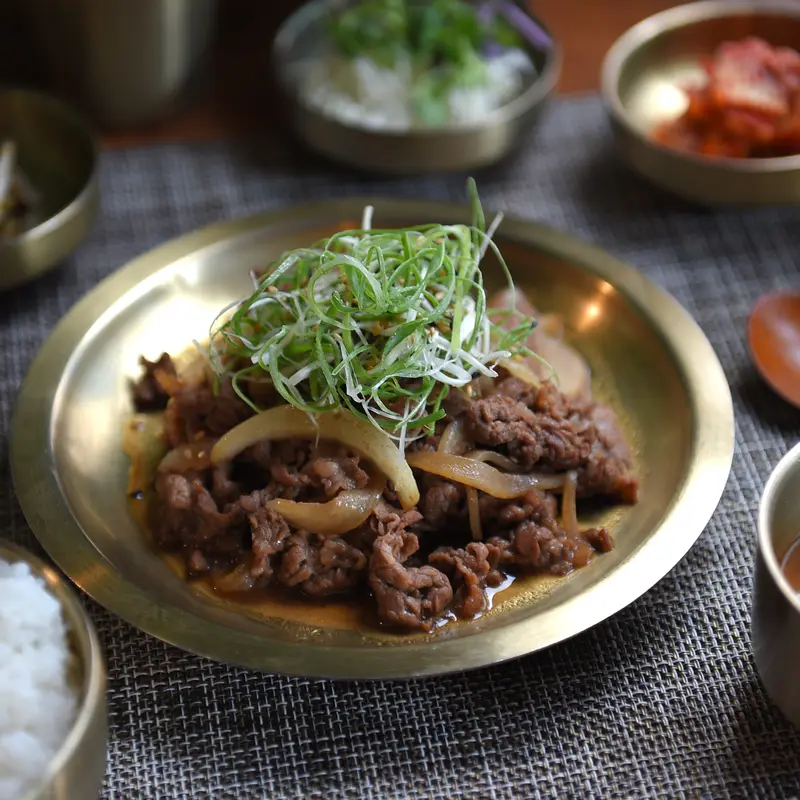
A halal Korean home-cooking restaurant 5 minutes from Noksapyeong Station, serving one-tray sets of bulgogi, japchae or spicy chicken with rice and side dishes for 14,000 won. The restaurant says it uses ingredients that meet the certification standards of Halal Food Korea. Visit Seoul lists no alcohol and no Muslim cooks, and notes a budae-jjigae made the halal way. The National Museum of Korea and the War Memorial are 5 minutes away by car, according to the restaurant.
- Hours
- Monday to Saturday 11:30 to 21:30 (last order 21:00). Visit Seoul gives a break from 14:00 to 15:00. Closed Sundays
- Prices
- Bulgogi, japchae, buldak (spicy chicken) or jjukkumi (webfoot octopus) set 14,000 won each, steak rice bowl 18,000 won, cheese tteokbokki 12,000 won, fried chicken (medium) 13,000 won
- Nearest station
- Noksapyeong Station (Line 6), Exit 3, 5 minutes on foot, at the start of the first lane toward Yongsan-gu Office. Address: 1F, 3 Noksapyeong-daero 32-gil
Foreigner access
- Korean name
- 집밥김선생
- Booking
- Its Naver listing says it takes reservations; how to book is unconfirmed
Korean phone number needed: unconfirmed - English
- Menu: unconfirmed · Signs: unconfirmed · Staff: unconfirmed
- Queue app
- unconfirmed
Kwanho (Gwanghwamun)
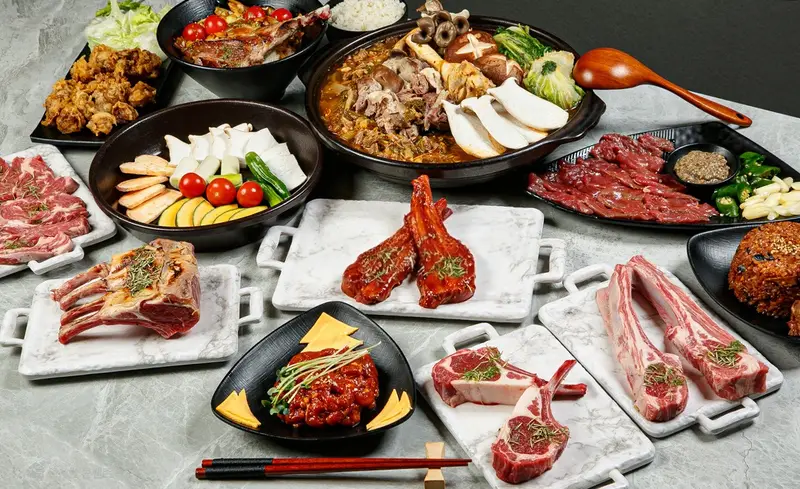
A lamb barbecue restaurant near Gwanghwamun where staff grill New Zealand and Australian lamb racks over charcoal at your table from start to finish. Halal certification covers its lamb; it serves alcohol. Both Visit Seoul and the restaurant say the lamb is halal certified, and the menu marks the halal dishes; the restaurant also sells sake, wine, highballs and draft beer, and some sets come with a free bottle of beer. There are private rooms for up to 20.
- Hours
- Evenings from 16:00 to 23:00 (last order 22:00) on its Naver listing; the restaurant's own notice gives 16:30. Lunch from 11:00 to 16:00 is by reservation only, booked by the day before. Naver lists it as closed on Sundays, while Visit Seoul lists it as open every day, so check before you go
- Prices
- Marked halal on the menu: straw-smoked lamb 39,000 won, French rack 37,000 won, shoulder rack 35,000 won, hot pot 23,000 to 49,000 won, karaage (fried lamb) 30,000 won
- Rules
- One order per person for the first order, according to the restaurant
- Nearest station
- Gwanghwamun Station (Line 5), Exit 6, 3 minutes on foot: turn into the lane between Starbucks Sejong-daero and a CU store, with a dental clinic sign at the corner. Address: 2F, 135-7 Sejong-daero
Foreigner access
- Korean name
- 관호 광화문점
- Booking
- Naver Booking, CatchTable or phone (+82-2-735-5821)
Korean phone number needed: unconfirmed - English
- Menu: unconfirmed · Signs: unconfirmed · Staff: unconfirmed
- Queue app
- unconfirmed
Temple food cooking class
Korean Temple Food Center
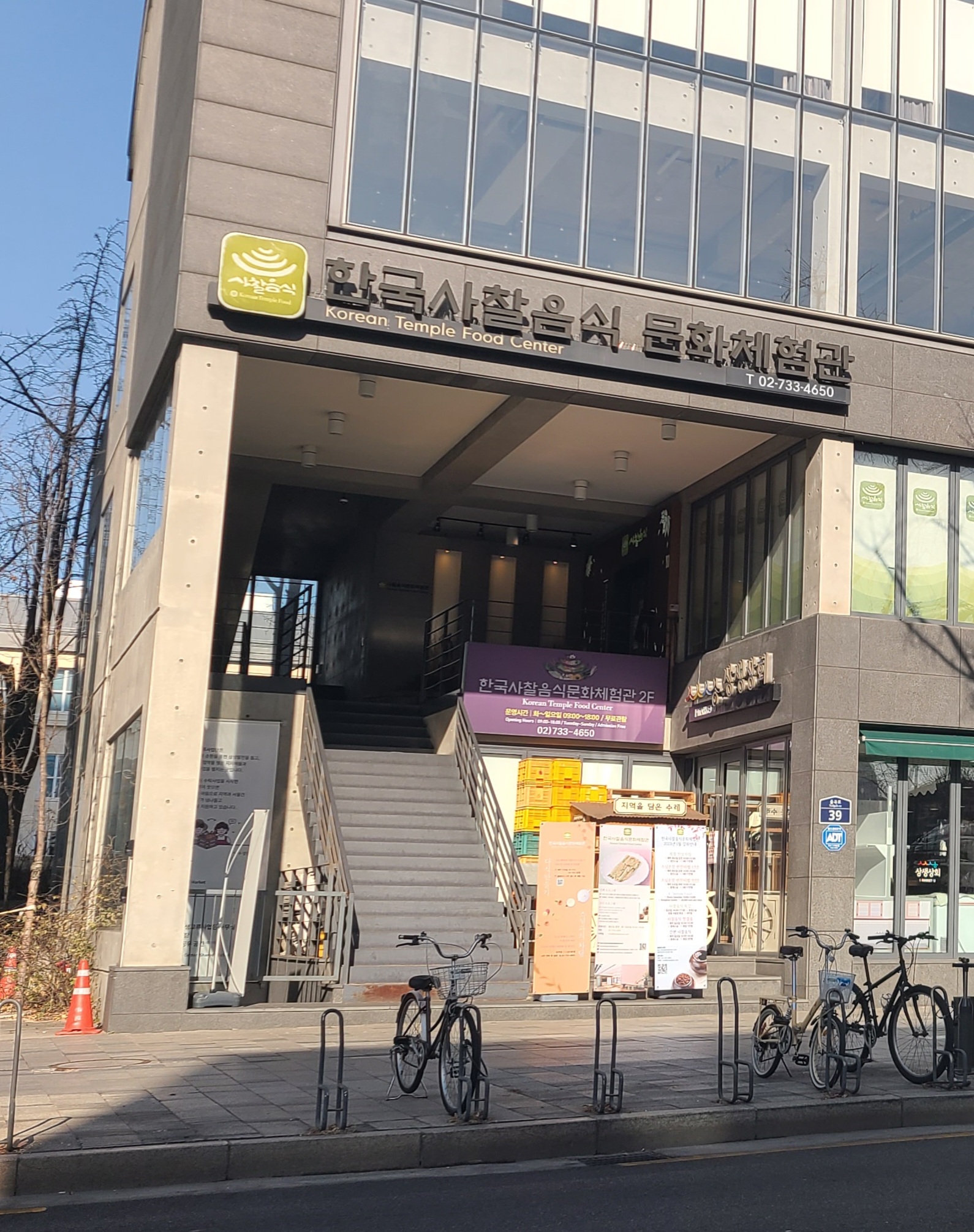
The temple food cooking studio of the Cultural Corps of Korean Buddhism, 1 minute from Exit 1 of Anguk Station. In a 90-minute class a monk demonstrates the dishes, then participants cook them in groups of four and take the food home. Classes cost 20,000 won and can be booked on the English website; English interpretation is given only for designated classes.
- Class
- 90 minutes, 10:00 to 11:30 (for example Saturday, November 21, 2026); check the website for dates. Arrive 10 minutes early
- Fee
- 20,000 won (may vary by date and participant). Cancel up to 3 days before for a refund
- Rules
- Bring a 600 ml container for each dish, two dishcloths, a bag for the wet cloths and a pen; aprons are provided. No video recording; photos are allowed if other participants are not in them
- Hours
- Tuesday to Sunday 9:00 to 18:00; no inquiries from 11:30 to 13:00. Closed Mondays and public holidays
- Nearest station
- Anguk Station (Line 3), Exit 1, 1 minute on foot. Address: 2F, Anguk Building, 39 Yulgok-ro
Foreigner access
- Korean name
- 한국사찰음식문화체험관
- Booking
- Apply online on the English website (koreatemplefood.com/EN), as a member or guest, within each class's registration period
Korean phone number needed: unconfirmed - English
- Signs: unconfirmed · Staff: Partly
English interpretation only for designated classes.
Hotels
Experiences
Sources
- Taste of Seoul 2026 (Seoul Metropolitan Government and Seoul Tourism Organization): the 100 restaurants(accessed 2026-11-14)
- Taste of Seoul 2026: Balwoo Gongyang (vegetarian)(accessed 2026-11-14)
- Taste of Seoul 2026: Sanchon (vegetarian)(accessed 2026-11-14)
- Taste of Seoul 2026: Maji (vegetarian)(accessed 2026-11-14)
- Taste of Seoul 2026: Bium (vegetarian)(accessed 2026-11-14)
- Taste of Seoul 2026: Gosari Express Sindang (vegetarian)(accessed 2026-11-14)
- Taste of Seoul 2026: Base Is Nice (vegetarian)(accessed 2026-11-14)
- Taste of Seoul 2026: Kkotbap-e Pida (Korean, vegan option with each course)(accessed 2026-11-14)
- Korea Tourism Organization (VISITKOREA): Muslim-friendly travel(accessed 2026-11-14)
- Korea Tourism Organization (VISITKOREA): Muslim-friendly restaurants list(accessed 2026-11-14)
- Korea Tourism Organization (VISITKOREA): prayer rooms in Seoul(accessed 2026-11-14)
- Korea Tourism Organization (VISITKOREA): Muslim visitors' FAQ in Korean, English and Arabic(accessed 2026-11-14)
- Visit Seoul (Seoul Tourism Organization): Seoul Restaurant Guide for Muslim Tourists (updated 2026-09-08)(accessed 2026-11-14)
- Visit Seoul: restaurants in the halal category (Korean)(accessed 2026-11-14)
- Visit Seoul: restaurants in the vegetarian category (Korean)(accessed 2026-11-14)
- Visit Seoul: Balwoo Gongyang, vegetarian (Korean)(accessed 2026-11-14)
- Visit Seoul: Sanchon, vegetarian (Korean)(accessed 2026-11-14)
- Visit Seoul: Osegyehyang, vegetarian (Korean)(accessed 2026-11-14)
- Visit Seoul: Vegan Kitchen (Korean)(accessed 2026-11-14)
- Visit Seoul: Chorokddeul (Korean)(accessed 2026-11-14)
- Visit Seoul: Eid, halal (Korean)(accessed 2026-11-14)
- Visit Seoul: Iftar, halal (Korean)(accessed 2026-11-14)
- Visit Seoul: Jipbap Kimseonsaeng, halal (Korean)(accessed 2026-11-14)
- Visit Seoul: Kwanho Gwanghwamun, halal certified lamb (Korean)(accessed 2026-11-14)
- Visit Seoul: Hyungje Yukhoe, an example of a halal-category card with alcohol and no Muslim cooks (Korean)(accessed 2026-11-14)
- Korean Temple Food (Cultural Corps of Korean Buddhism): temple food cooking class details (English)(accessed 2026-11-14)
- Balwoo Gongyang (official website)(accessed 2026-11-14)
- Korea Muslim Federation: prayer times (Korean)(accessed 2026-11-14)
- Pressian: Moon Sang-yoon on food tourism, part 10 (2026-11-04, Korean)(accessed 2026-11-14)
- Kukinews: little halal restaurant information; Korea Tourism Organization's Muslim-friendly restaurant program ran until 2021 (2024-03-24, updated 2025-02-20, Korean)(accessed 2026-11-14)
- Seoul Metropolitan Government (Mediahub): 948 restaurants with vegetarian menus listed online (2021-01-19, Korean)(accessed 2026-11-14)
- Naver Place business listings (hours, menus, prices, station exits) for each restaurant(accessed 2026-11-14)
- Naver blog post on 마지, courses by reservation and drinks (Korean)(accessed 2026-11-14)
- Naver blog post on 고사리 익스프레스, the shop's waitlist and up to three per table (Korean)(accessed 2026-11-14)
- Naver blog post on 고사리 익스프레스, a group of five registering as two (Korean)(accessed 2026-11-14)