Seochon
Old lanes, hanok and small museums between Gyeongbokgung Palace and Inwangsan, with Tongin Market's coin lunchbox
Intro
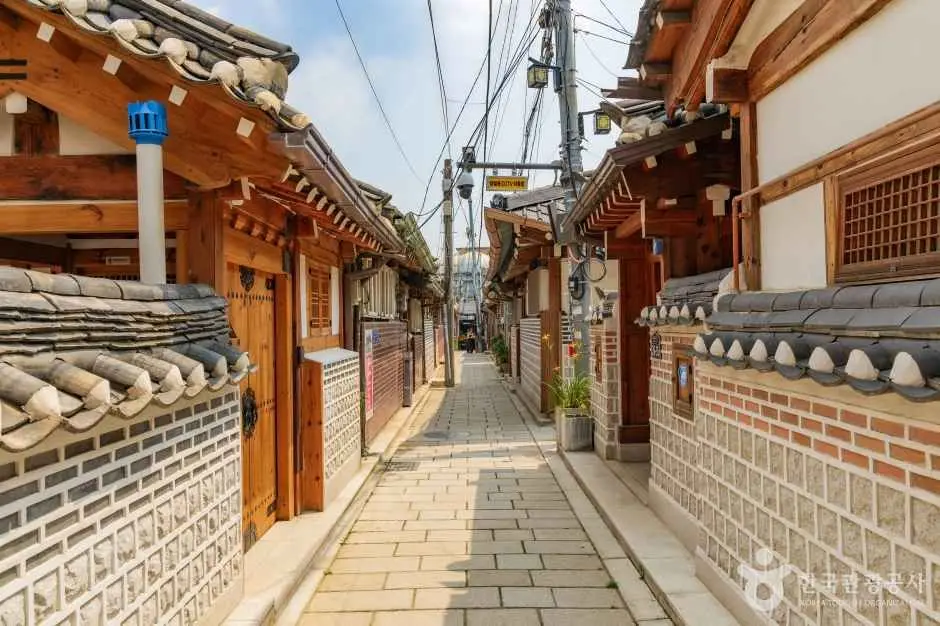
Seochon (“west village”) is the old neighborhood on the west side of Gyeongbokgung Palace, between the palace wall and Inwangsan. The Jongno District office also calls it Sejong Village. Its lanes are a maze of hanok, old shops and small houses, and they have been used as a location for films, dramas and music videos. Across the palace from Bukchon, Seochon mixes a market, a few small museums, old Chinese restaurants and new cafes in the same streets. Ttoganjip, Pungja’s YouTube show where residents vote for their regular places, titled its Seochon episode with a line calling Seochon the original hot place, one that outdoes Hongdae and Seongsu at their own mood.
Seochon pairs naturally with its neighbors. Visit Gyeongbokgung in the morning, walk out of the west gate (Yeongchumun) into Seochon for lunch, and end the afternoon on Inwangsan, whose paths start at the top of the neighborhood.
Half a day in Seochon
- Late morning: from Exit 2 of Gyeongbokgung Station, stop at Yi Sang’s House (free) on the way to Tongin Market.
- Lunch (from 11:00): buy coins at Tongin Market and fill a lunchbox with side dishes, plus a plate of gireum tteokbokki. Or have samgyetang at Tosokchon near the station.
- Early afternoon: see the front of Daeo Bookstore, then walk uphill to the Park No-soo Art Museum and on to Suseongdong Valley.
- Afternoon coffee: pick a Seochon cafe from our cafe map, such as Camel Coffee, whose upstairs windows look onto Yeongchumun.
- Evening: Boan Inn opposite Yeongchumun (until 18:00), then dinner in the Sejong Village Food Street by Exit 2 or at a place on our food map.
Sights
Tongin Market began in 1941 as a public market and now has about 70 shops, mostly side dishes and small restaurants. Its coin lunchbox (yeopjeon dosirak) is the reason most visitors come; see the next section.
Park No-soo Art Museum is the 1930s house of the painter Park No-soo, kept with its garden, ondol rooms and fireplaces. Adults pay 3,000 won; Wednesdays and visitors in hanbok pay half.
Suseongdong Valley, at the top of Okin-dong, is a granite stream valley that the painter Jeong Seon included in his album of eight views of Jangdong. It was covered by apartments from 1971 and restored about 40 years later. From here the forest path continues onto Inwangsan.
Daeo Bookstore (opened 1951) and Boan Inn are Seochon’s two famous old fronts: a blue hanok bookshop and a former inn opposite the palace’s west gate, now an exhibition space. Yi Sang’s House is a small free space on part of the site of the poet Yi Sang’s house.
The Tongin Market coin lunchbox
- Buy coins. 10,000 won buys 20 brass coins (500 won each), an empty lunchbox tray and chopsticks; that is the minimum. Coins are sold on weekdays from 11:00 to 15:00 and on weekends from 11:00 to 16:00. Cards are accepted.
- Fill the box. Walk the market and hand coins to the shops that take them. A recent visitor paid 5 coins for dakgangjeong (glazed fried chicken), 5 for japchae, 4 for two chicken skewers and 4 for sweet potato fritters, and found that 20 coins did not fill the whole box. Point at what you want; the Korean names do not matter.
- Eat. Normally you eat in the indoor dosirak cafe. Until early 2027 (the renovation is scheduled to end on January 30, 2027) you eat at outdoor tables by the traditional pavilion instead, so dress for the weather; on rainy days people crowd the tables inside the market.
- Leftover coins: recent visitors report that unused coins are refunded once you have spent at least 8,000 won.
The lunchbox is closed every Monday and the third Sunday of each month. Until April 2026 it closed on Tuesdays, and some older listings and articles still say Tuesday.
Food and drink
- Market food: the coin lunchbox (from 10,000 won) and gireum tteokbokki at Tongin Market (5,000 won a plate).
- Samgyetang: Tosokchon, 20,000 won, open daily 10:00 to 22:00 with no break, 3 minutes from Exit 2. Expect a line at lunch.
- Korean-Chinese: Younghwaru’s gochu ganjjajang (spicy black bean noodles), 12,000 won; closed Tuesdays.
- Bakery: Hyoja Bakery’s corn bread, 8,000 won, from 8:00; closed Mondays. For more bakeries Koreans queue for, see our Seoul bakery tour.
- Evening: the Sejong Village Food Street outside Exit 2.
More Seochon places are on our two maps, and they are not repeated here:
- Seochon on the food map: Sajikro Seoul (oak-grilled short ribs, residents’ first pick on Ttoganjip’s Seochon episode), Halmaejip (jokbal and gamjatang), Chebudong Janchijip (noodles and pancakes), Yonggeumok (loach soup) and Andeok (Pyongyang-style dumplings).
- Seochon on the cafe map: Camel Coffee Seochon, Veranda, Cafe Aux Petits Verres and Staff Picks.
When to go
Avoid Mondays. The coin lunchbox, the Park No-soo Art Museum, Boan Inn, Yi Sang’s House and Hyoja Bakery are all closed. On Tuesdays Gyeongbokgung and Younghwaru are closed, but the rest of Seochon is open. For the lunchbox, arrive between 11:00 and 15:00 on a weekday (16:00 at weekends), and avoid the third Sunday of the month. In autumn the ginkgo trees by Yeongchumun and in some cafe yards turn yellow, and Staff Picks, the cafe built around a ginkgo tree, fills early.
Getting there
Gyeongbokgung Station (Line 3) is the only station you need. Exit 2 leads into the middle of Seochon (food street, Yi Sang’s House, Tongin Market); Exit 3 is for Yeongchumun and Boan Inn; Exit 1 is for Sajikdan Altar and the Inwangsan paths. The Park No-soo Art Museum and Suseongdong Valley are uphill, a walk of about 15 minutes from the station, or take the Jongno 09 village bus. From the airport, see How to get from Incheon Airport to Seoul.
Practical information
- Where to stay: Seochon has a few hanok guesthouses, such as Hanok Essay Seochon. For hotels, look around Gwanghwamun and Jongno.
- Same dish, two stalls: Tongin Market has two gireum tteokbokki stalls with similar names (Wonjo Halmeoni and Wonjo Jeong Halmeoni). If you want to pay with lunchbox coins, ask at the stall first.
- Nearby: Gyeongbokgung, Inwangsan, Bukchon and Samcheong-dong on the palace’s east side, and Insadong and Ikseondong.
Get There
Gyeongbokgung StationLine 3
- Korean
- 경복궁역
- Exit
- Exit 2
- Walk
- 8 min
Exit 2 is right at the Sejong Village Food Street, 5 minutes from Yi Sang's House and about 8 minutes (500 m) from Tongin Market. Exit 3 is for Yeongchumun, the palace's west gate, and Boan Inn opposite it (about 7 minutes). Exit 1 is for Sajikdan Altar and the Inwangsan paths.
Hours & Fees
- Tongin Market coin lunchbox
- Coins on sale weekdays 11:00 to 15:00, weekends 11:00 to 16:00. Seating until 16:00 on weekdays and 17:00 on weekends. Closed every Monday and the third Sunday of each month
- Mondays
- The coin lunchbox, Park No-soo Art Museum, Boan Inn, Yi Sang's House and Hyoja Bakery are all closed on Mondays
- Suseongdong Valley
- Open at all times. Free
Places in Seochon
Tongin Market and the coin lunchbox
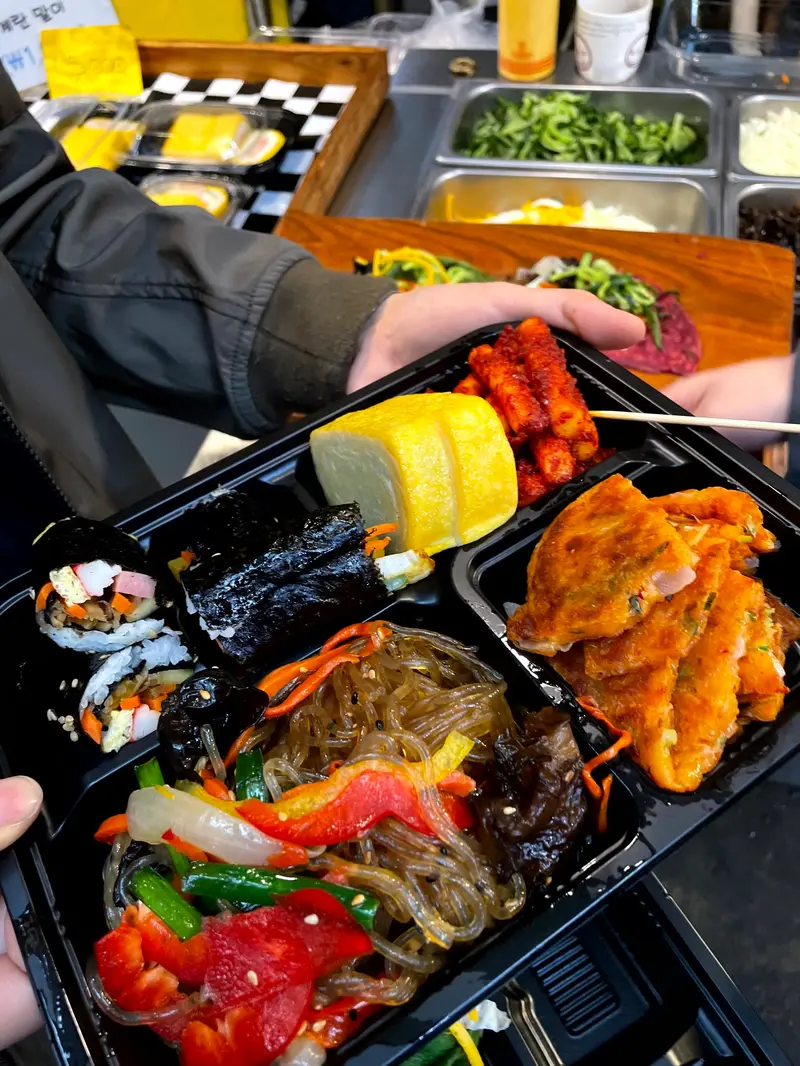
A market of about 70 shops, most of them side dishes and small restaurants, that began in June 1941 as a public market in Hyoja-dong. Since 2012 it has run the dosirak (lunchbox) cafe: you buy old-style brass coins (yeopjeon), get an empty lunchbox tray, and fill it at the shops that take coins, a few coins per dish. It is an easy way to try several Korean side dishes in one sitting. Until early 2027 the market's customer center is being rebuilt: coins are sold at a temporary pop-up store opposite the old center, and you eat at outdoor tables by the traditional pavilion instead of the indoor cafe.
- Coins
- 500 won per coin. Minimum 10,000 won, which buys 20 coins plus the lunchbox and chopsticks. Leftover coins are refunded if you have spent at least 8,000 won (reported by recent visitors). Coins can be paid for by card, cash, bank transfer or Onnuri voucher
- Coin sales
- Weekdays 11:00 to 15:00, weekends 11:00 to 16:00. Seating until 16:00 on weekdays and 17:00 on weekends
- Closed
- Every Monday and the third Sunday of each month (Mondays since April 1, 2026; some listings still show the old Tuesday closing)
- Market shops
- About 7:00 to 21:00; each shop sets its own hours
Foreigner access
Google Maps for Tongin Market and the coin lunchbox Naver Map for Tongin Market and the coin lunchbox- Korean name
- 통인시장
- Booking
- No booking for individuals; buy coins on the day. Groups ask by phone
Korean phone number needed: No - English
- Menu: unconfirmed · Signs: Partly · Staff: unconfirmed
The market has posted some notices in English, including the closing-day change and a line on the renovation sign: Coin sales relocated due to renovations.
Park No-soo Art Museum
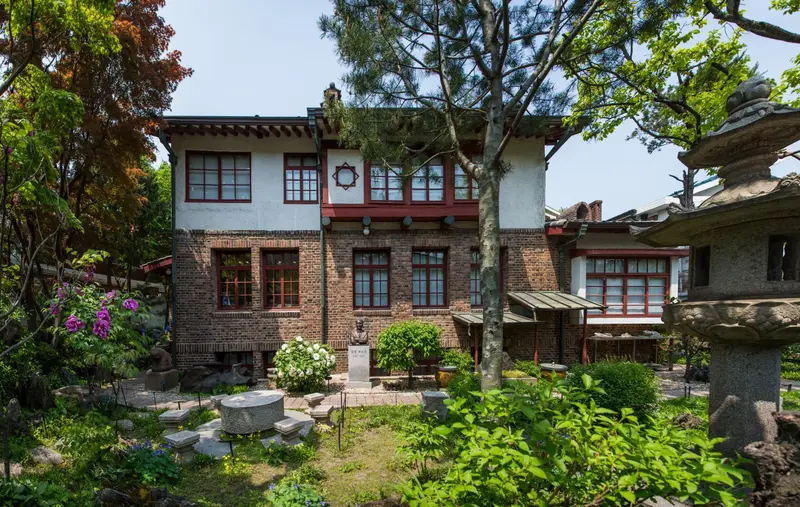
The house where the painter Park No-soo lived for over 40 years, opened as a Jongno District museum in September 2013 after his death. Built around 1937, it mixes Korean and Western styles: ondol (heated floor) rooms and a wooden-floored hall on the 1st floor, a wooden room upstairs and three fireplaces, set in a garden. It has been a Seoul cultural heritage site since 1991. The current exhibition, for the museum's 12th anniversary, runs until December 6, 2026. It is a 14-minute walk uphill from Exit 2 of Gyeongbokgung Station; the museum suggests the Jongno 09 village bus from Exit 3.
- Hours
- 10:00 to 18:00, Tuesday to Sunday (last entry 17:30)
- Closed
- Mondays, January 1, and Seollal and Chuseok days
- Admission
- Adults (25 to 64) 3,000 won, ages 13 to 24 1,800 won, ages 7 to 12 1,200 won. Half price on Wednesdays and for visitors wearing hanbok
Foreigner access
- Korean name
- 종로구립 박노수미술관
Foreigner access details not yet confirmed
- English
- The museum's official visitor page has no English version.
Suseongdong Valley
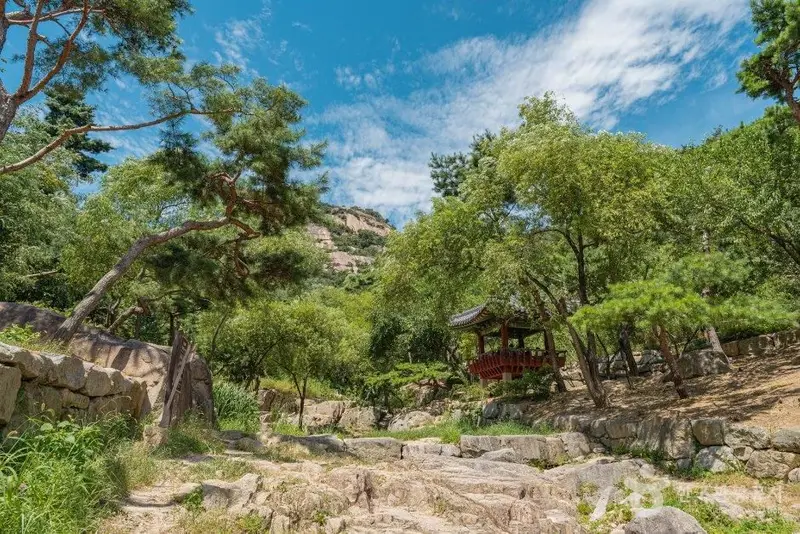
A rocky stream valley at the top of Okin-dong, the upper end of Seochon, painted by Jeong Seon in his album of eight views of Jangdong. Apartments built over it in 1971 hid it for about 40 years until they were removed and the valley was restored. It is also a way onto Inwangsan: the forest path from Sajikdan Altar passes through here on its way to the Yun Dong-ju Literature Museum (2.9 km, about 1 hour 30 minutes).
- Hours
- Open at all times
- Admission
- Free
Foreigner access
- Korean name
- 수성동계곡
Foreigner access details not yet confirmed
Boan Inn
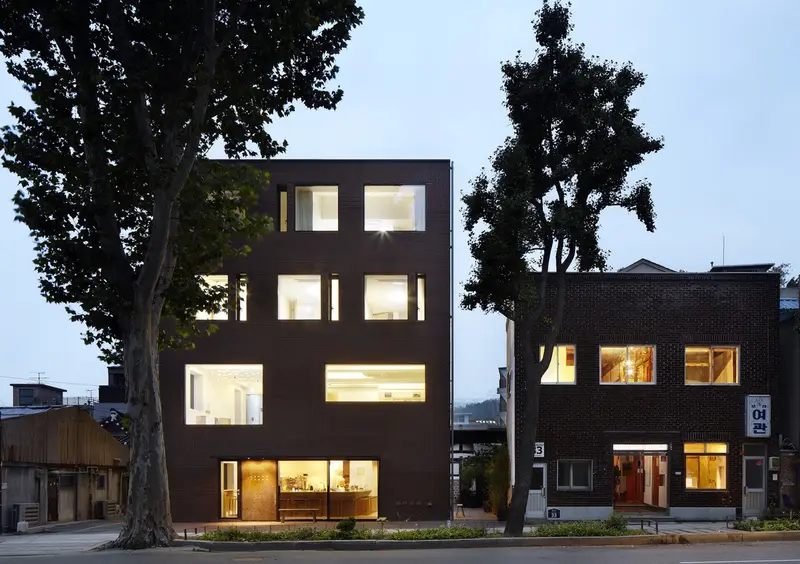
An old inn building opposite Yeongchumun, the west gate of Gyeongbokgung, now used as an exhibition space, with a newer building beside it (Boan1942). Exhibitions change, and the galleries close while a new one is being installed.
- Hours
- 12:00 to 18:00, Tuesday to Sunday. Closed on Mondays and between exhibitions
- Admission
- unconfirmed
- Nearest exit
- Gyeongbokgung Station Exit 3, about 7 minutes (Naver Map); the inn's own directions say 5 minutes from Exit 4 toward Cheong Wa Dae
Foreigner access
- Korean name
- 통의동 보안여관
Foreigner access details not yet confirmed
Daeo Bookstore
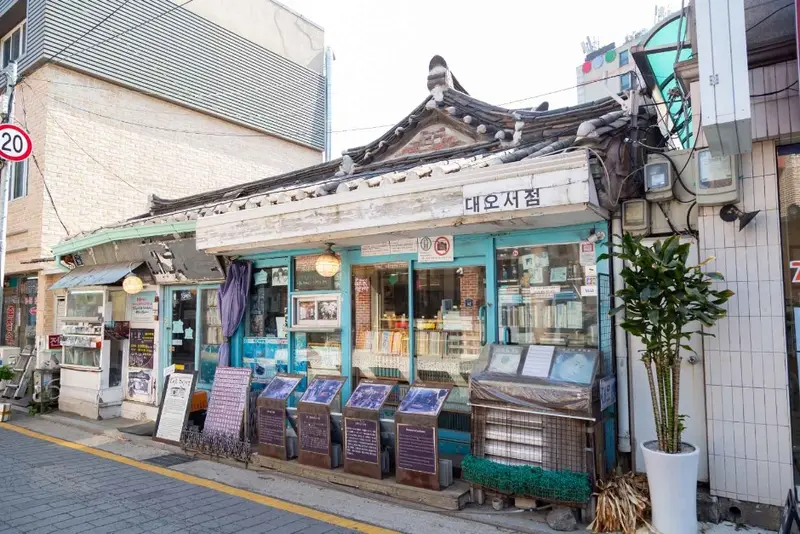
A small hanok bookshop opened in 1951, described by the Korea Tourism Organization as the oldest bookstore in Seoul, with a blue shopfront under a tiled roof. Singer IU shot the cover of her 2014 album Kkotgalpi here. The front is free to see. To go inside you pay a small charge, and sources differ on what: buying a postcard set, or a 3,000-won entry (free for seniors).
- Hours
- 12:00 to 21:00, daily (Naver and the Korea Tourism Organization); a recent visitor gives 12:00 to 18:00
- Admission
- Postcard set purchase or 3,000 won; sources differ
Foreigner access
- Korean name
- 대오서점
Foreigner access details not yet confirmed
Yi Sang's House
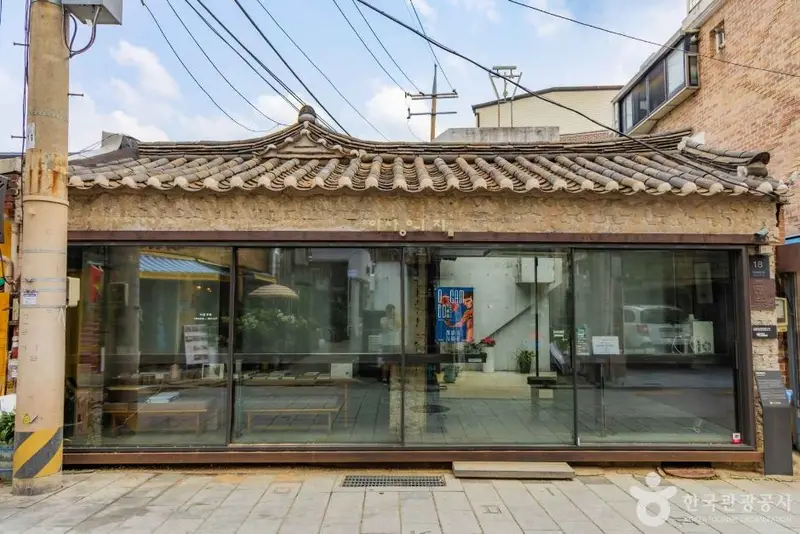
A small free exhibition space on part of the site of the poet Yi Sang's house, run by the National Trust of Korea. It is on the way to Tongin Market: 200 m from Exit 2 of Gyeongbokgung Station toward the market, then 50 m into the lane by the Woori Bank Hyoja-dong branch. It closes for lunch from 12:00 to 13:00.
- Hours
- 10:00 to 17:00, Tuesday to Sunday, closed 12:00 to 13:00 (Naver; a recent visitor gives 18:00 as closing). Closed on Mondays
- Admission
- Free
Foreigner access
- Korean name
- 이상의집
Foreigner access details not yet confirmed
Tosokchon Samgyetang
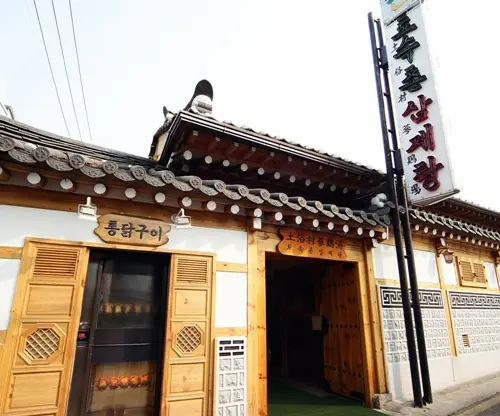
A ginseng chicken soup (samgyetang) restaurant in a hanok 3 minutes from Exit 2 of Gyeongbokgung Station, open since 1983 and well known to foreign visitors. A bowl of samgyetang (a small whole chicken stuffed with rice and ginseng, in broth) is 20,000 won. It opens every day of the year with no afternoon break, but lunchtime lines are long and it is busy from opening at 10:00.
- Hours
- 10:00 to 22:00, daily including holidays (last order 21:00). No break
- Prices
- Samgyetang 20,000 won, otgyetang (lacquer-tree chicken soup) 20,000 won, black chicken samgyetang 25,000 won, wild ginseng root samgyetang 26,000 won, rotisserie chicken 19,000 won, seafood pancake 17,000 won
Foreigner access
- Korean name
- 토속촌삼계탕
Foreigner access details not yet confirmed
- Queue app
- Recent visitors describe long lines at lunchtime; the line is at the door.
Younghwaru
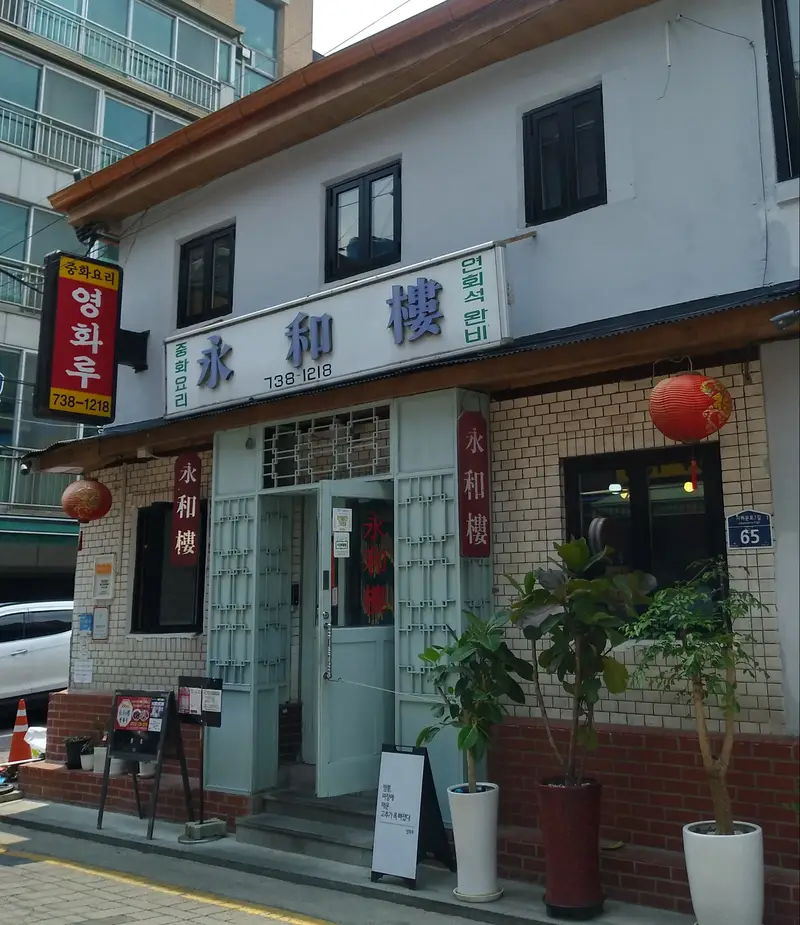
An old Korean-Chinese restaurant at 65 Jahamun-ro 7-gil whose signature is gochu ganjjajang: black bean noodles with a dry-fried sauce and hot chili, 12,000 won. It appeared on the Seochon episode of Ttoganjip, the YouTube show where residents vote for their regular places. Closed on Tuesdays; recent visitors report weekend lines.
Featured on Ttoganjip (YouTube)
- Hours
- 11:00 to 21:00, Wednesday to Monday. Break 14:45 to 17:00, last order 20:15. Closed on Tuesdays
- Prices
- Gochu ganjjajang 12,000 won, ganjjajang 10,000 won, jjajangmyeon 9,000 won, jjamppong 10,000 won, gochu jjamppong 12,000 won, samseon jaengban jjajang (seafood black bean noodles on a platter) 13,000 won
Foreigner access
- Korean name
- 영화루
- Booking
- unconfirmed
Korean phone number needed: unconfirmed - English
- Menu: unconfirmed · Signs: unconfirmed · Staff: unconfirmed
- Queue app
- none
Weekend line at the door.
Wonjo Halmeoni Gireum Tteokbokki
Tongin Market's best-known snack is gireum tteokbokki: rice cakes stir-fried in oil on a griddle instead of simmered in sauce, in a soy sauce version and a red pepper version. This stall inside the market says it is the only gireum tteokbokki listed as Seoul Future Heritage. A second stall in the same market, Wonjo Jeong Halmeoni Gireum Tteokbokki (원조정할머니기름떡볶이, 7:00 to 20:30, 5,000 won a plate), sells the same dish, and recent visitors buy it there with lunchbox coins; which stalls take coins is not posted.
- Hours
- 10:00 to 19:00, daily. Closes when the day's rice cakes run out
- Prices
- Oil tteokbokki 5,000 won, soy sauce tteokbokki 5,000 won, fish cake 1,000 won, mixed jeon (pancake) set 19,000 won
Foreigner access
- Korean name
- 원조할머니 기름떡볶이
Foreigner access details not yet confirmed
Hyoja Bakery
A neighborhood bakery at 54 Pirundae-ro, near Tongin Market, open since 1987, with a Seoul Oraegage (long-running shop) plaque. Corn bread is 8,000 won. It opens at 8:00 and closes early when the bread sells out. Closed on Mondays.
- Hours
- 8:00 to 19:40, Tuesday to Sunday. Closed on Mondays; closes early when sold out
- Prices
- Corn bread 8,000 won, walnut tart 6,500 won, onion cream cheese soboro 6,500 won, fermented fig bread 6,500 won, almond senbei 8,000 won
Foreigner access
- Korean name
- 효자베이커리
Foreigner access details not yet confirmed
Sejong Village Food Street
The eating alley right outside Exit 2 of Gyeongbokgung Station, a cluster of old restaurants and pubs for dinner and drinks after a day in Seochon or at the palace. Chebudong Janchijip, a cheap noodle and pancake house on our food map, is in this alley. Each place sets its own hours.
- Hours
- Open street; each restaurant sets its own hours
Foreigner access
- Korean name
- 세종마을음식문화거리
Hotels
Experiences
Sources
- Jongno Cultural Foundation: Park No-soo Art Museum visitor information (hours, closures, admission, current exhibition)(accessed 2026-11-12)
- Tongin Market official notices on Naver Place: coin sales moved during renovation (2026-09-29 to 2027-01-30), operating hours and payment, closing day changed to Monday from 2026-04-01(accessed 2026-11-12)
- Seoul Metropolitan Government Media Hub: Tongin Market coin lunchbox (2025-05-29, Korean)(accessed 2026-11-12)
- Korea Tourism Organization (TourAPI): Seochon Village, Tongin Market, Park No-soo Art Museum, Suseongdong Valley, Daeo Bookstore, Yi Sang's House, Tosokchon, Hanok Essay Seochon entries (Korean; search by name)(accessed 2026-11-12)
- Naver Place business listings (hours, menus, prices, station exits) for each place(accessed 2026-11-12)
- Ttoganjip EP.87, Seochon (YouTube, 2025-10-24)(accessed 2026-11-12)
- Younghwaru on Ttoganjip's Seochon episode (Naver blog, 2026-10-04)(accessed 2026-11-12)
- Younghwaru weekend waits (Naver blog, 2026-10-26)(accessed 2026-11-12)
- Tongin Market coin lunchbox: minimum purchase, refund rule, dishes and coin prices (Naver blog, 2026-11-11)(accessed 2026-11-12)
- Tongin Market coin lunchbox: 20 coins for 10,000 won (Naver blog, 2026-11-11)(accessed 2026-11-12)
- Wonjo Jeong Halmeoni Gireum Tteokbokki bought with lunchbox coins (Naver blog, 2026-11-10)(accessed 2026-11-12)
- Daeo Bookstore entry 3,000 won (Naver blog, 2026-10-30)(accessed 2026-11-12)
- Seochon walk: Daeo Bookstore, Yi Sang's House, Boan Inn and Younghwaru hours (Naver blog, 2026-11-07)(accessed 2026-11-12)
- Yi Sang's House free entry (Naver blog, 2026-11-04)(accessed 2026-11-12)
- Tosokchon since 1983 and foreign visitors (Naver blog, 2026-11-09)(accessed 2026-11-12)
- Tosokchon menu prices and morning crowds (Naver blog, 2026-11-11)(accessed 2026-11-12)
- Tosokchon lunchtime wait (Naver blog, 2026-11-11)(accessed 2026-11-12)