Seodaemun Prison History Hall and Independence Park
The 1908 prison museum by Dongnimmun Station, with Independence Gate, the Ansan Jarak-gil and Yeongcheon Market
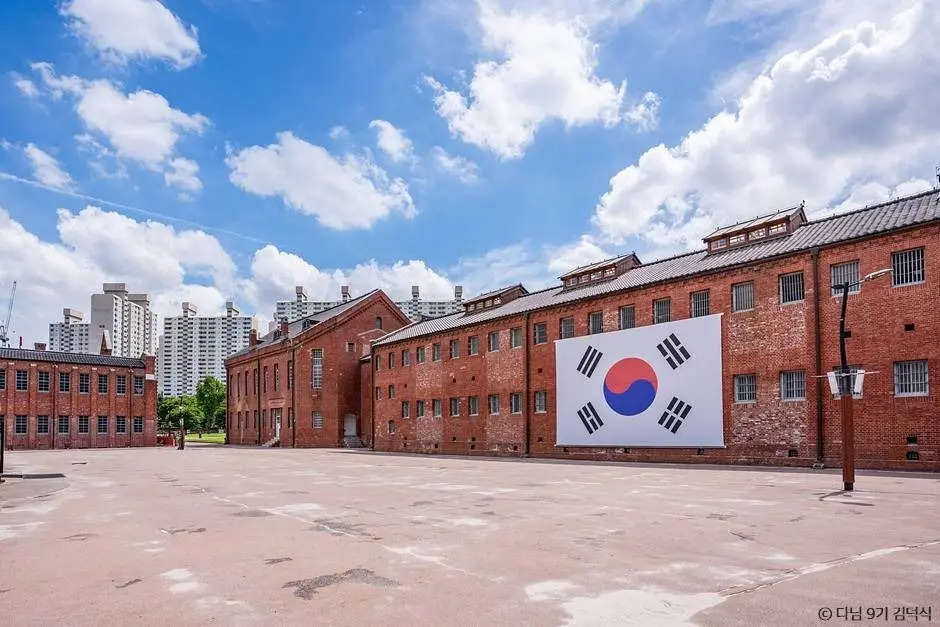
Intro
Seodaemun Prison History Hall is a prison museum in Seodaemun-gu, Seoul, by Dongnimmun Station on Line 3. The prison was built under Japanese imperial rule and opened in October 1908, and it was used as a prison for 80 years, until November 1987. During the Japanese colonial period it held independence activists who resisted colonial rule; after liberation it held democracy activists who resisted the dictatorship and military governments. The red-brick cell blocks were laid out in a panopticon arrangement, so that the prisoners could be watched easily.
The site is a national historic site, designated in February 1988. When the Seoul Detention Center moved out to Uiwang in Gyeonggi-do in November 1987, the security division building, Cell Blocks 9 to 12, the workshop, the leprosy ward and the execution building were kept and the rest was demolished. Seodaemun-gu opened the site as a museum on November 5, 1998.
Around it, the land became Seodaemun Independence Park in 1992, with Independence Gate (1897) at its far end. Behind the prison rises Ansan, a wooded hill with the Ansan Jarak-gil loop trail, and about 10 minutes’ walk south of the station is Yeongcheon Market, a lunch stop in Korean visitors’ blogs about the prison. All of it is around Dongnimmun Station.
What you see in the prison
The hall’s permanent exhibition is in three parts.
- The exhibition hall, the former security division building of 1923, with two floors and a basement. Inside are the Prison History Room, on the introduction of the justice system, the building of the prison and its restoration after 1987; National Resistance Halls 1 to 3, on independence activists held here from the end of the Korean Empire to 1945; and the underground interrogation rooms. National Resistance Hall 2 has about 4,800 prisoner record cards on its walls.
- The cell blocks. The central building covers how the prison was organized and the prisoners’ daily routine. In Cell Blocks 11 and 12 you can step inside a cell, and an exhibit shows the code prisoners tapped on the walls to pass on news. Cell Block 9, a two-story block of the 1920s, held prisoners under special watch, and its outer wall has bullet marks from the Korean War. The workshop is where prisoners did forced labor.
- The outdoor buildings: the leprosy ward, the execution building, the Sigumun passage (excavated in 1992 and restored for 40 m), the exercise yard (restored in 2011), the women’s prison (restored in 2011, with an exhibition on women in the independence movement), the watchtowers (two of the original six remain), and stretches of the 1923 brick wall, 4 m high. Cell 8 of the women’s prison is where prisoners called out for independence on March 1, 1920.
Until December 31, 2026, Cell Block 10 has a special exhibition, “Red Brick House, Seodaemun Prison: We Were Here”, made with the National Folk Museum of Korea.
Allow 1 to 1.5 hours, the hall’s own average. The site is a national historic site, so there is no food or drink inside, and no alcohol or smoking. Photography without flash is allowed with limits; flash, tripods and commercial shoots are not.
English tours and guides
The hall runs free guided tours in English on Tuesdays at 15:00, Thursdays at 11:00 and 15:00, and Fridays at 15:00. Book on the hall’s website from 14 days before your visit; places are first come, first served, a group is up to 20 people, and whether children aged 10 and under can join differs between the hall’s pages (not at all, or only with a parent), so ask when you book. The booking form asks for a mobile number, and you show the booking text message at the entrance; whether a foreign number works is unconfirmed. The website is being upgraded from November 16 to 30, 2026, and may be slow to load. In October 2026 the hall ran no guided tours on public holidays, so check the notices in holiday weeks.
On Sundays there are walk-up tours from 13:00 every 30 minutes, with no booking (up to 20 people, sign up on the spot), in front of the exhibition hall entrance; the hall’s pages give three or four sessions, and the timetable does not give a language. Exhibition room names were in Korean and English in 2019 photos. The hall’s pages mention a phone guide app, but whether an English version can be downloaded now is unconfirmed; ask at the information desk.
Visiting with children
The hall’s own rules for families: for the guided tours, whether children aged 10 and under can join differs between the hall’s pages (not at all, or only with a parent), so ask when you book; strollers and wheelchairs can be borrowed by leaving an ID; shoes with wheels are not allowed, and neither are bicycles, kick scooters, inline skates or skateboards in the grounds. There is no eating inside, so plan lunch before or after. The rest area is in the restored warehouse. On weekends the hall runs a family activity for families with elementary school children, signed up for on the spot in the exhibition hall; its poster is in Korean.
Independence Gate and the park
The park is free and open at all times. Independence Gate (Dongnimmun) was built in November 1897 by the Independence Club, led by Seo Jae-pil, with money raised from the public. After the Gabo Reforms it was put up on the site of Yeongeunmun, the gate where envoys from China had been received, which was torn down. The granite gate is 15 m high and 11.48 m wide, with a central arch, a stone staircase inside on the left up to the top, and the name carved in hangeul and Chinese characters with a taegeuk flag on each face. Since the park reopened in 2009, the gate has been open to the public.
Also in the park: Independence Hall, the Independence Club’s meeting hall from 1897, demolished under Japanese rule and rebuilt in wood in 1996, 350 m from its original spot, with memorial tablets of patriotic martyrs inside; the March First Independence Declaration Monument, moved here in 1992 from Tapgol Park, with the declaration and the names of its 33 signers on the back; and the Memorial Tower for Patriotic Martyrs (1992). Seodaemun-gu’s suggested 3-hour course runs from the gate past these monuments to the prison.
Ansan Jarak-gil
From beside the prison you can walk up onto the Ansan Jarak-gil, a barrier-free loop of about 7 km around Ansan, the hill in Seodaemun-gu (not Ansan city in Gyeonggi-do). Seoul city’s media hub gives about 2 to 2.5 hours for the whole loop. It is a different trail from the shorter Jarak-gil path on Inwangsan. The southern side of the same loop starts near Sinchon; see Sinchon and Ewha. For the summit and the sunrise on New Year’s Day, see Christmas and New Year in Seoul.
Eating at Yeongcheon Market
Yeongcheon Market is about 10 minutes from Exit 4 of Dongnimmun Station. The market’s own introduction says it began in the 1960s as a rice cake alley near the prison. For a sit-down meal, Laibin is a small Chinese-Korean restaurant whose fried dishes come in single portions from 8,000 won, with jjajangmyeon at 5,000 won. For a snack, Dalin Kkwabaegi sells two twisted doughnuts for 1,000 won but closes at 14:30 on weekdays and 11:00 on Saturdays; Gamasot Kkwabaegi, a different shop nearby, stays open until 17:00 and on Sundays. A new tourist information center for the market has opened by the public parking lot, according to a November 2026 blog post; its hours and languages are unconfirmed.
On the other side of Dongnimmun Station, 4 minutes from Exit 3, Daesungjip serves doganitang (ox knee soup) and is a Michelin Bib Gourmand for 2026; see Gukbap in Seoul.
A half day here
Some Korean visitors’ blogs from October and November 2026 eat lunch at the market first and then walk to the prison, and some add Independence Gate or the Ansan Jarak-gil. A suggested order:
- Lunch at Yeongcheon Market (Laibin, plus kkwabaegi before the shop closes).
- Walk up to Independence Gate and through the park.
- Seodaemun Prison History Hall (1 to 1.5 hours).
- If you have energy left, up onto the Ansan Jarak-gil from beside the prison.
In winter the last tickets for the prison are sold at 16:30, so do not leave lunch too late.
When to go
The prison is closed on Mondays; the park, the trail and the market are open. Dalin Kkwabaegi is closed on Sundays and Gamasot Kkwabaegi on Mondays. The Seodaemun Independence and Democracy Festival, held since 2010 around Liberation Day (August 15), ran in the park and the prison grounds on August 15 and 16 in 2026, free to enter; the 2027 dates had not been announced in November 2026.
Getting there
Take Line 3 to Dongnimmun Station: Exit 5 for the prison, Exit 4 for Independence Gate, the park and Yeongcheon Market. From other lines, change to Line 3 at Jongno 3(sam)-ga (Lines 1 and 5), Euljiro 3(sam)-ga (Line 2) or Chungmuro (Line 4). The southern end of the market is 9 minutes from Exit 2 of Seodaemun Station (Line 5). Airport bus 6005 and several city buses stop at the Dongnimmun Station / Hansung Science High School stop. Parking at the prison is almost impossible, so do not drive. For finding the stops on a phone, see Map apps in Korea.
Combine with
- Inwangsan: the Seonbawi route to the summit starts from Exit 2 of the same station. See Inwangsan.
- Seochon: the old lanes on the other side of Inwangsan. See Seochon.
- Gyeongbokgung: also on Line 3. See Gyeongbokgung Palace.
More sights are on the Seoul page.
Get There
Dongnimmun StationLine 3
- Korean
- 독립문역
- Exit
- Exit 5
- Walk
- unconfirmed
For Seodaemun Prison History Hall; the hall gives its entrance as within 50 m of the exit. From other lines, change to Line 3 at Jongno 3(sam)-ga (Lines 1 and 5), Euljiro 3(sam)-ga (Line 2) or Chungmuro (Line 4).
Dongnimmun StationLine 3
- Korean
- 독립문역
- Exit
- Exit 4
- Walk
- 3 min
For Independence Gate and Seodaemun Independence Park (2 to 3 minutes), and for Yeongcheon Market (about 10 minutes).
Seodaemun StationLine 5
- Korean
- 서대문역
- Exit
- Exit 2
- Walk
- 9 min
For the southern end of Yeongcheon Market and Laibin.
Hours & Fees
- Hours (March to October)
- 9:30 to 18:00, last tickets 17:30
- Hours (November to February)
- 9:30 to 17:00, last tickets 16:30
- Closed
- Mondays (when a Monday is a public holiday, the hall opens and closes on the Tuesday instead), January 1, and the days of Seollal and Chuseok
- Admission
- 3,000 won for adults (19 to 64), 1,500 won for ages 13 to 18, 1,000 won for ages 7 to 12. Groups of 20 or more: 2,400, 1,200 and 800 won. There is no discount for foreign visitors
- Free admission
- Ages 6 and under and 65 and over, people with disabilities, and some Korean categories such as soldiers in uniform. Whether free entry at 65 applies to foreign visitors is unconfirmed; ask at the ticket office
- Tickets
- Buy on the day at the ticket office or the ticket machines (the machines take cards only). Individuals and groups of up to 20 do not need to book
- English guided tour
- Free. Tuesday 15:00, Thursday 11:00 and 15:00, Friday 15:00. Book on the hall's website from 14 days before, first come, first served; up to 20 people; whether children aged 10 and under can join differs between the hall's pages (not at all, or only with a parent), so ask when you book
- Typical visit
- 1 to 1.5 hours, by the hall's own estimate
Places by area
The prison and Independence Park
Seodaemun Prison History Hall
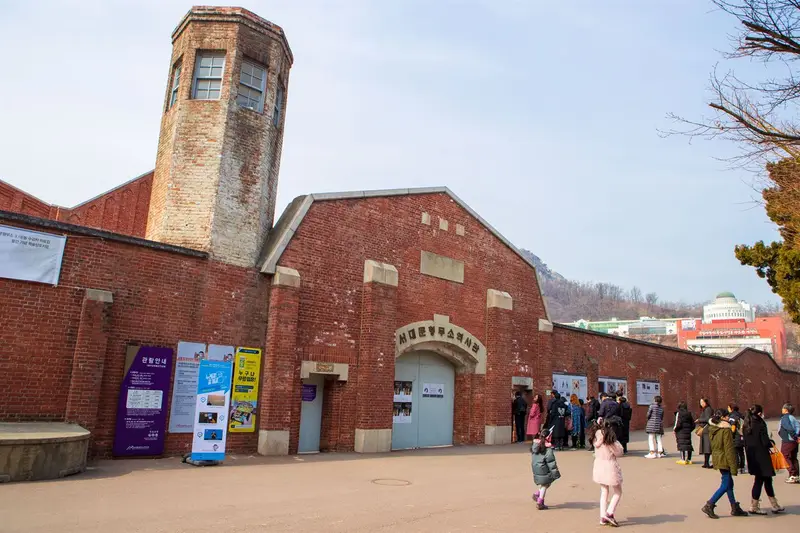
A prison built under Japanese imperial rule, opened in 1908 and used for 80 years until 1987, kept as a museum since 1998 and a national historic site. Independence activists were held here during the colonial period, and democracy activists after liberation. You walk through the former security division building, now the exhibition hall, the red-brick cell blocks and the yard. At 251 Tongil-ro, Seodaemun-gu, by Exit 5 of Dongnimmun Station. Hours, fees and English tour times are in the Hours & Fees section.
- Sunday tours
- Sundays from 13:00 every 30 minutes, with no booking (up to 20 people, sign up on the spot), in front of the exhibition hall entrance; the hall's pages give three or four sessions, and the timetable does not give a language
- Special exhibition
- "Red Brick House, Seodaemun Prison: We Were Here", with the National Folk Museum of Korea, in Cell Block 10, August 15 to December 31, 2026
- Parking
- No car parking on weekdays, and the lot is full at weekends and on public holidays. Come by subway
- Phone
- 02-360-8571 (ticket office), 02-360-8570 (exhibition hall information desk)
Foreigner access
- Korean name
- 서대문형무소역사관
- Booking
- Tickets on the day. The free English guided tour is booked on the hall's website
Korean phone number needed: unconfirmed - English
- Signs: Partly · Staff: unconfirmed
Exhibition room names are in Korean and English in 2019 photos. Free English guided tours four times a week. The English website has an English leaflet section. - Queue app
- none
Independence Gate and Seodaemun Independence Park
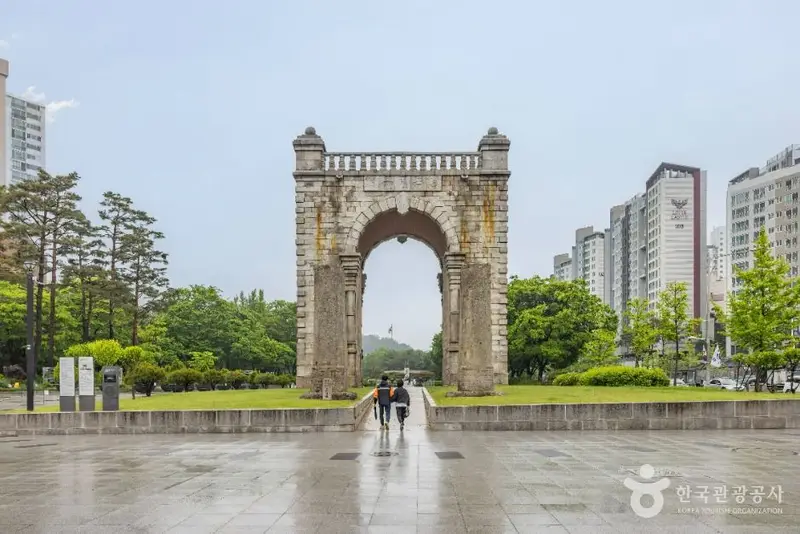
A free park in front of the prison, opened in 1992 and rebuilt in 2009. At its end stands Independence Gate (Dongnimmun), a granite arch built in November 1897 by the Independence Club, led by Seo Jae-pil, with money raised from the public, on the site of Yeongeunmun, the gate where envoys from China had been received. It is 15 m high, and the name Dongnimmun is carved in hangeul and in Chinese characters, with taegeuk flags, on its front and back. The park also holds Independence Hall, the March First Independence Declaration Monument and the Memorial Tower for Patriotic Martyrs.
- Hours
- Open at all times, every day
- Admission
- Free
- Guided walk
- Seodaemun-gu's free walk around the park: Saturdays and Sundays at 15:00, March to November except July and August, 2 hours, from Exit 4 of Dongnimmun Station, 2 to 10 people. Book at least 2 days ahead on the Seoul public service booking site. The language is not given
Foreigner access
Google Maps for Independence Gate and Seodaemun Independence Park Naver Map for Independence Gate and Seodaemun Independence Park- Korean name
- 독립문
Foreigner access details not yet confirmed
- English
- The Korea Tourism Organization lists no foreign-language guide service here.
Ansan
Ansan Jarak-gil
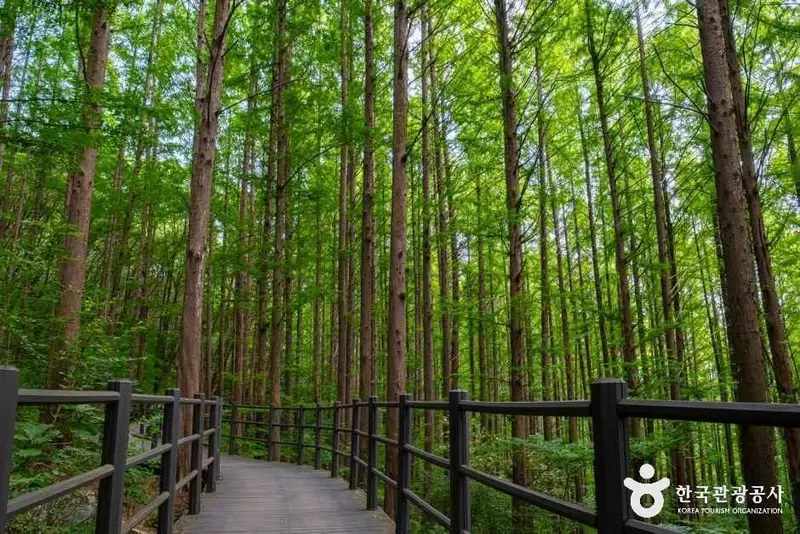
A barrier-free loop of about 7 km around Ansan, the wooded hill behind the prison in Seodaemun-gu (not Ansan city in Gyeonggi-do). Mostly gentle decks, with an average gradient under 9%, that wheelchairs and strollers can use, through a metasequoia wood and past a book cafe rest stop and viewpoints. From the Dongnimmun side, walk up the road beside the prison toward Hansung Science High School. It is a different trail from the Jarak-gil path on Inwangsan.
- Hours
- Open at all times, every day
- Admission
- Free. No parking
- Length and time
- About 7 km for the whole loop; about 2 to 2.5 hours, by Seoul city's media hub
- Summit
- A separate hiking path climbs to the old beacon site at the top (296 m), about 1.5 km and 40 minutes from Dongnimmun Station
- Rules
- No bicycles, hiking poles or crampons; dogs on a leash; keep to the right
- Step-free entry
- An October 2026 blog post found steps before the deck at the entrance beside the prison; a step-free entrance on this side is unconfirmed
Foreigner access
- Korean name
- 안산자락길
Foreigner access details not yet confirmed
Yeongcheon Market
Yeongcheon Market
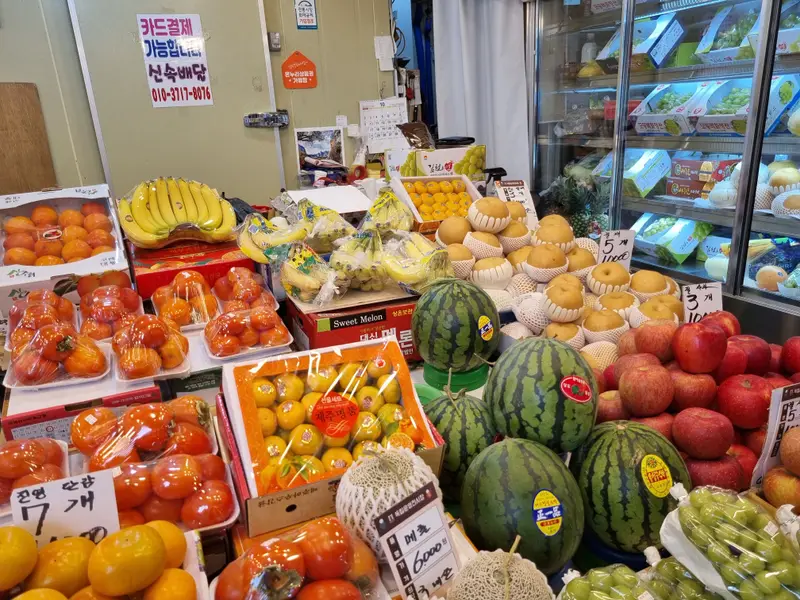
Dongnimmun Yeongcheon Market, a traditional market of about 198 shops that grew up near Independence Gate in the 1960s and was once Seoul's main wholesale market for rice cakes. It is named after a spring on Ansan, is known for tteokbokki and kkwabaegi (twisted doughnuts), and is on Seoul's 2021 Future Heritage list. It runs between Dongnimmun and Seodaemun stations.
- Hours
- 7:00 to 21:00; each shop keeps its own hours and closing days
- From the station
- About 10 minutes from Exit 4 of Dongnimmun Station
Foreigner access
- Korean name
- 독립문영천시장
- English
- Menu: unconfirmed · Signs: unconfirmed · Staff: unconfirmed
- Queue app
- none
Laibin
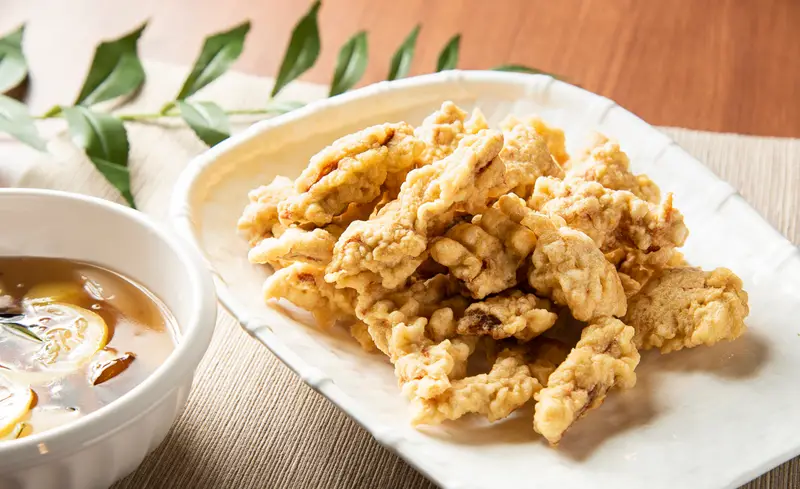
A small Chinese-Korean restaurant at the Seodaemun Station end of the market. Its fried and stir-fried dishes come in single portions, so one or two people can try several: sweet and sour pork tenderloin or fried pork for 8,000 won, yangjangpi for 9,000 won. Jjajangmyeon is 5,000 won and jjamppong 8,000 won; in winter there is an oyster jjamppong (12,000 won).
- Hours
- 11:00 to 21:30 daily, last orders 21:00
- Prices
- Jjajangmyeon 5,000 won, jjamppong 8,000 won, ganjjajang 9,000 won, fried rice 7,000 won, seafood jjamppong 12,000 won. Single-portion dishes 8,000 to 12,000 won (small and large sizes too). Handmade fried dumplings 6,000 won for 3
- Seats
- Five or six tables and a counter for about five, by a November 2026 blog post
- From the station
- 9 minutes from Exit 2 of Seodaemun Station. Address: 66 Yeongcheonsijang-gil
Foreigner access
- Korean name
- 라이빈
- Booking
- Walk-in
- English
- Menu: unconfirmed · Signs: unconfirmed · Staff: unconfirmed
- Queue app
- none
Dalin Kkwabaegi
A kkwabaegi (twisted doughnut) shop on the main road at the Dongnimmun end of the market, open from 7:00 and closed by mid-afternoon. Two kkwabaegi cost 1,000 won, a red bean doughnut 1,000 won, and four glutinous rice doughnuts 1,000 won. It has been on several Korean TV programs.
- Hours
- Monday to Friday 7:00 to 14:30 (last orders 14:00), Saturday 7:00 to 11:00 (last orders 10:30). Closed Sundays. Closes early when sold out
- Prices
- Kkwabaegi 2 for 1,000 won, red bean doughnut 1 for 1,000 won, glutinous rice doughnuts 4 for 1,000 won. Gift box of 40 kkwabaegi 20,000 won
- Address
- 205-3 Tongil-ro
Foreigner access
- Korean name
- 달인꽈배기
- Booking
- Walk-in
- English
- Menu: unconfirmed · Signs: unconfirmed · Staff: unconfirmed
- Queue app
- none
Gamasot Kkwabaegi
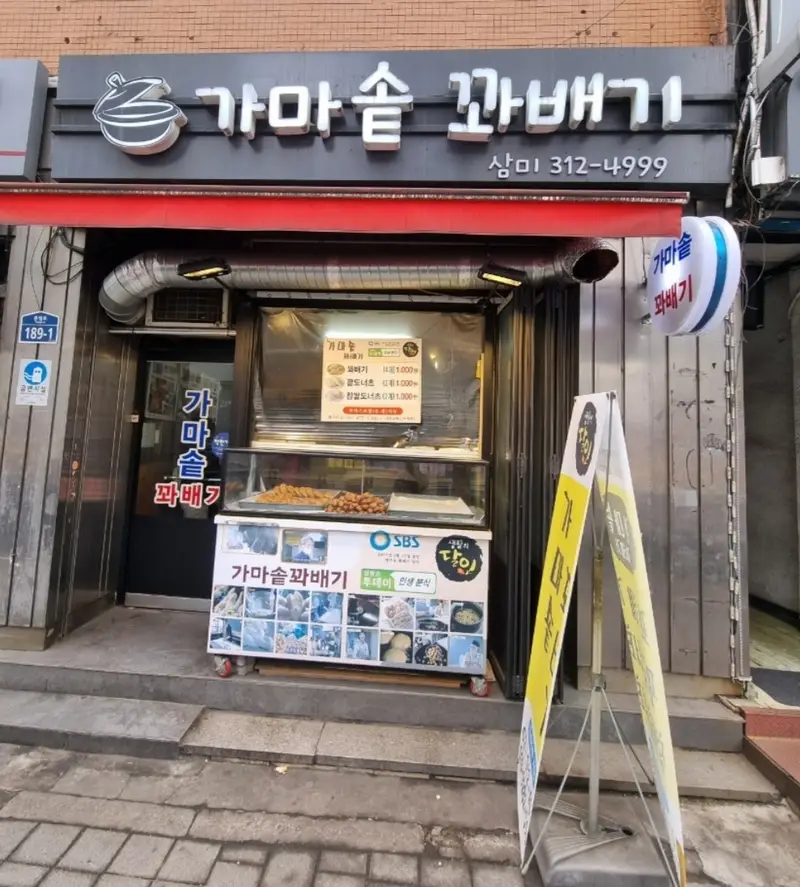
A different kkwabaegi shop, on the main road just outside the market, that stays open into the afternoon and on Sundays. It sells kkwabaegi, red bean doughnuts and glutinous rice doughnuts; a blog post from October 2026 paid 2,000 won for six kkwabaegi. It was on SBS's Master of Living (Saenghwarui Dalin) in 2023.
- Hours
- Tuesday to Sunday 7:00 to 17:00. Closed Mondays
- Address
- 189-1 Tongil-ro (Dongseong Building)
Foreigner access
- Korean name
- 가마솥꽈배기
- Booking
- Walk-in
- English
- Menu: unconfirmed · Signs: unconfirmed · Staff: unconfirmed
- Queue app
- none
Hotels
Experiences
Sources
- Seodaemun Prison History Hall: visitor information, hours, closed days, fees, free admission, payment and rules (Korean)(accessed 2026-11-14)
- Seodaemun Prison History Hall: guided tours, Sunday tours, apps and QR guides (Korean)(accessed 2026-11-14)
- Seodaemun Prison History Hall: guided tour booking, times by language (Korean)(accessed 2026-11-14)
- Seodaemun Prison History Hall: FAQ (visit length, food, strollers and wheelchairs; Korean)(accessed 2026-11-14)
- Seodaemun Prison History Hall: directions (Korean)(accessed 2026-11-14)
- Seodaemun Prison History Hall: facilities (rest area, museum shop, information desk; Korean)(accessed 2026-11-14)
- Seodaemun Prison History Hall: historic sites nearby (Independence Hall and monuments; Korean)(accessed 2026-11-14)
- Seodaemun Prison History Hall: history of the prison (Korean)(accessed 2026-11-14)
- Seodaemun Prison History Hall: permanent exhibition, exhibition hall (Korean)(accessed 2026-11-14)
- Seodaemun Prison History Hall: permanent exhibition, cell blocks (Korean)(accessed 2026-11-14)
- Seodaemun Prison History Hall: permanent exhibition, outdoor buildings (Korean)(accessed 2026-11-14)
- Seodaemun Prison History Hall notice: 2026 Seodaemun Independence and Democracy Festival (Korean)(accessed 2026-11-14)
- Seodaemun Prison History Hall notice: October 2026 opening schedule (Korean)(accessed 2026-11-14)
- Seodaemun Prison History Hall notice: parking (Korean)(accessed 2026-11-14)
- Seodaemun Prison History Hall notice: winter hours, November 1, 2026 to February 28, 2027 (Korean)(accessed 2026-11-14)
- Seodaemun Prison History Hall notice: website upgrade, November 16 to 30, 2026 (Korean)(accessed 2026-11-14)
- Seodaemun Prison History Hall (English website)(accessed 2026-11-14)
- Seodaemun Prison History Hall: guided tour booking (English)(accessed 2026-11-14)
- Seodaemun Prison History Hall: reservations for individuals and groups (English)(accessed 2026-11-14)
- Seodaemun Prison History Hall: directions, airport bus 6005 (English)(accessed 2026-11-14)
- Seodaemun-gu: Seodaemun Prison History Hall, national historic site (Korean)(accessed 2026-11-14)
- Seodaemun-gu: Seodaemun Independence Park (Korean)(accessed 2026-11-14)
- Seodaemun-gu: Yeongcheon Market (Korean)(accessed 2026-11-14)
- Seodaemun-gu: Independence Park course, Independence Gate and monuments (Korean)(accessed 2026-11-14)
- Seodaemun-gu: guided history and culture walks (Korean)(accessed 2026-11-14)
- Seodaemun-gu: Seodaemun Independence and Democracy Festival (Korean)(accessed 2026-11-14)
- Korea Tourism Organization (TourAPI): Seodaemun Prison History Hall (Korean)(accessed 2026-11-14)
- Korea Tourism Organization (TourAPI): Independence Gate (Korean)(accessed 2026-11-14)
- Korea Tourism Organization (TourAPI): Seodaemun Independence Park (Korean)(accessed 2026-11-14)
- Korea Tourism Organization (TourAPI): Seodaemun Ansan, Ansan Jarak-gil (Korean)(accessed 2026-11-14)
- Korea Tourism Organization (TourAPI): Dongnimmun Yeongcheon Market (Korean)(accessed 2026-11-14)
- Naver Place: Seodaemun Prison History Hall, with the business's exhibition and family program posters (Korean)(accessed 2026-11-14)
- Naver Place: Independence Gate (Korean)(accessed 2026-11-14)
- Naver Place: Seodaemun Independence Park (Korean)(accessed 2026-11-14)
- Naver Place: Dongnimmun Yeongcheon Market (Korean)(accessed 2026-11-14)
- Naver Place: Laibin, hours and menu (Korean)(accessed 2026-11-14)
- Naver Place: Dalin Kkwabaegi, hours and menu (Korean)(accessed 2026-11-14)
- Naver Place: Gamasot Kkwabaegi (Korean)(accessed 2026-11-14)
- Seoul Media Hub: Ansan Jarak-gil, 7 km, about 2 to 2.5 hours (2023-04-10, Korean)(accessed 2026-11-14)
- Seoul Media Hub: Ansan Jarak-gil rules and the Dongnimmun start (2023-03-22, Korean)(accessed 2026-11-14)
- Seoul Media Hub: Korea's first barrier-free loop trail on Ansan (2022-06-22, Korean)(accessed 2026-11-14)
- Seoul Media Hub: Ansan summit from Dongnimmun Station (2025-04-25, Korean)(accessed 2026-11-14)
- Naver blog: Laibin lunch, then a walk past the prison onto the Ansan trail (2026-11-05)(accessed 2026-11-14)
- Naver blog: Laibin lunch, then Seodaemun Prison History Hall (2026-10-31)(accessed 2026-11-14)
- Naver blog: Yeongcheon Market lunch, Independence Gate and the Ansan Jarak-gil (2026-10-18)(accessed 2026-11-14)
- Naver blog: Laibin single portions, seats and winter oyster dishes (2026-11-07)(accessed 2026-11-14)
- Naver blog: Gamasot Kkwabaegi and the steps at the Ansan Jarak-gil entrance by the prison (2026-10-09)(accessed 2026-11-14)
- Naver blog: the new Yeongcheon Market tourist information center (2026-11-11)(accessed 2026-11-14)