Gyeongju Namsan
A low mountain of Silla Buddhas carved in rock, part of the World Heritage listing, reached by city bus 500
Intro
Namsan is the low mountain on the south side of Gyeongju, about 8 km from north to south and 4 km across, with more than 40 valleys. Its highest points are Geumobong (468 m) and Gowibong (494 m). Its rocks and valleys hold Buddhas carved in stone, temple sites and pagodas, many from the Silla period: the Korea Tourism Organization counts about 100 temple sites, 80 stone Buddhas and 60 stone pagodas. Namsan is one of the five districts of the Gyeongju Historic Areas, a UNESCO World Heritage Site since 2000, and part of Gyeongju National Park, designated in 1968.
Namsan is worth half a day if you like walking: the trails are short, but you climb past Buddhas carved in rock that you will not see in a museum. Korean hikers come for exactly this, often on the Samneung trail to Geumobong. If you would rather not climb, the pine forest at Samneung and the flat East Namsan walk give you some of the carvings at ground level.
Trails
The trails below are those of the Korea National Park Service, which gives distances and times one way. Recent hikers’ times are given separately.
| Course | Distance (one way) | Time (one way) | Starts at |
|---|---|---|---|
| Samneung course: Samneung to Baduk Rock to Geumobong | 2.1 km | about 1 hour 30 minutes | Samneung bus stop |
| Yongjang Valley course | 1.9 km | about 1 hour 20 minutes | Naenam Police Box stop, then 10 minutes on foot |
| Sambulsa course: Sambulsa to Baduk Rock | 1.4 km | about 1 hour | Sambulsa, Mangwolsa stop |
Samneung course: the park service’s main trail. From Samneung to Baduk Rock (1.2 km, about 1 hour) the path is stone paving and earth, with stone steps from the Seongak Yukjonbul (six Buddhas incised in rock) onward; from Baduk Rock to the summit of Geumobong (0.9 km, about 30 minutes) it follows the ridge on rock, earth and decking. The park service describes gentle slopes and steps. On the way you pass the pine forest, a seated stone Buddha from a temple site, a rock-carved Avalokiteshvara, the incised six Buddhas, the seated stone Buddha of Samneung Valley (a Treasure) and, 5 minutes beyond Baduk Rock toward Geumobong, the 6 m rock-carved seated Buddha, then Sangsa Rock and the summit.
Over the top to Yongjang Valley: the route Korean hikers use most is up the Samneung course, over Geumobong, then down past the Yongjangsa pagoda and carved Buddhas to the Seoljamgyo bridge and the Yongjang village. Recent hikers report 5.5 km in 3 hours 30 minutes and 6.7 km in about 3 hours. At the bottom, catch the bus back to town at the Yongjang or Naenam stops; buses 500 and 505 to 508 also stop at Samneung on the way. The Yongjang Valley course is flat from Yongjang village to Seoljamgyo, then steep between rocks.
Round trip from Samneung: recent hikers report 2 to 4 hours there and back, depending on how long you stop at the carvings. One gave 5.6 km and 4 hours from the Seonamsan parking lot, with the sites.
Sambulsa course: the shortest way up to Baduk Rock, starting at the Baedong standing Buddha triad, with a short bamboo grove and then a gentle climb on sandy soil and stone. Watch for roots and rock.
East Namsan and Chilburam: from the Tongiljeon parking lot, one recent hiker reached Chilburam in about 1 hour 20 minutes; another gave about 7.5 km and 3 to 4 hours for the round trip to Chilburam and Sinseonam, with some steep sections.
The East Namsan walk (not a hike): the city tourism site’s East Namsan course is about 8 km one way on almost level ground, from Woljeonggyo Bridge past the Bulgok Buddha, the Tapgok carvings, the royal tombs of Heongang and Jeonggang, Tongiljeon and Seochulji to the pair of three-story pagodas at Namsan-dong. The city allows most of a day, or half a day at a brisk pace. It starts at Woljeonggyo Bridge.
What to see
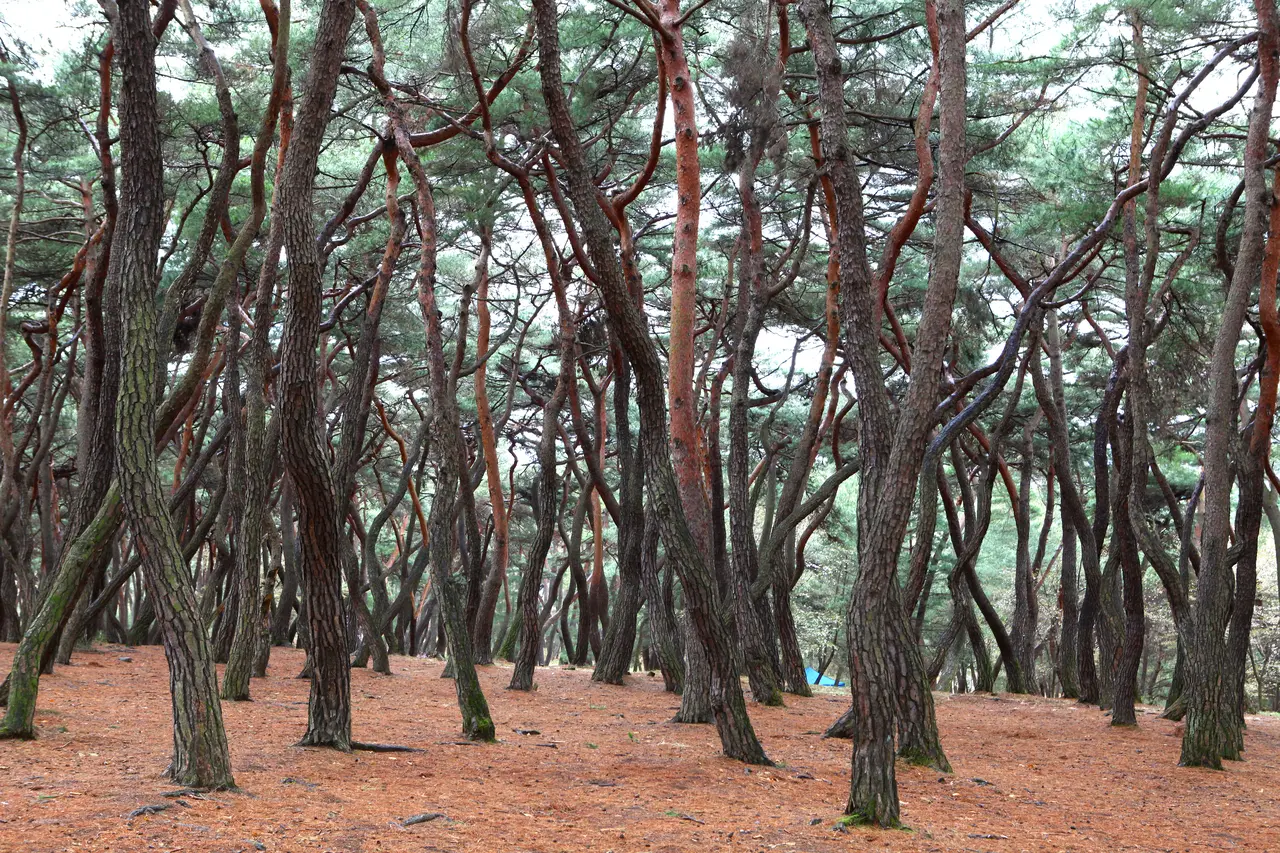
Samneung is a group of three royal tombs said to belong to three Silla kings of the Park clan, set in a forest of crooked pines. The forest is a favorite of photographers, especially in the morning; azaleas bloom between the pines in spring, and the national park service shows it in autumn color.
The rock-carved Buddhas of Samneung Valley line the Samneung course. The largest, 6 m tall, is the biggest seated Buddha on the mountain.
Yongjangsa Temple Site, on the Yongjang side, has a three-story pagoda that stands on the bare rock of the ridge, using it as its base, and two Buddhas: a seated stone Buddha and one carved into a rock face. This is where the Joseon writer Kim Si-seup wrote Geumo Sinhwa.
Chilburam, on the east side, is a set of seven Buddhas, three on the rock face and four on a stone pillar in front, and a National Treasure. Climb a little higher for the Sinseonam Bodhisattva carved on a cliff above it.
Bulgok and Tapgok, on the East Namsan walk, are the oldest Buddha on the mountain, seated in a niche, and a boulder carved on all four sides.
Poseokjeong, at the west foot of the mountain, one bus stop before Sambulsa, is a Silla site, thought to date from the reign of King Heongang (875 to 886), where only a winding stone water channel about 10 m long remains; King Gyeongae was captured here by Gyeon Hwon in 927. It is open 9:00 to 18:00 from March to October and 9:00 to 17:00 from November to February, and costs 2,000 won for adults (1,000 won youths, 500 won children; free for people aged 65 and over with proof of age). It is a stop on bus 500.
Trail entry times and safety
- Entry times: trails close to new hikers after 15:00 (November to March) or 16:00 (April to October); start early enough to be down before dark. The park service may also close trails in bad weather.
- Fire season: in the autumn fire prevention period from November 15 to December 15, 2026, all 21 Namsan entry points are open. Spring closures for 2027 have not been announced. Smoking and fires are banned, and entering a closed trail carries a fine.
- After rain: the park service warns that rocks and exposed tree roots are very slippery after rain, and recommends hiking shoes.
- Finding your way: there are many junctions. One recent hiker advises checking for signs to Baedong (Samneung) on the way down from Geumobong if you want to return to your start. Whether the trail signs have English has not been confirmed.
- Toilets and supplies: the Korea Tourism Organization lists no toilets at the rock-carved seated Buddha of Samneung Valley. One recent hiker advises bringing water and snacks.
Getting there
West side (Samneung, Sambulsa, Poseokjeong, Yongjang): take city bus 500 from the bus terminal. The park service also lists bus 506, and buses 505, 507 and 508 follow the same road. Bus 500 runs through the center (Jungang Market, Palujeong, Cheonmachong Humun Hwangnidan-gil) and then south past the Tamni Village and Oreung stops, Poseokjeong, Sambulsa, Mangwolsa and Samneung, on to Yongjang. One recent visitor gives about 15 minutes from town to the Namsan side. Times are in Hours & Fees above.
From Gyeongju Station (KTX), no bus goes straight to Samneung: take bus 50, 51 or 70 to the bus terminal and change to bus 500. A change within 30 minutes of tapping off the first bus is free with a transit card. See How to Get from Seoul to Gyeongju.
East side (Tongiljeon, Chilburam, Seochulji): take city bus 10 or 11 to the Tongiljeon stop. Bus 10 runs from 6:00 to 21:10 and bus 11 from 6:15 to 21:30 from their starting points, about every 20 minutes according to the city tourism site.
By car: recent visitors report 2,000 won for a car at the Seonamsan public parking lot in front of the Samneung trailhead, and free parking at Tongiljeon.
Copy these stop names into a map app or show them to a driver: 삼릉 (Samneung), 삼불사,망월사 (Sambulsa), 포석정 (Poseokjeong), 내남파출소 (Naenam Police Box), 통일전 (Tongiljeon).
Half a day on Namsan
- Morning: take bus 500 from the bus terminal (for example 8:40 on weekdays or 8:50 on weekends). If you want a packed lunch, Gyori Gimbap’s main shop near the Tamni Village stop opens at 8:30 and sells boxes of 2 rolls for 13,000 won (closed Wednesdays); see Gyochon Hanok Village and Woljeonggyo Bridge.
- Samneung course: walk through the pine forest and up past the carved Buddhas to Baduk Rock and Geumobong, about 1 hour 30 minutes by the park service’s figure.
- Down: go back the same way to Samneung, or cross over and descend past the Yongjangsa pagoda to Yongjang village, about 3 to 3 hours 30 minutes in all by recent hikers’ accounts.
- Lunch and the bus back: kalguksu at Samneung Gohyang Son-kalguksu, then bus 500 back to town.
In winter, remember that trails close to new hikers at 15:00.
Where to eat
Samneung Gohyang Son-kalguksu, next to Samneung, is open every day from 8:30 to 20:30 and serves hand-cut kalguksu for 9,000 won, a seafood pancake for 12,000 won and acorn jelly for 10,000 won. Grain kalguksu is listed at 6,000 won, lower than the other dishes, so check the price when you order. For food to carry up the mountain, buy gimbap in town before you go.
When to go
- Spring: azaleas among the pines at Samneung.
- Late October to early November: autumn colors at Samneung and the ginkgo avenue at Tongiljeon. Days are short: trails close to new hikers at 15:00 from November.
- Summer: the park service has issued notices on trails exposed to heat, so start early.
- Mornings: the Samneung pine forest is a favorite of photographers, according to the Korea Tourism Organization, and the national park service’s photo exhibitions show it in morning mist.
Practical information
- Live trail closures: check the Korea National Park Service closure page (in Korean) before you go, or call Gyeongju National Park at +82-54-778-4100.
- English: the national park service has a page of help in English: knps.or.kr English help.
- Namsan research institute: the Korea Tourism Organization lists the Gyeongju Namsan Research Institute for inquiries (+82-54-777-7142).
Combine with
- Gyochon Hanok Village and Woljeonggyo Bridge: the East Namsan walk starts at Woljeonggyo, and bus 500 passes close to Gyori Gimbap.
- Daereungwon and Hwangnidan-gil: bus 500 stops at Cheonmachong Humun Hwangnidan-gil on its way to Namsan.
- Bulguksa and Seokguram: buses 10 and 11 link Tongiljeon with Bulguksa.
Back to the Gyeongju guide.
Get There
Samneung bus stopCity buses 500 and 506 (also 505, 507 and 508) from the bus terminal
- Korean
- 삼릉
- Exit
- unconfirmed
- Walk
- unconfirmed
For the Samneung course, the most used trail up to Geumobong. The Samneung trailhead and the Seonamsan public parking lot are here.
Sambulsa, Mangwolsa bus stopSame buses as Samneung, one stop before it from town
- Korean
- 삼불사,망월사
- Exit
- unconfirmed
- Walk
- unconfirmed
For the Sambulsa course.
Naenam Police Box bus stopSame buses, further south past Samneung
- Korean
- 내남파출소
- Exit
- unconfirmed
- Walk
- 10 min
For the Yongjang Valley course. The national park service gives about 10 minutes on foot to the trailhead.
Tongiljeon bus stopCity buses 10 and 11
- Korean
- 통일전
- Exit
- unconfirmed
- Walk
- unconfirmed
For East Namsan: Chilburam, Seochulji and the Tongiljeon shrine.
Hours & Fees
- Trail entry times
- Trails close to new hikers after 15:00 (November to March) or 16:00 (April to October); start early enough to be down before dark. Entry opens at 5:00 (November to March) or 4:00 (April to October). The same times apply at all the controlled trailheads on Namsan
- Admission
- Free for the mountain, the Samneung tombs and the Buddhas. Poseokjeong, at the foot of the west side, charges 2,000 won for adults
- Fire season closures
- In the autumn fire prevention period, November 15 to December 15, 2026, all 21 Namsan entry points stay open; the closed trails in Gyeongju National Park are on Tohamsan, Gumisan and Dansoksan. Smoking and fires are banned. Check live closures before you go (link in Practical information)
- Bus 500 from the bus terminal (weekdays)
- 6:15, 6:50, 7:30, 8:00, 8:40, 9:40, 10:30, 11:35, 12:10, 12:50, 13:50, 14:30, 15:40, 16:15, 17:15, 18:00, 18:40, 19:40, 20:05 and 21:20
- Bus 500 from the bus terminal (weekends)
- 6:20, 6:50, 7:30, 8:00, 8:50, 9:50, 11:00, 12:00, 13:00, 14:00, 15:00, 15:40, 17:00, 18:00, 19:15, 20:05 and 21:20
- Bus 500 back to town
- 20 runs on weekdays and 17 on weekends. The timetable gives the times they pass Ijo, south of Yongjang: 7:10 to 22:00 on weekdays and weekends, for example 13:10, 14:40, 16:30 and 18:10 on weekdays and 13:00, 14:10, 16:00 and 18:10 on weekends. They reach Yongjang and Samneung after Ijo; the timetable does not give those times
- Bus timetable date
- Bus 500 timetable in force since January 14, 2026. Buses 505, 506, 507 and 508 run on the same road past Samneung and Yongjang on their own timetables
- Bus fare
- 1,500 won, or 1,450 won with a transit card; one free change within 30 minutes
Places in Gyeongju Namsan
Samneung and the pine forest
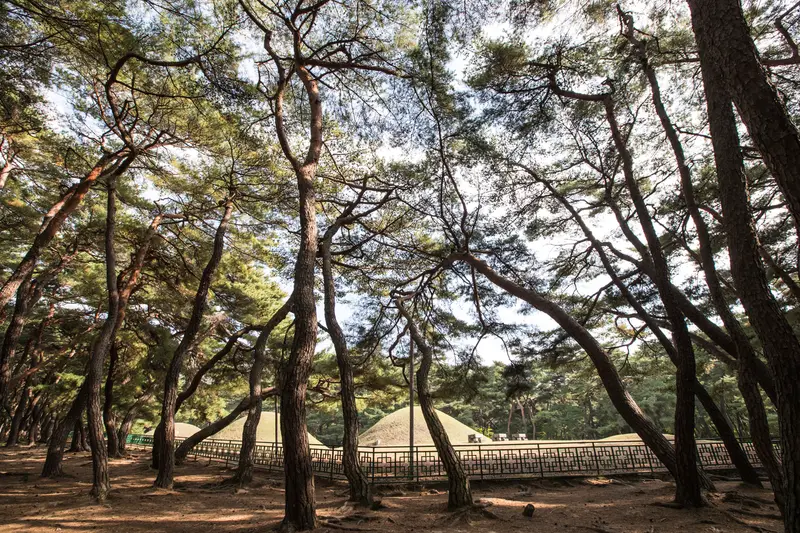
Three royal tombs at the west foot of Namsan, said to be those of the Silla kings Adalla, Sindeok and Gyeongmyeong of the Park clan, though there is no firm record. Inside the middle tomb are traces of a painted screen in 12 panels. The tombs stand in a forest of crooked pines that is a favorite of photographers, with azaleas between the trees in spring. The Samneung trail starts here.
- Hours
- Open at all times
- Admission
- Free
Foreigner access
- Korean name
- 경주 배동 삼릉
- Booking
- No booking; free
- English
- Signs: unconfirmed
Rock-carved seated Buddha, Samneung Valley
A seated Buddha 6 m tall carved on a rock face, the largest seated Buddha on Namsan, thought to date from late Unified Silla. The rock leans back, so the Buddha seems to look out at the distant sky. About 5 minutes past Baduk Rock toward Geumobong on the Samneung trail. There are no toilets.
- Admission
- Free; within the trail entry times
Foreigner access
Google Maps for Rock-carved seated Buddha, Samneung Valley Naver Map for Rock-carved seated Buddha, Samneung Valley- Korean name
- 삼릉계곡 마애석가여래좌상
Foreigner access details not yet confirmed
Yongjangsa Temple Site: three-story pagoda and carved Buddhas
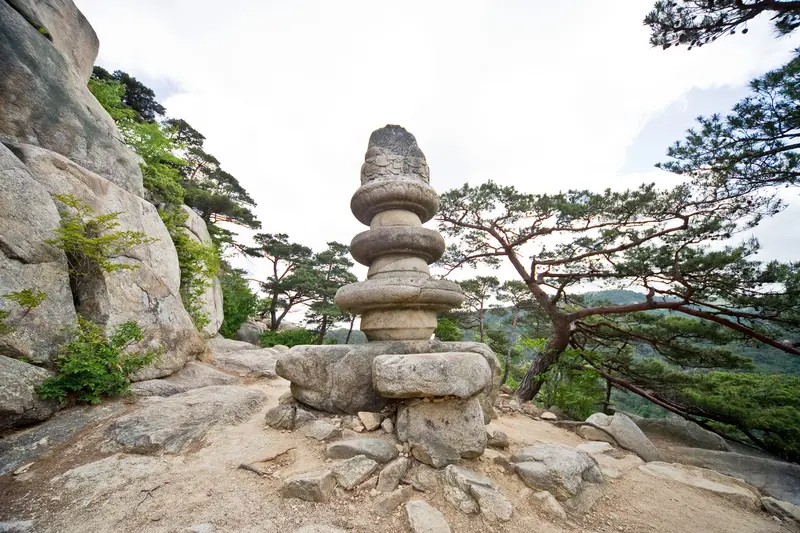
A three-story stone pagoda that uses the natural rock of the ridge as its lower base, rebuilt in 1922 and dated to late Unified Silla, at the site of Yongjangsa Temple. Nearby are a seated stone Buddha and a Buddha carved on a rock face, with an inscription read as 977 or 1022. The Joseon writer Kim Si-seup wrote his tales Geumo Sinhwa here. On the way down from Geumobong into Yongjang Valley.
- Admission
- Free; within the trail entry times
Foreigner access
Google Maps for Yongjangsa Temple Site: three-story pagoda and carved Buddhas Naver Map for Yongjangsa Temple Site: three-story pagoda and carved Buddhas- Korean name
- 용장사곡 삼층석탑
Foreigner access details not yet confirmed
Chilburam rock-carved Buddhas
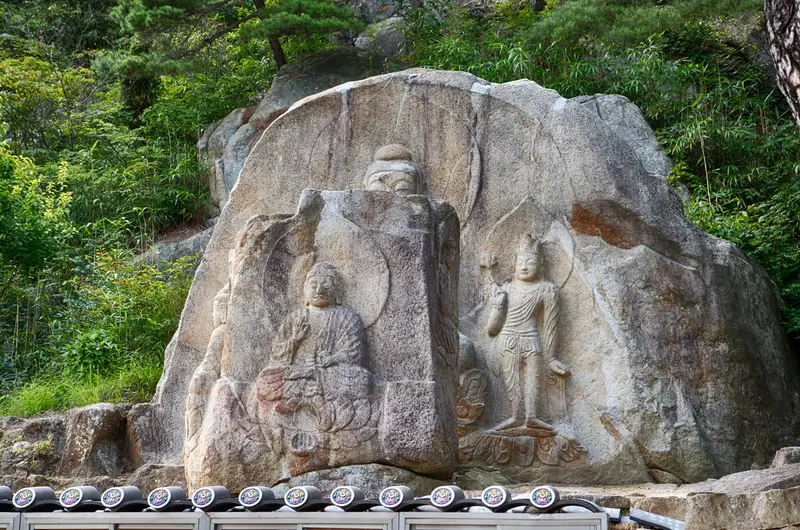
Seven Buddhas on the east side of Namsan: a triad carved on a rock face and four more on the sides of a stone pillar in front of it. It is thought to have been a cave temple with a roof. The site is a National Treasure. Above it, on a cliff, is the Sinseonam carved Bodhisattva, 1.4 m tall, seated as if on clouds, from the late 8th century.
- Admission
- Free; within the trail entry times
Foreigner access
- Korean name
- 경주 남산 칠불암 마애불상군
Foreigner access details not yet confirmed
Bulgok rock-carved seated Buddha
A Buddha seated in a niche about 1 m deep cut into a boulder, the oldest of the Silla stone Buddhas on Namsan (7th century). Gyeongju people call it the Grandmother Buddha in the niche, and the morning sun shines into the niche. On the East Namsan walk from Woljeonggyo. No set hours; free.
- Admission
- Free
Foreigner access
- Korean name
- 남산 불곡 마애여래좌상
Foreigner access details not yet confirmed
Tapgok rock-carved Buddhas (Buddha Rock)
A rock 9 m high and about 40 m around, carved on all four sides with Buddhas, Bodhisattvas, monks, flying celestials and pagodas, behind Okryongam hermitage. The next stop after the Bulgok Buddha on the East Namsan walk.
- Admission
- Free
Foreigner access
Google Maps for Tapgok rock-carved Buddhas (Buddha Rock) Naver Map for Tapgok rock-carved Buddhas (Buddha Rock)- Korean name
- 남산 탑곡 마애불상군
Foreigner access details not yet confirmed
Baedong stone standing Buddha triad
Three standing stone Buddhas with childlike faces, gathered and set up together in 1923 after being found scattered. They mark the start of the Sambulsa course, near the Sambulsa, Mangwolsa bus stop.
- Admission
- Free
Foreigner access
Google Maps for Baedong stone standing Buddha triad Naver Map for Baedong stone standing Buddha triad- Korean name
- 경주 배동 석조여래삼존입상
Foreigner access details not yet confirmed
Tongiljeon and Seochulji
Tongiljeon (Hall of Unification) is a shrine built in 1977 with portraits of King Muyeol, King Munmu and General Kim Yu-sin, set in a wide lawn; it is the usual start for Chilburam. Next to it, Seochulji is a pond with a pavilion (Iyodang) and crape myrtles, linked to a legend of King Soji. One recent visitor describes an avenue of ginkgo trees of about 2 km in front of Tongiljeon in late October and early November.
- Tongiljeon hours
- Closed on Mondays. The Korea Tourism Organization lists 9:00 to 18:00 with last entry at 17:00; the city tourism site gives 9:00 to 17:00. Arrive before 17:00
- Admission
- Free
Foreigner access
- Korean name
- 통일전
- Booking
- No booking; free
- English
- Signs: unconfirmed · Staff: unconfirmed
Samneung Gohyang Son-kalguksu
A noodle restaurant in a hanok-style building by Samneung, serving hand-cut wheat noodles (kalguksu), grain noodles, boiled beef head meat, pancakes and acorn jelly. It has been featured on KBS and SBS programs, according to the Korea Tourism Organization. Open every day from 8:30. At 2 Samneung 3-gil.
Featured on KBS 2TV Saengsaeng Jeongbo (YouTube)
- Hours
- 8:30 to 20:30, every day
- Prices
- Hand-cut kalguksu 9,000 won (large 10,000 won), grain kalguksu 6,000 won as listed, boiled beef 13,000 won, seafood pancake 12,000 won, acorn jelly 10,000 won
Foreigner access
- Korean name
- 삼릉고향손칼국수
Foreigner access details not yet confirmed
- English
- The menu board in the business's photos on Naver is in Korean.
Hotels
Experiences
Sources
- Korea National Park Service: trail entry times by national park (Korean)(accessed 2026-11-14)
- Korea National Park Service: Gyeongju National Park courses (Samneung, Sambulsa and Yongjang Valley courses; distances, times, buses) (Korean)(accessed 2026-11-14)
- Korea National Park Service: Gyeongju National Park autumn fire prevention closures, November 15 to December 15, 2026 (Korean)(accessed 2026-11-14)
- Korea National Park Service: trail closure information (Korean)(accessed 2026-11-14)
- Korea National Park Service: Gyeongju National Park overview (Korean)(accessed 2026-11-14)
- Korea National Park Service: help in English(accessed 2026-11-14)
- Korea Tourism Organization (TourAPI): Gyeongju Namsan, Baedong Samneung, Samneung forest, Samneung Valley seated Buddha, Yongjangsa pagoda and Buddhas, Chilburam, Sinseonam, Bulgok, Tapgok, Baedong standing Buddhas, Poseokjeong, Tongiljeon, Seochulji and Samneung Gohyang Son-kalguksu entries (Korean; search by name)(accessed 2026-11-14)
- Gyeongju City tourism site: East Namsan course (walking distances, Bulgok, Tongiljeon and Seochulji hours) (Korean)(accessed 2026-11-14)
- Gyeongju City tourism site: touring Gyeongju by bus 10 (Korean)(accessed 2026-11-14)
- Gyeongju City Transportation Information Center: bus fares (Korean)(accessed 2026-11-14)
- Saecheonnyeon Miso (Gyeongju city bus operator): route search for Samneung (Korean)(accessed 2026-11-14)
- Saecheonnyeon Miso: bus 500 stops (Korean)(accessed 2026-11-14)
- Saecheonnyeon Miso: bus 500 timetable, in force from January 14, 2026 (Korean)(accessed 2026-11-14)
- Saecheonnyeon Miso: route search for Tongiljeon (buses 10 and 11) (Korean)(accessed 2026-11-14)
- Naver Place: Samneung Gohyang Son-kalguksu (hours, menu)(accessed 2026-11-14)
- Naver Place: Gyori Gimbap main shop (hours, menu)(accessed 2026-11-14)
- Naver blog: Samneung to Geumobong and down Yongjang Valley, 5.5 km (2026-11-11)(accessed 2026-11-14)
- Naver blog: Samneung, Geumobong and Yongjang Valley, bus back to the parking lot (2026-10-28)(accessed 2026-11-14)
- Naver blog: Samneung to Seoljamgyo with times (2026-11-08)(accessed 2026-11-14)
- Naver blog: round trip from the Seonamsan parking lot, 5.6 km (2026-11-12)(accessed 2026-11-14)
- Naver blog: two hours up toward Geumobong (2026-11-13)(accessed 2026-11-14)
- Naver blog: Namsan hike, what to bring (2026-11-11)(accessed 2026-11-14)
- Naver blog: Tongiljeon parking lot to Chilburam (2026-11-01)(accessed 2026-11-14)
- Naver blog: Chilburam and Sinseonam round trip (2026-11-09)(accessed 2026-11-14)
- Naver blog: following the signs back to Samneung from Geumobong (2026-11-12)(accessed 2026-11-14)
- Naver blog: bus from town to Namsan, about 15 minutes (2026-11-13)(accessed 2026-11-14)
- Naver blog: Seonamsan public parking lot fee (2026-11-13)(accessed 2026-11-14)
- Naver blog: Tongiljeon parking and hours (2026-11-04)(accessed 2026-11-14)
- Naver blog: the ginkgo avenue at Tongiljeon (2026-11-02)(accessed 2026-11-14)
