Seongbuk-dong
A quiet valley below the city wall with Gilsangsa Temple, the Kansong Art Museum and the houses of writers
Intro
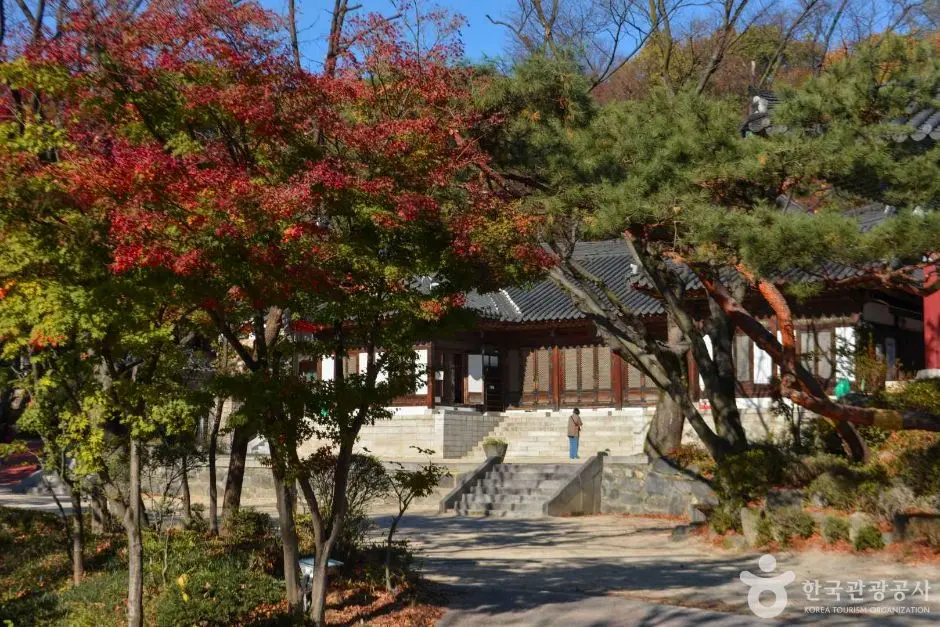
Seongbuk-dong is a quiet valley on the north side of the old Seoul City Wall, climbing from Hansung University Station up Seongbuk-ro toward the slopes of Bugaksan. For a small area it holds a lot of Korea’s 20th-century history: Korea’s first private art museum, a temple that was once a yojeong (hostess restaurant), the houses of a museum director, a novelist and a poet of the independence movement, and a hillside village built against the wall. It is a neighborhood for walking slowly.
For lunch, two pork bulbaek restaurants (grilled pork with rice) stand next to each other at the Ssangdari bus stop; one of them began in 1975 as a gisa sikdang, a restaurant for taxi drivers.
Plan by season
Two of the main sights keep limited dates, so check before you go:
- Kansong Art Museum: open only during its exhibitions, in its regular schedule twice a year, in spring (late April to early May) and autumn (late September to early October). The current exhibition runs from October 7 to December 6, 2026. Book a time slot in advance.
- Choi Sunu House: open April to November only, Tuesday to Saturday.
From December to March both are closed, and a visit is Gilsangsa, Simujang, Bukjeong Village, the city wall and lunch.
Half a day in Seongbuk-dong
- Morning: from Exit 6 of Hansung University Station, take bus 1111, 2112 or Seongbuk 03 to Seongbuk Elementary School for the Kansong Art Museum (booked slot, during exhibitions), or walk about 20 minutes.
- Lunch: pork bulbaek at Seongbukdong Dwaejigalbi or Ssangdari Dwaeji Bulbaek, close to the museum.
- Tea: ssanghwacha or sweet pumpkin bingsu in Yi Tae-jun’s house at Suyeonsanbang (closed Mondays and Tuesdays).
- Afternoon: Gilsangsa Temple at the top of the valley (village bus Seongbuk 02 to the Gilsangsa stop, or walk from Ssangdari, about 10 minutes along the main road).
- Late afternoon: Simujang and Bukjeong Village, then down along the city wall to Hyehwamun and the station. Pick up bread at Napoleon Bakery by Exit 5, or have dumplings at Hadan or noodles at Guksijip.
Sights
Gilsangsa Temple was Daewongak, a high-end yojeong restaurant, until its owner gave it to the monk Beopjeong after reading his book Non-possession; it became a temple in 1997. Entry is free, and the temple is open every day. Opening times differ by source: the Korea Tourism Organization lists 9:00 to 18:00, while a recent visitor gives 6:30 to 19:00 from October to March and until 20:00 from April to September. Recent visitors report the posted rules: no photos of the Buddha statues inside the halls or of monks, no pets, bicycles or eating, and silence and no photos in the House of Silence, a meditation room open to anyone. The grounds are known for autumn leaves, and recent visitors describe red spider lilies on the slopes for about ten days from mid-September. The temple also runs a templestay; see its English website.
Kansong Art Museum (Bohwagak, 1938) holds the collection that Jeon Hyeong-pil bought during Japanese rule to keep Korean art in Korea, including the Hunminjeongeum manuscript. Tickets (adults 5,000 won) are sold for 60-minute slots on NOL Ticket, whose sales page is in Korean.
Choi Sunu House is the 1930s hanok of Choi Sunu, a director of the National Museum of Korea, around a small courtyard. Entry is free, and the National Trust offers an online docent in English.
Simujang is the north-facing house of the poet and independence activist Han Yong-un, up a lane in Bukjeong Village, a hillside village under the wall where people still live. The Seongbuk-gu Museum of Art at the Ssangdari stop is free (10:00 to 18:00, closed Mondays and between exhibitions).
The city wall
Seongbuk-dong sits on the outside of the City Wall’s Baegak section. From Hyehwamun, by Exit 5 of the station, the official route follows the wall uphill to Waryong Park and the Malbawi information center, and on to Sukjeongmun and Bugaksan; the full section to Changuimun is 4.7 km and takes about 3 hours. For the Bugaksan part and its hours, see hiking in Seoul. Heading the other way from Hyehwamun, the Naksan section runs 3.2 km to Gwanghuimun Gate in Sindang-dong, Seoul’s tteokbokki neighborhood.
Food and drink
- Pork bulbaek: Seongbukdong Dwaejigalbi (since 1975, sets from 13,000 won, one-person sets; closed Tuesdays) and Ssangdari Dwaeji Bulbaek (13,000 won; closed Mondays), next to each other near the Kansong Art Museum.
- Noodles: Guksijip’s beef bone broth kalguksu, 11,000 won, by Exit 5 (closed Mondays).
- North Korean dumplings: Hadan’s dumpling soup and cold buckwheat noodles, 12,000 won each (closed Tuesdays).
- Tea: Suyeonsanbang, a traditional teahouse in a writer’s hanok, ssanghwacha 13,500 won.
- Bakery: Napoleon Bakery, red bean buns from 2,900 won, by Exit 5. It is one of the old bakeries on our Seoul bakery tour.
Seongbuk-dong is not on our food map or cafe map.
When to go
April to November, Wednesday to Saturday, is when everything is open, and during a Kansong exhibition the neighborhood has its best day. Autumn is the season for leaves at Gilsangsa. Mondays are the worst day: the Kansong Art Museum, Choi Sunu House, Suyeonsanbang, Ssangdari Dwaeji Bulbaek and Guksijip are closed. On Tuesdays, Seongbukdong Dwaejigalbi, Hadan and Suyeonsanbang are closed, and Choi Sunu House is closed on Sundays too.
Getting there
Hansung University Station (Line 4) is the gateway. Exit 5 is for Hyehwamun, Napoleon Bakery, Guksijip and Hadan, and the walk up to Choi Sunu House (10 to 15 minutes). The rest of the valley is uphill, so take a bus from the Samseongyo stop outside Exit 6: village bus Seongbuk 02 to Gilsangsa (the 9th stop), and buses Seongbuk 03, 1111, 1112 and 2112 to Seongbuk Elementary School (Kansong Art Museum) or the Seongbuk-gu Museum of Art, Ssangdari stop (the 5th stop). From the airport, see How to get from Incheon Airport to Seoul.
Practical information
- Where to stay: Gilsangsa runs a templestay (see its English website). For hotels, look in central Seoul.
- Booking the Kansong Art Museum: the museum’s website links to NOL Ticket, whose sales page is in Korean; whether foreign cards and phone numbers work there is unconfirmed. A recent visitor reports buying a ticket on site.
- Nearby: Bukchon and Samcheong-dong, about 4 km from Gilsangsa by road through the Samcheong Tunnel, and the city wall to Sindang-dong. Back to the Seoul guide.
Get There
Hansung University StationLine 4
- Korean
- 한성대입구역
- Exit
- Exit 6
- Walk
- unconfirmed
Exit 6 is for the buses at the Samseongyo stop. Village bus Seongbuk 02 goes to Gilsangsa (9th stop). Buses Seongbuk 03, 1111, 1112 and 2112 go to Seongbuk Elementary School for the Kansong Art Museum, and to the Seongbuk-gu Museum of Art, Ssangdari stop (5th stop) for the pork bulbaek restaurants. Exit 5 is for Hyehwamun Gate (3 minutes), Napoleon Bakery, Guksijip and Hadan, and Choi Sunu House (10 to 15 minutes on foot).
Hours & Fees
- Exhibition periods
- The Kansong Art Museum opens only during its exhibitions, twice a year in its regular schedule. The current exhibition runs from October 7 to December 6, 2026
- April to November only
- Choi Sunu House is open April to November and closed from December to March
- Mondays
- The Kansong Art Museum, Choi Sunu House, Suyeonsanbang, Ssangdari Dwaeji Bulbaek and Guksijip are closed
- Tuesdays
- Seongbukdong Dwaejigalbi, Hadan and Suyeonsanbang are closed
Places in Seongbuk-dong
Gilsangsa Temple
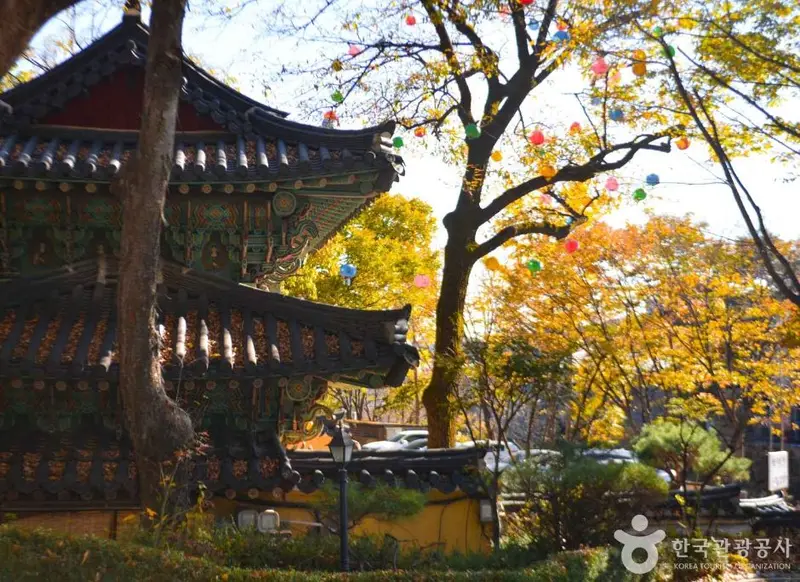
A Buddhist temple in a wooded valley at the top of Seongbuk-dong that was once Daewongak, a high-end yojeong (a traditional restaurant where hostesses entertained guests). Its owner, Kim Young-han (1916 to 1999), read the monk Beopjeong's book Musoyu (Non-possession) and asked him to accept the property; after ten years he agreed, and the temple opened on December 14, 1997. Most buildings are from the Daewongak days. Kim was given the name Jaya by the poet Baek Seok, and her ashes were scattered on the hill behind the temple on a day of first snow. Jinyeonggak holds Beopjeong's portrait, manuscripts and belongings, including the chair he sat in; his ashes lie under the wall to its right. The statue of Avalokitesvara (2000) is by Choi Jong-tae, a Catholic sculptor, as a sign of reconciliation between religions. Free, open every day.
- Hours
- Open every day. The Korea Tourism Organization lists 9:00 to 18:00; a recent visitor gives 6:30 to 19:00 from October to March and until 20:00 from April to September
- Admission
- Free
- Rules
- No photos of the Buddha statues inside the halls and no photos of monks; no pets, bicycles or eating in the grounds. In the House of Silence, a meditation room open to anyone, no talking or photos (posted rules reported by recent visitors)
Foreigner access
- Korean name
- 길상사
Foreigner access details not yet confirmed
- English
- The temple's website has English, Chinese and Japanese pages, including a map and its templestay.
Kansong Art Museum
Korea's first modern private art museum, opened in 1938 as Bohwagak by Jeon Hyeong-pil (pen name Kansong) in a building designed by the architect Park Kil-ryong. During Japanese rule Kansong spent his own fortune buying Korean cultural treasures to keep them in Korea, among them the Hunminjeongeum manuscript (acquired in 1940); the museum's own story says he paid 20,000 won, the price of 20 tiled houses, for a celadon maebyeong vase with crane and cloud inlay, now National Treasure No. 68. The museum opens only during its exhibitions, normally twice a year. The current one, Sangseo: Reading the Collection, marks 120 years since Kansong's birth and reads the collection through the writing on the paulownia boxes that held the works, with pieces by Jang Seung-eop, Kim Hong-do and Kim Jeong-hui; there is an audio guide. It runs until December 6, 2026.
- Hours
- Open only during exhibitions. Current exhibition October 7 to December 6, 2026, 10:00 to 18:00, closed Mondays. The regular exhibitions are in spring (late April to early May) and autumn (late September to early October)
- Admission
- Adults (19 to 64) 5,000 won; ages 7 to 18 and 65 and over 3,000 won
- Booking
- Visits are booked in advance in 60-minute time slots through NOL Ticket, linked from the museum's website. Online sales for the current exhibition close at 17:00 on December 5. A recent visitor reports that tickets were also sold on site
- Rules
- No flash, tripods or selfie sticks, no commercial photography, no food or pets
Foreigner access
- Korean name
- 간송미술관
- Booking
- NOL Ticket, booked in advance (Korean-language sales page)
Korean phone number needed: unconfirmed - English
- Signs: unconfirmed · Staff: unconfirmed
The museum's website has English pages on its history, admission and how to get there.
Choi Sunu House
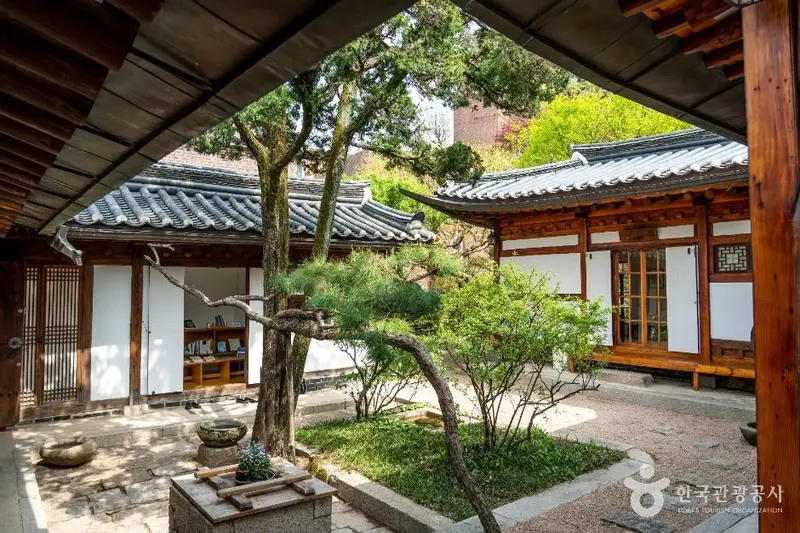
A 1930s hanok around a small square courtyard with a pine tree, home from 1976 to 1984 of Choi Sunu (1916 to 1984), the fourth director of the National Museum of Korea and author of the essay collection Leaning on the Entasis Pillars of Muryangsujeon. It was bought with citizens' donations and opened in 2004 as Citizens' Cultural Heritage No. 1. Free; open only from April to November.
- Hours
- April to November: 10:00 to 17:00, Tuesday to Saturday (last entry 16:30). Closed Sundays, Mondays, Chuseok day and Workers' Day (May 1). Closed December to March
- Admission
- Free
Foreigner access
- Korean name
- 최순우옛집
- Booking
- No booking for individuals; groups of 15 or more book ahead
Korean phone number needed: No - English
- Signs: unconfirmed · Staff: unconfirmed
The National Trust publishes English visitor information and an online docent in English, Japanese, Chinese, Thai, Spanish and other languages.
Simujang
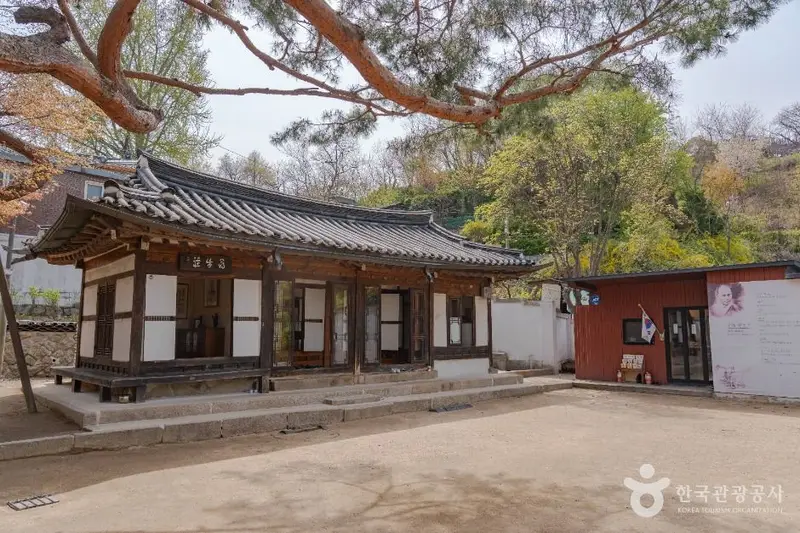
The small house where Han Yong-un (Manhae), poet and one of the 33 national representatives of the March 1st Movement, lived from 1933 until 1944. It is a five-bay tiled house that faces north, and the signboard of his study, reading Simujang, was written by the calligrapher Oh Se-chang. It stands up a hillside lane in Bukjeong Village.
- Hours
- 9:00 to 18:00, daily
- Admission
- unconfirmed
Foreigner access
- Korean name
- 만해 한용운 심우장
Foreigner access details not yet confirmed
Bukjeong Village
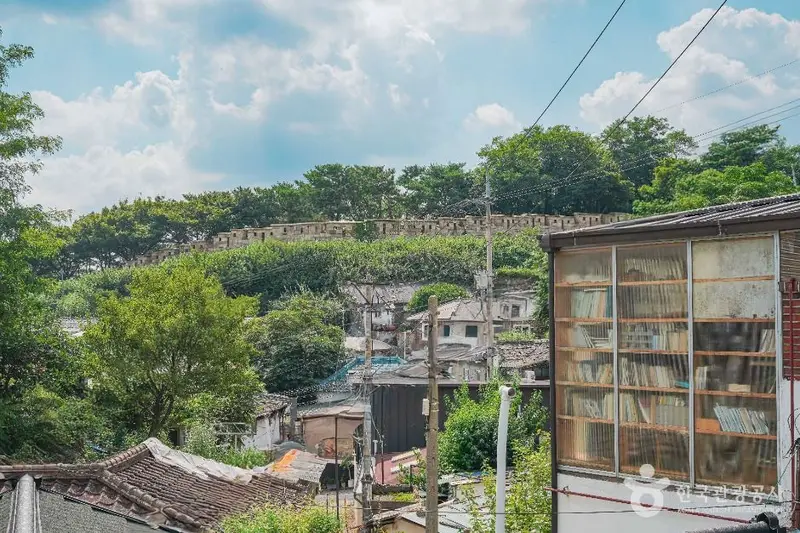
A hillside village built against the Seoul City Wall. Because the wall limited development, its narrow lanes and stairs have survived, and it is listed as Seoul Future Heritage. People live here: the Korea Tourism Organization asks visitors to come between 9:00 and 18:00 and to keep quiet.
- Visiting hours
- 9:00 to 18:00 (residential village)
- Admission
- Free
Foreigner access
- Korean name
- 북정마을
Foreigner access details not yet confirmed
Hyehwamun Gate and the city wall
Hyehwamun, 3 minutes from Exit 5 of Hansung University Station, is the east end of the City Wall's Baegak section (Changuimun to Hyehwamun, 4.7 km, about 3 hours, rated five stars for difficulty). Walking it from this end, the official route climbs along the wall past the Hyehwa-dong exhibition center (the former Seoul mayor's residence) and Gyeongsin and Seoul Science high schools to Waryong Park and the Malbawi information center, then on to Sukjeongmun Gate and Bugaksan. In the other direction, the Naksan section runs 3.2 km (about 1 hour 30 minutes) from Hyehwamun to Gwanghuimun Gate in Sindang-dong.
- Hours
- The wall paths are open at all times. For the hours of the Bugaksan section past the Malbawi information center, see the hiking page
- Admission
- Free
Foreigner access
- Korean name
- 혜화문
Foreigner access details not yet confirmed
- English
- The Seoul City Wall website has an English version.
Suyeonsanbang
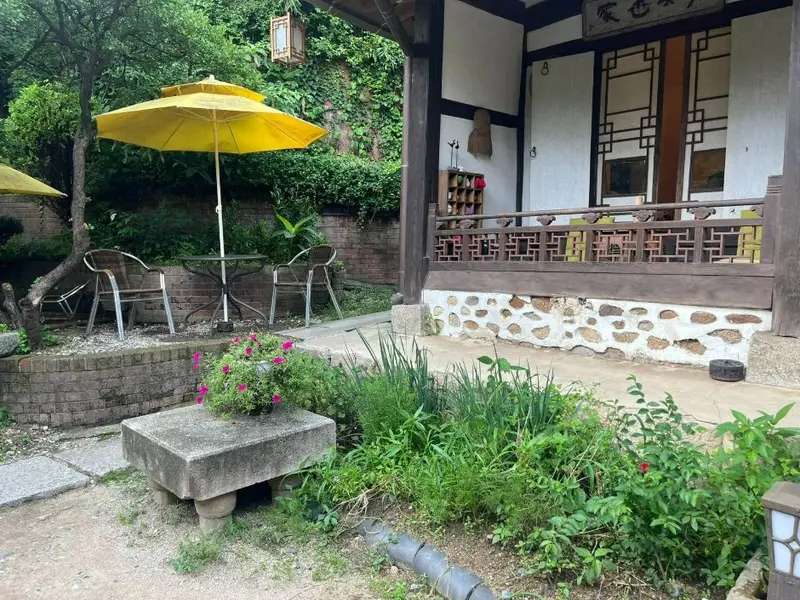
A traditional teahouse in the house where the novelist Yi Tae-jun (pen name Sangheo) lived and wrote, a Seoul folk heritage site. His granddaughter has run it as a teahouse since 1998. From the seats outside the sarangbang (the men's quarters) you look over the wall to the slopes of Bugaksan. It is small, about six tables in the main house plus seats in the yard, so you may have to wait. The business directs visitors to the Yi Tae-jun House stop on buses 1111, 1112 and 2112.
- Hours
- 11:30 to 17:50, Wednesday to Friday (last order 17:00); 11:30 to 19:50 on Saturdays and Sundays (last order 19:00). Closed Mondays and Tuesdays
- Prices
- Ssanghwacha (herbal tea) 13,500 won, jujube ssanghwacha 15,500 won, sweet pumpkin bingsu (shaved ice) 16,000 won, red bean porridge 15,500 won
Foreigner access
- Korean name
- 수연산방
Foreigner access details not yet confirmed
Seongbukdong Dwaejigalbi
A gisa sikdang (a restaurant for taxi drivers) open since 1975, near the Kansong Art Museum. It grills pork marinated the day before and serves it as a set meal with rice (baekban), with a self-service bar of acorn jelly, chive kimchi and lettuce for wraps. There are one-person sets.
- Hours
- 9:00 to 20:30, Wednesday to Monday. Closed on Tuesdays
- Prices
- Pork bulgogi set 13,000 won, pork galbi set 14,000 won, one-person bulgogi and naengmyeon set 19,000 won, set for two (two bulgogi and snail doenjang stew) 32,000 won, naengmyeon 10,000 won
Foreigner access
- Korean name
- 성북동돼지갈비 본점
Foreigner access details not yet confirmed
Ssangdari Dwaeji Bulbaek

A pork bulbaek (grilled spicy pork with rice) restaurant that says it has served the dish since 1970, in front of the Ssangdari bus stop by the Seongbuk-gu Museum of Art and a few steps from Seongbukdong Dwaejigalbi. There are branches elsewhere in Seoul; this is the original.
- Hours
- 9:30 to 20:50, Tuesday to Sunday (last order 20:20). Closed on Mondays
- Prices
- Dwaeji bulbaek 13,000 won, large 18,000 won, bulssam naengmyeon (cold noodles with grilled pork) 18,000 won, budae jjigae 13,000 won
Foreigner access
- Korean name
- 쌍다리돼지불백 본점
Foreigner access details not yet confirmed
Guksijip
An old noodle restaurant 3 minutes from Exit 5 of Hansung University Station that serves one main dish: guksi, kalguksu (hand-cut noodles) in beef bone broth with a seasoning sauce, eaten in floor-seated, hanok-style rooms. Pancakes, octopus and boiled pork (suyuk) go with it.
- Hours
- 11:30 to 21:00, Tuesday to Sunday, break 14:30 to 17:00. Closed on Mondays
- Prices
- Guksi 11,000 won, large 13,000 won. Small plates: pancakes 18,000 won, octopus 20,000 won, suyuk 22,000 won
Foreigner access
- Korean name
- 국시집
Foreigner access details not yet confirmed
Hadan
A North Korean-style restaurant whose owner comes from Hadan in South Pyongan Province: clear dumpling soup, dumpling hot pot, cold buckwheat noodles in dongchimi (radish water kimchi) broth and mung bean pancakes. You take your shoes off at the door. It is in a lane about 100 m from Samseongyo toward Seongbuk-dong, near Hansung University Station.
- Hours
- 12:00 to 20:00, Wednesday to Monday, break 14:00 to 17:00, last order 19:00. Closed on Tuesdays
- Prices
- Dumpling soup 12,000 won, cold buckwheat kalguksu 12,000 won, dumpling hot pot (medium) 30,000 won, mung bean pancake 10,000 won, steamed dumplings 10,000 won
Foreigner access
- Korean name
- 하단
Foreigner access details not yet confirmed
Napoleon Bakery
An old neighborhood bakery a minute from Exit 5 of Hansung University Station that makes everything it sells in-house; buy red bean buns or salad bread on the way back to the subway.
- Hours
- 9:00 to 20:30, daily
- Prices
- Red bean bun (danpatppang) 2,900 won, whole red bean bun 3,300 won, cream bun 3,300 won, salad bread 6,000 won, croissant 4,600 won
Foreigner access
- Korean name
- 나폴레옹과자점 본점
Foreigner access details not yet confirmed
Hotels
Experiences
Sources
- Kansong Art Museum: visitor information (exhibition periods, advance booking, photography rules; Korean)(accessed 2026-11-12)
- Kansong Art Museum: Sangseo, Reading the Collection exhibition page (Korean)(accessed 2026-11-12)
- Kansong Art Museum: About the museum (English)(accessed 2026-11-12)
- Kansong Art Museum: Patron greetings (English)(accessed 2026-11-12)
- Kansong Art Museum: How to get here (English)(accessed 2026-11-12)
- NOL Ticket: Sangseo, Reading the Collection (hours, admission, time slots, end of sales; Korean)(accessed 2026-11-12)
- Gilsangsa: Gilsanghwa, the temple's founding donor (Korean)(accessed 2026-11-12)
- Gilsangsa: Around the temple (Korean)(accessed 2026-11-12)
- Gilsangsa: Directions (Korean)(accessed 2026-11-12)
- Gilsangsa: English website(accessed 2026-11-12)
- National Trust Cultural Heritage Fund: Visitors information of Choi Sunu House(accessed 2026-11-12)
- National Trust Cultural Heritage Fund: Choi Sunu House winter closure (Japanese)(accessed 2026-11-12)
- Seoul City Wall: Baegak section, Changuimun to Hyehwamun(accessed 2026-11-12)
- Seoul City Wall: Naksan section, Hyehwamun to Gwanghuimun(accessed 2026-11-12)
- Korea Tourism Organization (TourAPI): Gilsangsa, Choi Sunu House, Simujang, Bukjeong Village, Suyeonsanbang, Seongbukdong Dwaejigalbi, Guksijip and Hadan entries (Korean; search by name)(accessed 2026-11-12)
- Naver Place business listings (hours, menus, prices, station exits) for each place(accessed 2026-11-12)
- Gilsangsa opening hours by season and visitor rules (Naver blog, 2026-11-03)(accessed 2026-11-12)
- Gilsangsa notice on photographing Buddha statues (Naver blog, 2026-10-06)(accessed 2026-11-12)
- Gilsangsa House of Silence rules (Naver blog, 2026-10-24)(accessed 2026-11-12)
- Kansong Art Museum tickets sold in advance and on site (Naver blog, 2026-11-10)(accessed 2026-11-12)
- Gilsangsa red spider lilies in September (Naver blog, 2026-11-01)(accessed 2026-11-12)