Pyeongchang
The 2018 Winter Olympics county, 1 hr 20 min from Seoul by KTX-Eum: ski resorts, the ski jump, sheep and a fir forest
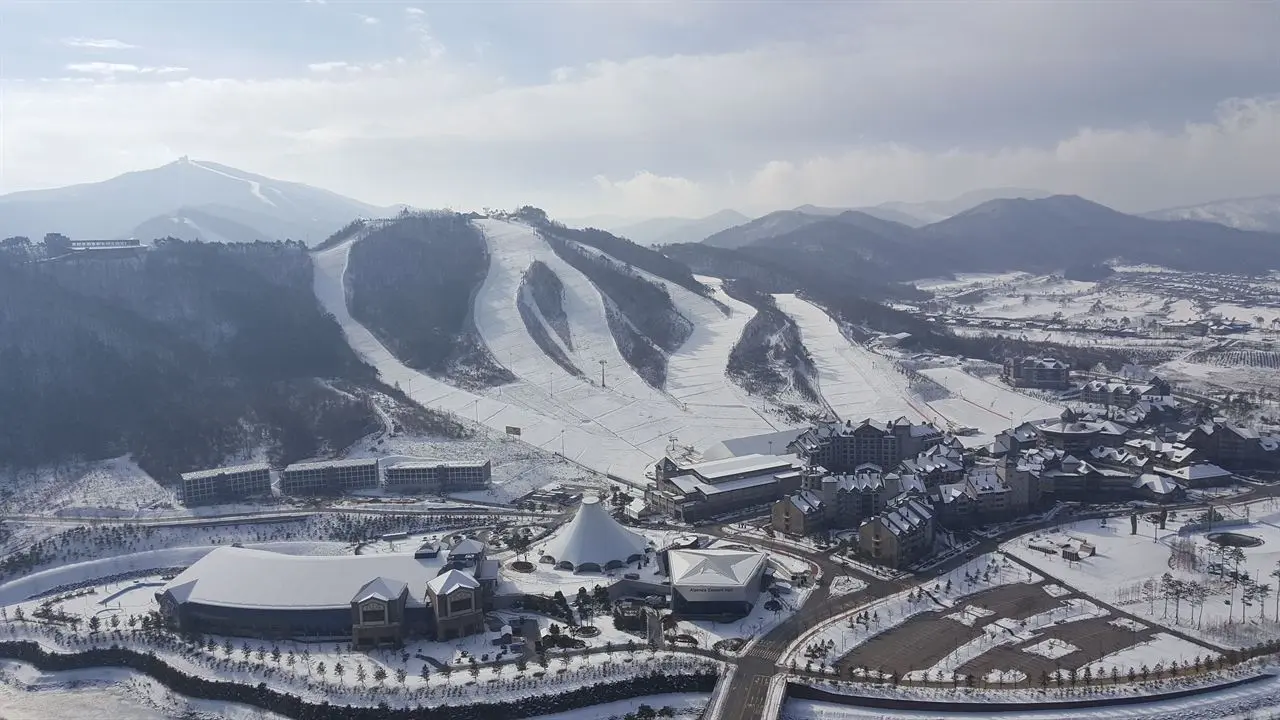
Pyeongchang is a county in the mountains of Gangwon, in South Korea, that held the snow events of the 2018 Winter Olympics. It is about 1 hour 20 minutes from Cheongnyangni in Seoul by KTX-Eum. This page helps you decide when to come, how long to stay and where, then sends you to our pages for the details.
Intro
Pyeongchang is a county in the mountains of Gangwon, about 1 hour 20 minutes from Seoul by KTX-Eum, and the host of the snow events of the 2018 Winter Olympics. Visitors come for four things:
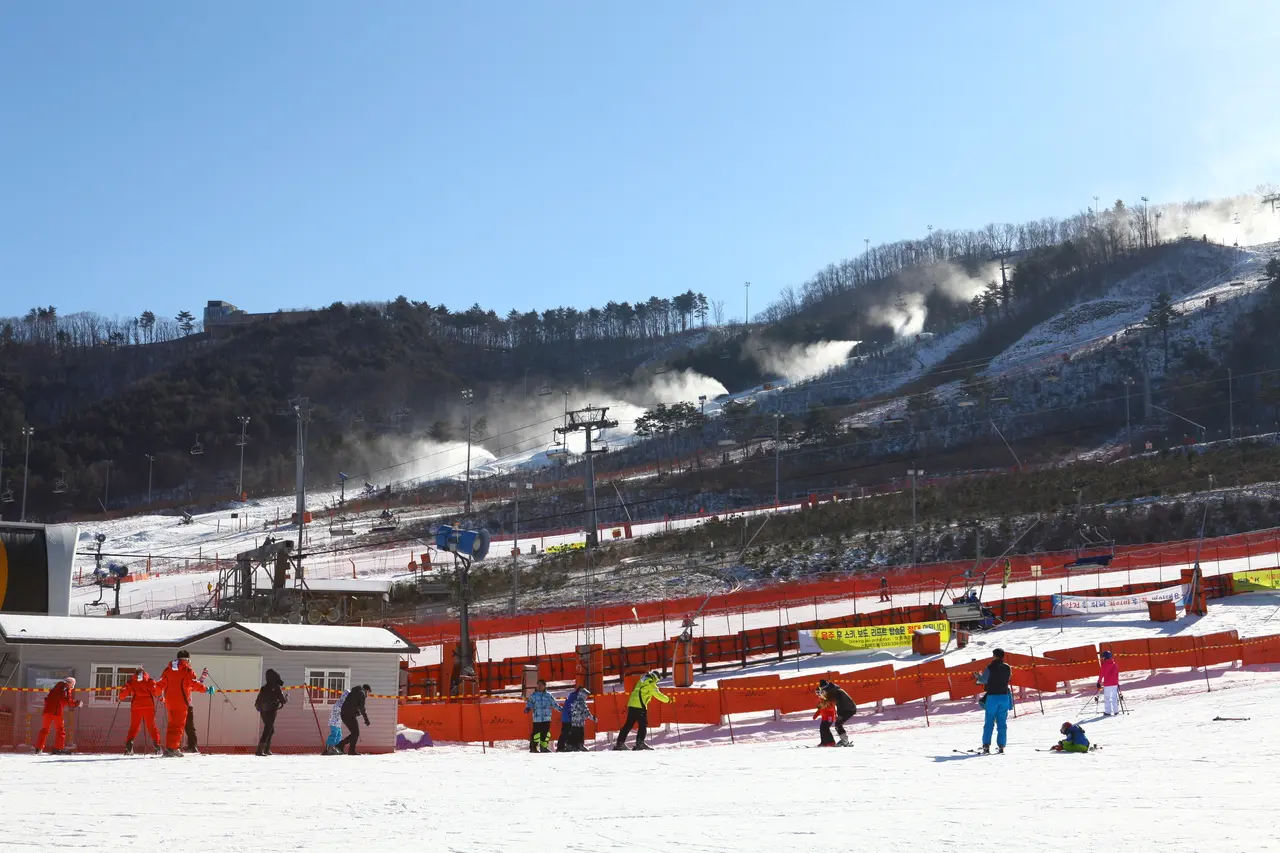
- Skiing near Seoul. Mona Yongpyong and Alpensia, from late November to early March, with ski lessons in English at Mona Yongpyong.
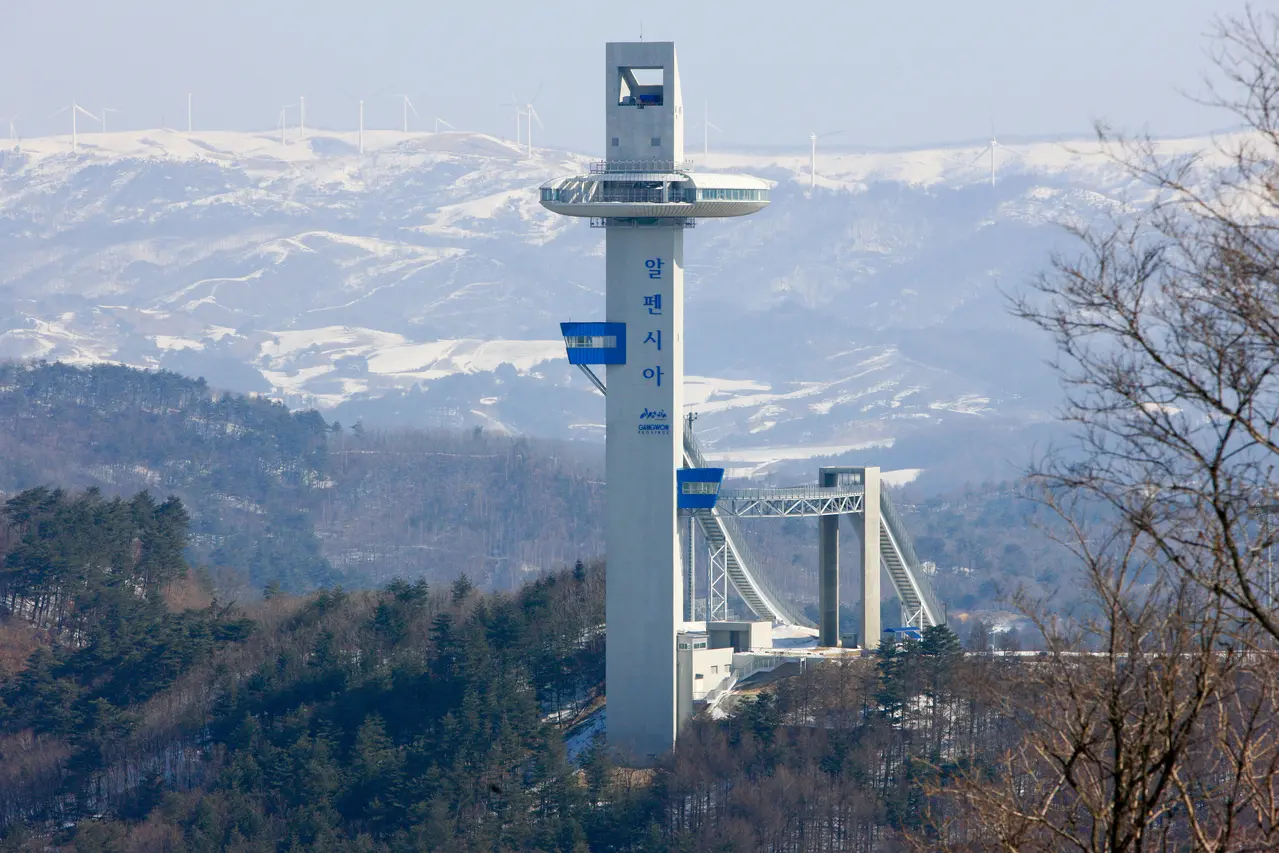
- The Olympics. The ski jump, which you can ride up to by monorail, and the Olympic Memorial Hall on the site of the ceremony stadium.
- Mountains in any season. The Balwangsan cable car to 1,458 m, the Daegwallyeong sheep farm, and the fir forest at Woljeongsa Temple.
- Mountain food. Hwangtae (dried pollack), osam bulgogi (squid and pork belly), hanu beef, buckwheat noodles and wild greens.
Areas
Daegwallyeong (Hoenggye) and Jinbu
- Skiing, Olympic Sites and Woljeongsa: the two ski resorts with lift, rental and English lesson prices, the ski jump, the cable car, the sheep farm and Woljeongsa, with restaurants in both areas. The resorts and the sheep farm are around Hoenggye in Daegwallyeong; Woljeongsa is past Jinbu town.
Bongpyeong
Bongpyeong is buckwheat country. The Hyoseok Culture Festival, for the buckwheat flowers, ran from September 4 to 13 in 2026, and Bongpyeong Memil Migayeon serves 100% buckwheat noodles (12,000 won, 10:00 to 17:00, closed Wednesdays). Phoenix Snow Park, another ski resort, is reached from Pyeongchang Station rather than Jinbu, according to a recent visitor. Bongpyeong is not covered on these pages yet.
How many days
- Day trip: possible. The first KTX-Eum from Seoul Station leaves at 5:40 and reaches Jinbu at 7:26, and the last train back every day leaves Jinbu at 22:29 (Seoul Station 0:12). A day is enough for one area: the sheep farm and the ski jump in Daegwallyeong, or Woljeongsa and its fir forest from Jinbu.
- Skiing: plan the transfer. The free shuttles between Jinbu Station and the resorts run only twice a day, for resort visitors who can show a booking text, ticket or membership, so on an early train you will need a taxi; and the KD ski bus from Seoul does not accept cards issued overseas.
- Two areas: add a night here or in Gangneung, 20 minutes away by train.
Where to stay
- To ski: at Mona Yongpyong or Alpensia in Daegwallyeong, which both have condos and hotels; their shuttles from Jinbu Station are for resort visitors.
- For Woljeongsa or the trout festival: Jinbu, which has the KTX station and the bus terminal for bus 226 to Woljeongsa.
- Gangneung: the coastal city 20 minutes from Jinbu by KTX-Eum, if you are combining the two; see Gangneung.
Getting there
KTX-Eum trains to Jinbu (Odaesan) Station, the station for the ski resorts and Woljeongsa, take about 1 hr 22 min from Cheongnyangni (20,300 won) or 1 hr 43 min from Seoul Station (21,900 won). Intercity buses from Dong Seoul to Jinbu and Hoenggye cost about the same and take over 2 hours. Bus tickets marked Pyeongchang (평창) go to Pyeongchang-eup, the county town far from the resorts, so buy them to Hoenggye or Jinbu. Times, last trains, resort shuttles and taxis are in How to Get from Seoul to Pyeongchang, and booking is explained in How to Take the KTX in Korea.
Combining Pyeongchang with Gangneung
Pyeongchang and Gangneung, on the coast, are on the same KTX-Eum line, so one way to see both is Seoul to Jinbu, a day of skiing or Woljeongsa, then on to Gangneung for the night and back to Seoul.
- Jinbu to Gangneung: about 18 to 22 minutes, 8,400 won; 7 trains Monday to Thursday, 9 on Fridays and 11 on Saturdays and Sundays.
- Gangneung to Jinbu: 9 trains Monday to Thursday, 13 on Fridays and 14 on Saturdays and Sundays.
- Pyeongchang Station and Gangneung: about 24 to 30 minutes, 8,400 won.
- By bus: Alpensia’s directions page lists buses from Gangneung Intercity Bus Terminal to Hoenggye every 20 to 30 minutes from 6:10 to 20:10, 40 to 50 minutes, 2,800 won, tickets at the terminal.
What to eat
- Hwangtae: pollack soup (10,000 won) or a grilled pollack set (15,000 won) at Hwangtae Deokjang in Hoenggye.
- Osam bulgogi: squid and pork belly grilled at the table, 17,000 won a portion at Napjak Sikdang.
- Hanu beef: buy it at the butcher counter at Pyeongchang Hanu Maeul and grill it for a 4,000 won table charge.
- Buckwheat: mul makguksu (10,000 won) at Bangnim Memil Makguksu, or 100% buckwheat noodles in Bongpyeong.
- Wild greens: a sanchae jeongsik (25,000 won) at Gyeongnam Sikdang below Woljeongsa.
Prices, hours and maps are in Skiing, Olympic Sites and Woljeongsa.
When to go
- Winter (late November to early March): skiing. In 2025-26 Mona Yongpyong opened on November 21 and Alpensia ran until March 2. For 2026-27, Mona Yongpyong aims to open in late November and Alpensia on November 28, depending on the weather.
- January: Pyeongchang Trout Festival on the Odaecheon stream in Jinbu. In 2026 it ran from January 9 to February 9; the 2027 dates have not been announced.
- Winter days are short. The sheep farm sells its last tickets at 16:00 from November to February, Odaesan National Park trails can be entered only from 5:00 to 15:00 from November to March (times vary by trail, and trails may close in bad weather), and the last monorail up the ski jump is at 16:55.
- May to mid-November: sheep on the pasture. In 2026 they grazed outside from May 1 to November 15. In winter they stay in the barns.
- September: Hyoseok Culture Festival in Bongpyeong (2026: September 4 to 13).
- All year: the Balwangsan cable car (9:00 to 17:00) and the Woljeongsa fir forest.
- Weather: for average temperatures and what to wear each month, see Korea Weather by Month and When to Go.
Before you go
- How to Take the KTX in Korea: booking KTX-Eum tickets on Korail’s English website with a card issued overseas.
- Paying with Foreign Cards in Korea: the KD ski bus takes only cards issued in Korea, so plan on the train.
- Taxis in Korea: you will need a taxi between Jinbu Station and the resorts outside the two daily shuttle times, or if you have no resort booking or ticket to show.
- Map Apps in Korea: every place on our pages has a Korean name you can copy.
Questions travelers ask
Is Pyeongchang in North Korea?
No. Pyeongchang is a county in Gangwon, South Korea. The similar-sounding Pyongyang is the capital of North Korea. Seoul also has a neighborhood called Pyeongchang-dong, in Jongno-gu, with an art gallery street; it has nothing to do with the Olympic county.
How far is Pyeongchang from Seoul? Can I do a day trip?
About 1 hr 20 min by KTX-Eum from Cheongnyangni to Jinbu (20,300 won), or 1 hr 45 min from Seoul Station (21,900 won). A day trip works: the first train from Seoul Station reaches Jinbu at 7:26, and the last train back leaves Jinbu at 22:29.
When is the ski season, and when do the slopes open?
Usually from late November to early March. The 2026-27 opening dates had not been announced by mid-November 2026: Mona Yongpyong aims for late November and Alpensia for November 28. In 2025-26, Mona Yongpyong’s slopes were open from 8:30 to 16:30 and for night skiing from 18:00 to 22:00.
What is there to do in Pyeongchang besides skiing?
The Balwangsan cable car, the Daegwallyeong sheep farm, the ski jump observatory and the Olympic Memorial Hall, Woljeongsa Temple and its fir forest, the trout festival in January, and the local food: dried pollack, osam bulgogi, hanu beef, buckwheat and wild greens. See Skiing, Olympic Sites and Woljeongsa.
Can I still see the Olympic Stadium?
The Olympic Memorial Hall stands on the site of the opening and closing ceremony stadium, with the Olympic cauldron and outdoor exhibits (free, 10:00 to 18:00, closed Mondays). The ski jump is open as an observatory (adults 4,000 won, closed Tuesdays).
Hotels
Experiences
All 2 guides in Pyeongchang
Sources
- Korail: KTX timetable as of November 1, 2026 (spreadsheet, Gangneung Line)(accessed 2026-11-13)
- Korail: KTX fare table as of September 1, 2026 (spreadsheet)(accessed 2026-11-13)
- Mona Yongpyong: KTX Jinbu Station shuttle (Korean)(accessed 2026-11-13)
- Mona Yongpyong: Balwangsan cable car hours and fares (Korean)(accessed 2026-11-13)
- Alpensia: getting here by public transport (Korean)(accessed 2026-11-13)
- Alpensia: lift pass schedule and hours, 2025-26 season (Korean)(accessed 2026-11-13)
- Daewon Tourism KD ski bus: payment Q&A (Korean)(accessed 2026-11-13)
- Kangwon Ilbo: Mona Yongpyong aims to open in late November (2026-10-22, Korean)(accessed 2026-11-13)
- Financial News: Alpensia to open its ski slopes on November 28 (2026-11-05, Korean)(accessed 2026-11-13)
- News1: Mona Yongpyong opens for the 2025-26 season (2025-11-21, Korean)(accessed 2026-11-13)
- Daegwallyeong Sheep Farm: shorter opening hours from November 1 (Korean)(accessed 2026-11-13)
- Daegwallyeong Sheep Farm: 2026 grazing season ends November 15 (Korean)(accessed 2026-11-13)
- Herald Corporation: Pyeongchang Trout Festival opens January 9, 2026 (2026-01-06, Korean)(accessed 2026-11-13)
- MTN: Gangwon autumn festivals, Hyoseok Culture Festival September 4 to 13, 2026 (2026-09-04, Korean)(accessed 2026-11-13)
- Korea Tourism Organization (TourAPI): Olympic Memorial Hall, Ski Jump Observatory, Odaesan National Park, Pyeongchang-dong art street in Seoul (Korean)(accessed 2026-11-13)
- Naver Place: Bongpyeong Memil Migayeon (hours and menu)(accessed 2026-11-13)
- Naver blog: Phoenix Snow Park from Pyeongchang Station, Yongpyong and Alpensia from Jinbu Station (2026-11-12)(accessed 2026-11-13)