Jeonju Hanok Village
About 700 hanok in the middle of the city, with a royal portrait shrine, a brick cathedral, hanbok and bibimbap
Intro
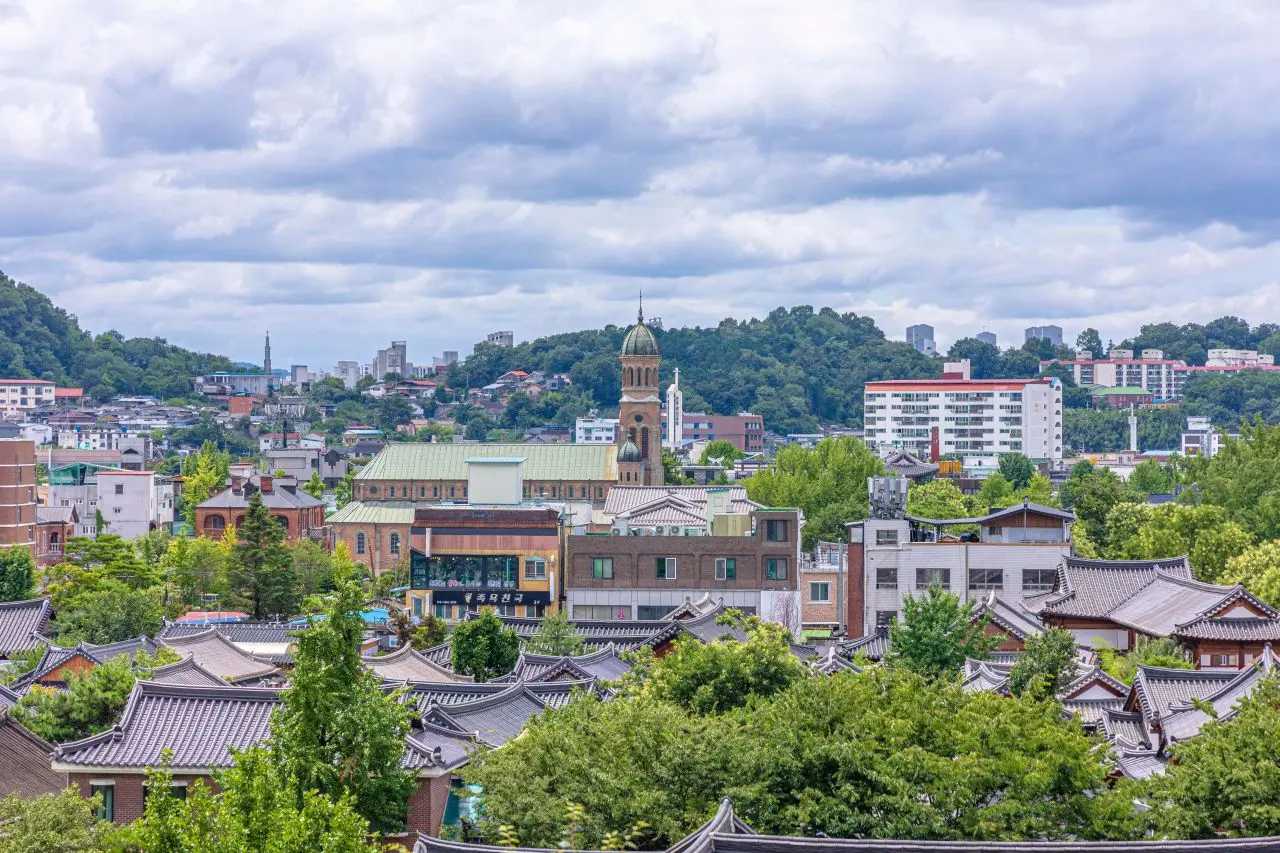
Jeonju Hanok Village is a neighborhood of about 700 hanok, traditional Korean houses, in Pungnam-dong in the center of Jeonju, built up from 1910 onward. The city describes it as the largest hanok village in Korea and the only one in a city center: 735 of its 947 buildings are hanok, and it holds about 575 businesses, including 203 places to stay, 183 places to eat and drink and 189 shops and rental shops. Gyeonggijeon Shrine, Jeondong Cathedral, Omokdae and some 20 heritage sites and cultural facilities are within it. The lanes are open 24 hours with no admission fee, and at night lanterns along Taejo-ro and lights along the walls are lit.
The Hanok Village is a reason to come to Jeonju in itself: in Korea’s largest hanok neighborhood you can walk the lanes in hanbok, eat bibimbap and sleep in a hanok without leaving the area.
Half a day in the Hanok Village
- Morning: Gyeonggijeon Shrine and the Royal Portrait Museum (from 9:00), then Jeondong Cathedral across the road.
- Lunch: bibimbap at Hanguk-jip on the edge of the village, or walk about 10-odd minutes west to Gajok Hoegwan or Seongmi-dang. Kalguksu at Veteran Kalguksu by the cathedral is a cheaper option.
- Afternoon: rent hanbok and walk the lanes, climb to Omokdae for the view over the roofs, then continue to Jaman Mural Village or Hanbyeokdang by the stream.
- Evening: walk the lit lanes, or go a few minutes west to Nambu Market for its Friday and Saturday night market (see Nambu Market).
Sights
Gyeonggijeon Shrine holds the portrait of King Taejo, Yi Seong-gye, who founded the Joseon dynasty. The hall was built in 1410, named Gyeonggijeon in the reign of King Sejong, burned in the Japanese invasions of the 1590s and was rebuilt in 1614. The Royal Portrait Museum is inside the grounds and included in the ticket (3,000 won for adults). Note that free entry for those aged 65 and over is for Korean nationals only, so foreign seniors pay. Whether visitors in hanbok enter free, as at Seoul’s palaces, has not been confirmed. On Friday nights from June to November 2026, a night program called Byeolbit Nubim ran in the shrine (10,000 won, booked on Ticketlink); 2027 dates have not been announced. Ticketlink is a Korean ticketing site, so check whether you can book without a Korean phone number.
Jeondong Catholic Cathedral, a red-brick cathedral across the road from Gyeonggijeon, stands on the site outside the old city’s south gate where the Catholics Yun Ji-chung and Gwon Sang-yeon were executed in 1791, followed by others in 1801. The Korea Tourism Organization gives its hours as 9:00 to 17:00. Mass times and visits inside have not been confirmed.
Omokdae is a pavilion on a wooded hill on the east side of the village with a view over the hanok roofs. Yi Seong-gye, later King Taejo, is said to have celebrated a victory here in 1380.
Jeonju Hyanggyo was the state Confucian school of the Joseon period; its ginkgo trees, more than 400 years old, turn yellow in autumn. It is closed on Mondays.
Jaman Mural Village, on the hill across from the Hanok Village, is a residential neighborhood first settled by refugees, with painted walls along its lanes. Hanbyeokdang is a pavilion on the rocks above the Jeonjucheon stream, first built in 1404 and counted among the eight views of Jeonju.
Hanbok
Hanbok rental shops are found throughout the village, renting traditional hanbok, modernized hanbok, early 20th-century outfits and school uniforms, according to the village’s official site. It does not list prices. One recent visitor paid 10,000 won for an hour plus 5,000 won for hair styling. Ask about prices, booking and English when you arrive at a shop.
Where to stay
The village has about 160 hanok stays according to the official hanok stay page; the village’s own building survey counts 203 lodging businesses. The city tourism site links to a vacancy search for hanok stays (jeonjuhanokroom.kr). For lockers if you arrive before check-in, see Hours & Fees above.
Dining
Long-running bibimbap restaurants are on the edge of the village and just west of it.
Bibimbap
- Hanguk-jip, on Eojin-gil at the northwest edge of the village near Gyeonggijeon, opens at 9:50: Jeonju bibimbap 15,000 won, yukhoe bibimbap (with raw beef) 17,000 won.
- Gajok Hoegwan, about 10-odd minutes on foot west of the village near Jeolla Gamyeong: Jeonju bibimbap 14,000 won, yukhoe bibimbap 17,000 won.
- Seongmi-dang, in the next lane: Jeonju bibimbap 16,000 won, yukhoe bibimbap 18,000 won. Closed on Mondays, with an afternoon break on weekdays.
Other food
- Kalguksu: Veteran Kalguksu, by Jeondong Cathedral, serves knife-cut noodles topped with ground perilla seeds and laver flakes for 10,000 won, from 9:00 to 20:00.
- Choco pies to take home: PNB Pungnyeon Bakery’s main shop on Paldal-ro, west of the village, sells handmade choco pies in boxes of 10 from 23,000 won.
- Kongnamul gukbap (bean sprout and rice soup, served from early morning) and blood sausage soup are at Nambu Market, a few minutes’ walk west; see Nambu Market.
At busy times, arrive early or check the wait on arrival.
When to go
The lanes are open around the clock. Gyeonggijeon is open from 9:00 until 18:00 to 20:00 depending on the season, and Jeonju Hyanggyo is closed on Mondays. In autumn, Hyanggyo’s old ginkgo trees turn yellow. On weekends the lockers at the tourist information centers can run out early.
Getting there and around
- From Jeonju Station: bus 119 (every 10 to 29 minutes) or buses 79, 550, 999 and 501 to the Jeondong Cathedral and Hanok Village stop, or a taxi, 15 to 20 minutes according to recent visitors.
- From the bus terminals: bus 79 or 999, or a taxi, about 10 minutes.
- On foot: the village is walkable; Nambu Market is a few minutes west.
- By bicycle: the city tourism site mentions Jeonju’s public bicycles, called Kkotsingi, for the village and the Jeonjucheon stream; ask at a tourist information center how to rent one.
Details and timetables are in How to Get from Seoul to Jeonju.
Get There
Jeondong Cathedral and Hanok Village bus stopCity buses 119, 79, 550, 999 and 501
- Korean
- 전동성당.한옥마을
- Exit
- unconfirmed
- Walk
- unconfirmed
Bus 119 from Jeonju Station runs every 10 to 29 minutes. From the bus terminals take bus 79 or 999. Details in the getting-there page.
Hours & Fees
- Hanok Village lanes
- Open 24 hours, every day; no admission fee
- Lockers
- Gyeonggijeon Traveler's Lounge (110 Jeondongseongdang-gil): 17 free lockers. Hanok Village Tourist Information Center (99 Girin-daero): 23 lockers behind the center, 500 won returned when you collect your bag. Centers open 9:00 to 18:00 daily. First come, first served; they can fill up early on weekends
- Hanbok rental
- Shops throughout the village rent hanbok, modernized hanbok, early 20th-century outfits and school uniforms. One recent visitor paid 10,000 won for 1 hour plus 5,000 won for hair styling; prices vary by shop
Places in Jeonju Hanok Village
Gyeonggijeon Shrine
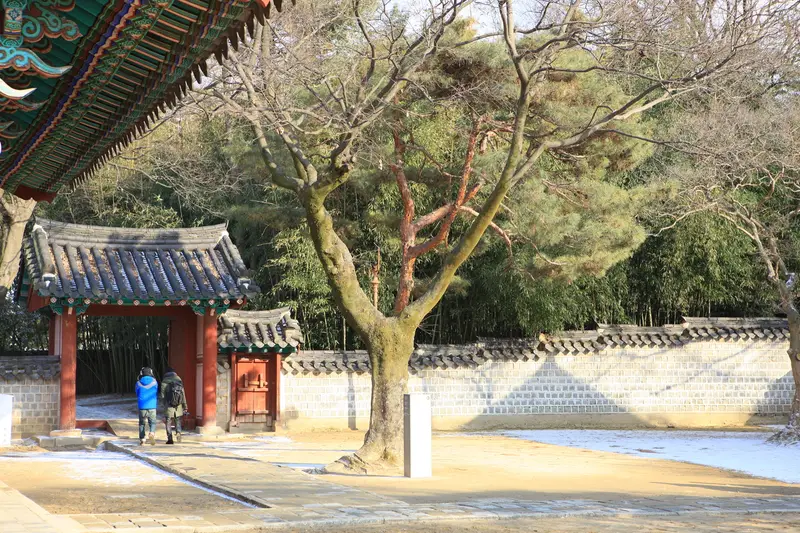
The shrine holding the portrait of King Taejo, founder of the Joseon dynasty, first built in 1410 and rebuilt in 1614 after it burned in the Japanese invasions. The Royal Portrait Museum is inside the grounds. At 44 Taejo-ro, opposite Jeondong Cathedral.
- Hours
- March to May and September to October 9:00 to 19:00 (last entry 18:00); June to August 9:00 to 20:00 (last entry 19:00); November to February 9:00 to 18:00 (last entry 17:00). Open every day; the Royal Portrait Museum closes on January 1
- Admission
- 3,000 won adults, 2,000 won youths and soldiers, 1,000 won children (groups of 20 or more 2,500, 1,500 and 500 won), including the Royal Portrait Museum. Free for Korean nationals aged 65 and over and children 6 and under. Cards accepted
- Byeolbit Nubim (night program)
- Friday nights from June to November 2026, entry at 19:30 or 20:30 from September, 10,000 won, booked on Ticketlink. The 2026 run ends in late November; 2027 dates have not been announced
Foreigner access
- Korean name
- 경기전
- Booking
- Tickets on site
- English
- Signs: unconfirmed · Staff: unconfirmed
Jeondong Catholic Cathedral
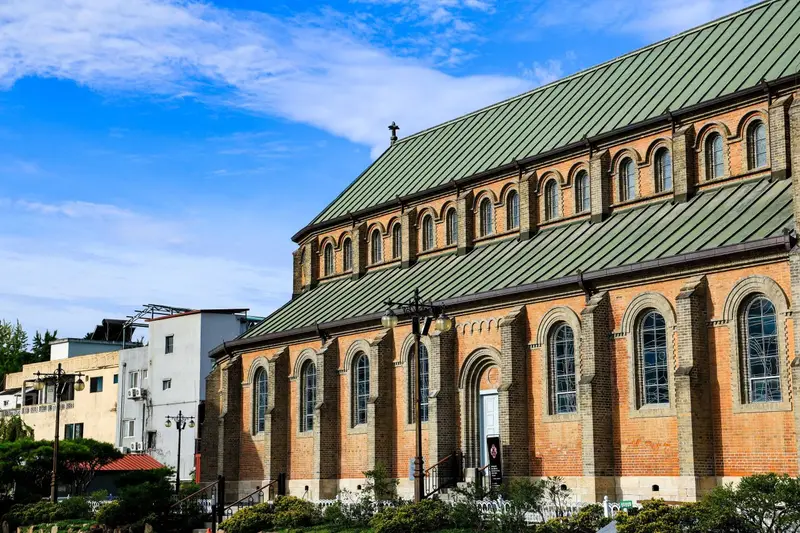
A red-brick cathedral at 51 Taejo-ro, across the road from Gyeonggijeon, built on the site outside the city's south gate where Catholics were executed in 1791 and 1801.
- Hours
- 9:00 to 17:00, every day, according to the Korea Tourism Organization. Mass times and whether the interior is open to visitors have not been confirmed
- Admission
- unconfirmed
Foreigner access
- Korean name
- 전동성당
Foreigner access details not yet confirmed
Omokdae Pavilion
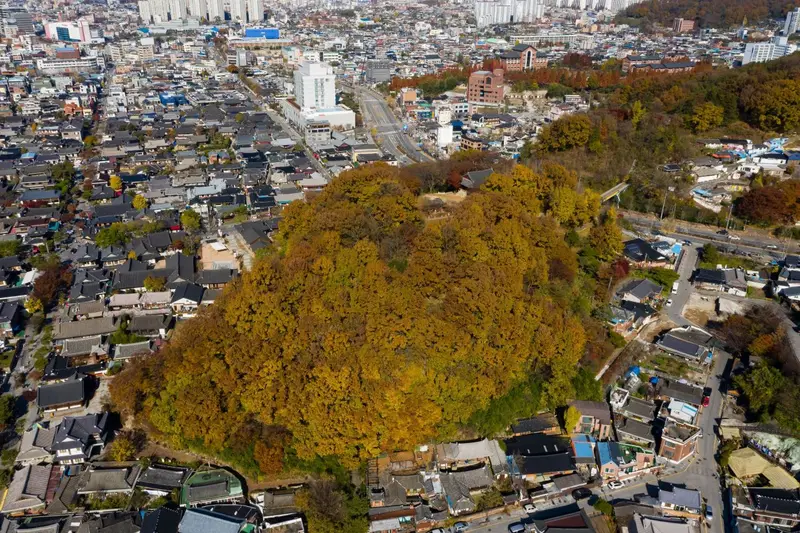
A pavilion on a wooded hill at the east side of the village, looking over the hanok roofs, where Yi Seong-gye, later King Taejo, is said to have celebrated a victory in 1380. Open at all times; no fee is listed.
Foreigner access
- Korean name
- 오목대
Foreigner access details not yet confirmed
Jeonju Hyanggyo Confucian School
A Joseon-era state Confucian school at 139 Hyanggyo-gil, with its shrine hall and lecture hall, and ginkgo trees over 400 years old that turn yellow in autumn.
- Hours
- March to October 9:00 to 18:00, November to February 10:00 to 17:00. Closed on Mondays (the next day if Monday is a public holiday)
- Admission
- unconfirmed
Foreigner access
- Korean name
- 전주향교
Foreigner access details not yet confirmed
Jaman Mural Village
Lanes of painted walls on the hillside across from the Hanok Village, in a neighborhood first settled by refugees. People live in these houses. Open at all times.
Foreigner access
- Korean name
- 자만벽화마을
Foreigner access details not yet confirmed
Hanbyeokdang Pavilion
A pavilion on the rocks above the Jeonjucheon stream at the southeast end of the village, first built in 1404 as a private retreat and counted among the eight views of Jeonju. Open at all times.
Foreigner access
- Korean name
- 한벽당
Foreigner access details not yet confirmed
Hanguk-jip
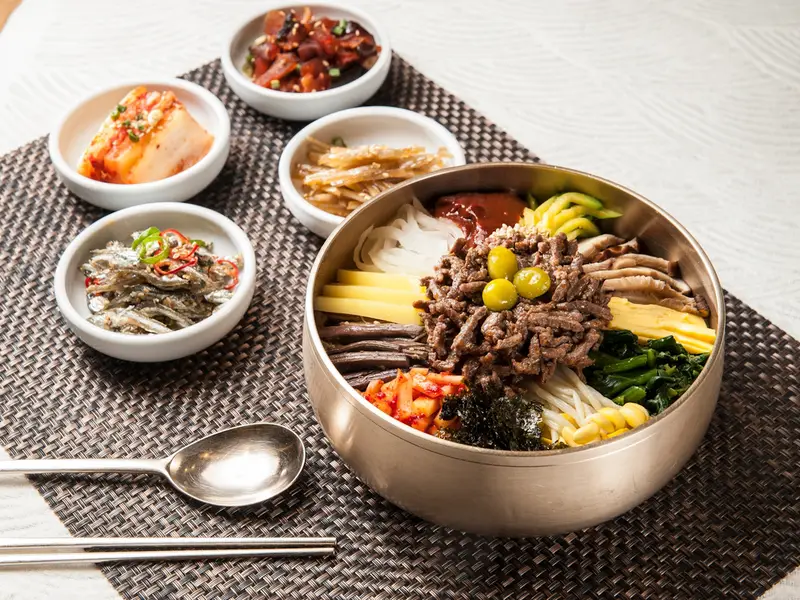
A long-running bibimbap restaurant at 119 Eojin-gil, on the northwest edge of the village near Gyeonggijeon, open from 9:50.
- Hours
- 9:50 to 20:50 daily, last orders 20:10. The restaurant says it may close for a break depending on how busy it is
- Prices
- Yukhoe bibimbap (with raw beef) 17,000 won, Jeonju bibimbap 15,000 won, stone-pot bibimbap 15,000 won, octopus bibimbap 17,000 won
Foreigner access
- Korean name
- 한국집
Foreigner access details not yet confirmed
Gajok Hoegwan
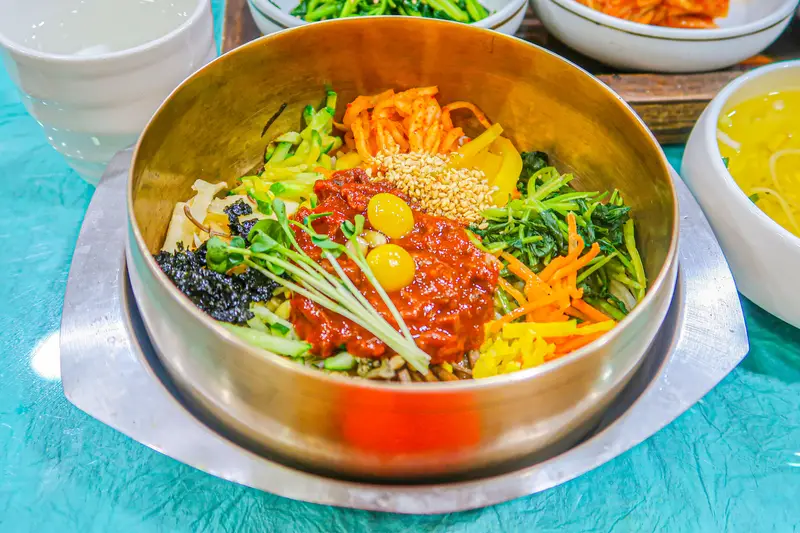
A bibimbap restaurant serving it in brass bowls, outside the Hanok Village to the west near Jeolla Gamyeong, about 10-odd minutes on foot from the village. At 17 Jeollagamyeong 5-gil.
- Hours
- 10:30 to 20:00 daily, last orders 19:50
- Prices
- Jeonju yukhoe bibimbap 17,000 won, Jeonju bibimbap 14,000 won, tteok-galbi (grilled beef patty) 10,000 won
Foreigner access
- Korean name
- 가족회관
Foreigner access details not yet confirmed
Seongmi-dang
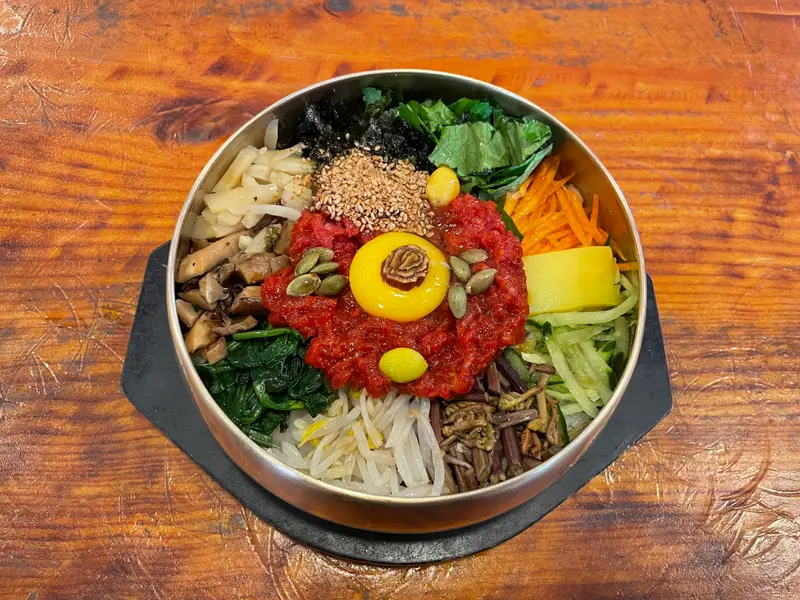
A bibimbap restaurant in the lane next to Gajok Hoegwan, also about 10-odd minutes on foot west of the village, at 19-9 Jeollagamyeong 5-gil. Closed on Mondays.
- Hours
- 11:00 to 20:00. Break 16:00 to 17:30 on Tuesday to Friday; no break on weekends. Closed on Mondays
- Prices
- Yukhoe bibimbap 18,000 won, Jeonju bibimbap 16,000 won, samgyetang 18,000 won, tteokguk (rice cake soup) 15,000 won
Foreigner access
- Korean name
- 성미당
Foreigner access details not yet confirmed
Veteran Kalguksu
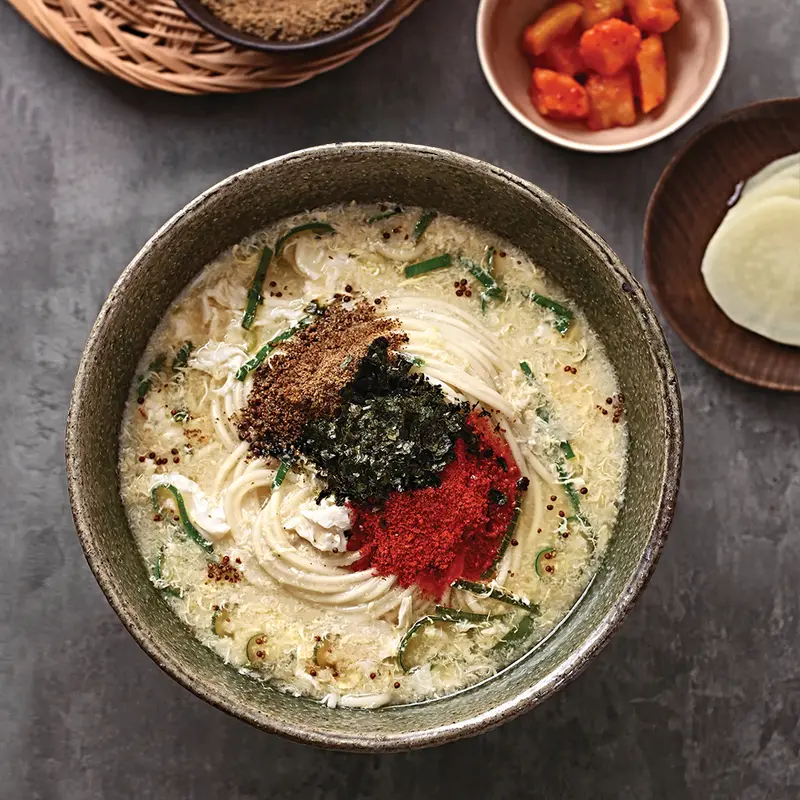
A noodle restaurant by Jeondong Cathedral, at 135 Gyeonggijeon-gil, serving kalguksu topped with ground perilla seeds and laver flakes.
- Hours
- 9:00 to 20:00 daily
- Prices
- Kalguksu 10,000 won, jjolmyeon (chewy spicy noodles) 9,000 won, dumplings 8,000 won, kongguksu (cold soy milk noodles) 11,000 won
Foreigner access
- Korean name
- 베테랑 칼국수
Foreigner access details not yet confirmed
PNB Pungnyeon Bakery (main shop)
A bakery selling handmade choco pies, a Jeonju souvenir, in boxes of 10. The main shop is at 141 Paldal-ro, west of the Hanok Village.
- Hours
- 8:00 to 22:00 daily, last orders 21:00
- Prices
- Handmade choco pie (Korean wheat) 23,000 won for 10; real chocolate or white chocolate versions 25,000 won for 10
Foreigner access
- Korean name
- 풍년제과 본점
Foreigner access details not yet confirmed
Hotels
Experiences
Sources
- Jeonju Hanok Village: overview and figures (Korean)(accessed 2026-11-11)
- Jeonju Hanok Village: hanbok experience (Korean)(accessed 2026-11-11)
- Jeonju Hanok Village: hanok stays (Korean)(accessed 2026-11-11)
- Visit Jeonju: home page (hanok stay vacancy search link) (Korean)(accessed 2026-11-11)
- Visit Jeonju: Gyeonggijeon Byeolbit Nubim 2026 (Korean)(accessed 2026-11-11)
- Visit Jeonju: tourist information centers and lockers (Korean)(accessed 2026-11-11)
- Visit Jeonju: travel tips (Kkotsingi public bicycles) (Korean)(accessed 2026-11-11)
- Korea Tourism Organization (VisitKorea): Jeonju Hanok Village, Gyeonggijeon, Royal Portrait Museum, Jeondong Cathedral, Omokdae, Jeonju Hyanggyo, Jaman Mural Village and Hanbyeokdang entries (Korean; search by name)(accessed 2026-11-11)
- Naver Place: Hanguk-jip (hours, menu)(accessed 2026-11-11)
- Naver Place: Gajok Hoegwan (hours, menu)(accessed 2026-11-11)
- Naver Place: Seongmi-dang (hours, menu)(accessed 2026-11-11)
- Naver Place: Veteran Kalguksu (hours, menu)(accessed 2026-11-11)
- Naver Place: PNB Pungnyeon Bakery main shop (hours, menu)(accessed 2026-11-11)
- Naver blog: two days in Jeonju with hanbok rental prices (2026-11-10)(accessed 2026-11-11)