Gyeongju's East Coast: Jusangjeolli, Munmu's Tomb and Gampo
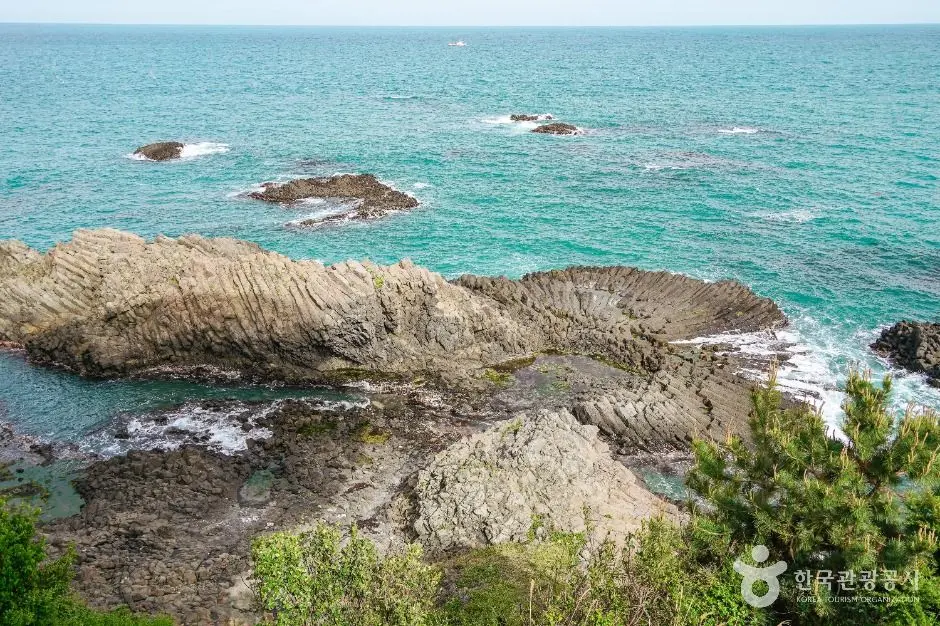
Fan-shaped columnar joints at Yangnam, King Munmu's tomb in the sea, Gameunsa's pagodas and the fishing port of Gampo
Intro
Gyeongju’s coast runs for about 33 km along the East Sea, from Gwanseong Beach in Yangnam-myeon in the south to Yeondong in Gampo-eup in the north. Three stretches of it are worth the trip. At Yangnam, basalt columns line the shore in shapes that include a rare open fan, with a deck path and an observatory over them. Further north at Bonggil, King Munmu, who unified the Three Kingdoms under Silla, lies in a rock in the sea about 200 m off the beach, and his son’s temple, Gameunsa, stands inland with its two great stone pagodas. At the north end, Gampo is Gyeongju’s largest fishing port, with a lighthouse built like a pagoda, a lane of painted sea asters and restaurants serving the local flatfish raw.
Come for a day of sea air after the tombs and temples in town. All the sights are outdoors, free and open at all times, except an observatory, a museum and a small gallery, which all close on Mondays. Korean travelers in 2026 blog posts mostly drove, taking Gameunsa, King Munmu’s tomb and the Yangnam joints in that order or the reverse, and fitting Gampo in at the start or in the middle. Without a car, buses from town and from the KTX station reach each stretch.
Two names that lead elsewhere
If you search in English, “jusangjeolli” on its own brings up Jusangjeolli Cliff on Jeju, and “Daewangam” brings up Daewangam Park in Ulsan. Both are different places: the Jeju cliff is covered in Seogwipo and Jungmun. For Gyeongju, search for “Yangnam columnar joints” and “Tomb of King Munmu”, or copy the Korean names from the cards on this page into a map app.
Planning your day
- By bus: for a one-day route along the coast by bus 150, with times and a lunch stop (the joints, Eupcheon Port, King Munmu’s tomb and Gameunsa), see the east coast course in Gyeongju Day Courses. Gampo is on a different bus line, so on a bus day pick either the southern stretch (Yangnam to Gameunsa) or Gampo, or plan a change at Eoil (see Getting around the coast).
- Avoid Mondays if you want to go inside: the columnar joints observatory, the King Munmu Maritime History Museum and the Songdaemal light gallery all close. Several restaurants also close on Mondays (Gampo Igyeondae Hoetjip, Gampo Hoetjip) and on Thursdays (Pureun Bada Hoe Center, Icheon Sikdang).
- Time: the Padosori-gil is about 1.7 km each way. King Munmu’s tomb is a view from the beach, and Gameunsa is a grassy site with two pagodas; neither takes long.
- Rain: the observatory, the maritime museum and the Songdaemal gallery are indoors. The rest is open coast.
- Sunrise: the Korea Tourism Organization’s listing for Songdaemal names it, with King Munmu’s tomb and the Yangnam joints, among the sunrise spots on Gyeongju’s coast.
Yangnam: the columnar joints and the Padosori-gil
At Yangnam the basalt columns stand upright, lean, lie flat and, in one place, spread out from a center like an open fan. The Korea Heritage Service, which listed them as a natural monument in September 2012, notes that horizontal columns have formed here on a large scale and that the joints differ from Korea’s other listed columnar joints in their size and variety of shapes. The shore was closed to the public until an army unit at Eupcheon-ri pulled out in 2012.
The Padosori-gil (Sound of Waves Trail) follows the coast for about 1.7 km between Eupcheon Port in the north and Haseo Port in the south, on decks with pavilions and benches and over a suspension bridge. The observatory, opened in October 2017, is a tower on the hill above the fan-shaped joints, with a viewing floor outdoors on the second floor and an indoor one on the fourth, according to the city’s webzine. From Haseo Port, the Mulbit Sarang-gil continues for about 1 km to Haseo Coastal Park.
Eupcheon Port at the north end of the trail has a lighthouse shaped like Cheomseongdae in town, and the mural village beside it. Start at the port if you come by bus to the Eupcheon stop, walk south along the trail to the observatory, and catch the bus back at the Jusangjeolli stop, or the other way round.
Bonggil: King Munmu, Igyeondae and Gameunsa
The tomb in the sea. King Munmu (reigned 661 to 681) finished Silla’s unification of the Three Kingdoms, defeating Goguryeo and holding off the Tang. According to the Samguk Sagi, he asked to be cremated in the Buddhist way and buried in the East Sea, so that he could become a dragon and protect the country from Japanese raiders. The Korea Heritage Service describes Daewangam as a natural rock with channels cut through it in four directions: sea water flows in from the east and out to the west, so the water inside stays calm. Under the surface lies a turtle-shaped stone about 3.7 m long and 2.06 m wide, and the king’s remains are thought to be buried beneath it. Above the water, the rock measures about 35 m east to west and 36 m north to south. You see it from Bonggil Beach.
Igyeondae, on a rise beside the coast road north of the beach, is the spot with the best view of the rock. King Sinmun, Munmu’s son, built a structure here in 681, and the record says a dragon appeared here and gave him a jade belt and the bamboo flute Manpasikjeok. The King Munmu Maritime History Museum, opened in 2026 next to Igyeondae, tells the same story in its Silk Road gallery, along with Silla’s sea trade.
Gameunsa Temple Site is inland from the tomb. Munmu began the temple; Sinmun finished it in 682 and named it for his gratitude to his father. The hall, the lecture hall and the middle gate stood in a line with the two pagodas in front, the standard layout of Unified Silla, and under the hall was a drain toward the sea through which, legend says, the dragon king came and went. When the west pagoda was taken apart for repairs in 1960, a reliquary was found in its third story.
Gampo
Gampo Port is the center of the north end, with a daily fish auction and raw fish restaurants around the harbor. From the port it is about 300 m and 5 minutes on foot to Gampo Haeguk-gil, the painted lanes and Japanese-era houses in the village by the port, and about 1.4 km and 20 minutes to Songdaemal Lighthouse, according to the city’s Gampo walking route. Gampo Public Market is by the bus stop; on days ending in 3 or 8 it fills with a five-day market.
What to eat
The local catch is chamgajami, a small flatfish that Gampo is known for, eaten as raw fish (hoe), in mulhoe (cold raw fish soup) or over rice as hoetbap or hoedeopbap. Gajami (flatfish) also comes grilled, braised or in seaweed soup in the plain restaurants of Gampo town.
- A quick lunch for one: mulhoe or hoedeopbap costs 15,000 to 20,000 won at most of the restaurants on this page; Dahae Sikdang’s hoetbap (15,000 won) uses wild chamgajami. Daerim Mulhoe, on the road into Gampo, is lunch only and takes orders for two or more.
- Breakfast or an early start: Namhae Sikdang by the market opens at 6:30, Yeonhui Bapsang at 8:00 and Icheon Sikdang at 9:30 (until 14:00).
- A raw fish meal for two: Pureun Bada Hoe Center on the Gampo breakwater (wild raw fish for two, 70,000 won), or near King Munmu’s tomb at Euna Hoetown, Gampo Igyeondae Hoetjip or Gampo Hoetjip, which sells assorted raw fish by the person (35,000 won).
- A snack at Yangnam: rice-flour doughnuts at Eupcheon Port, 1,500 won each.
Pureun Bada Hoe Center sells its wild raw fish as a plate for two, while Gampo Hoetjip prices assorted raw fish per person. Stews and braised dishes at Namhae Sikdang, hoe guksu at Dahae Sikdang and every order at Daerim Mulhoe are for two or more; where a restaurant sets a minimum, its card says so. The cards give the Korean dish names.
Getting around the coast
From town (the bus terminal): bus 150 runs out to Gameunsa, King Munmu’s tomb, Eupcheon and the joints, ending at Yangnam; the city puts the ride from town to Yangnam at 50 minutes to an hour. Bus 150-1 covers the same coast via Bomun Lake Resort. Buses 100 and 100-1 go to Gampo. Times from the terminal and back are in Hours & Fees.
From Gyeongju Station (KTX): express bus 1150 leaves at 8:00, 12:10 and 17:50 for King Munmu’s tomb, the joints and Yangnam, via the bus terminal and Bulguksa; it does not stop at Gameunsa Temple Site. Express bus 1100 leaves at 7:25, 11:20, 15:00 and 18:30 for Gampo. Bus 700 also runs from the station via Bulguksa to Gameunsa, Igyeondae and Gampo four times a day, but its posted timetable dates from 2023, so check it before you rely on it.
Between the stretches: buses 150 and 100 split at Eoil, inland, so there is no single city bus between Yangnam and Gampo; you have to change at Eoil. The timetables give Eoil times only for buses heading back toward town, not for the bus 150 to Yangnam or bus 100 to Gampo that you would change onto, so check those times in a map app. Bus 700 is the only route along the coast between Gameunsa, Igyeondae and Gampo. Times at the coastal stops are not posted on any of these timetables, so check arrival times in a map app and wait at the stop well ahead. A transfer within 30 minutes of tapping off is free with a transit card. See Map Apps in Korea and Taxis in Korea.
Where to stay
Some raw fish restaurants by King Munmu’s tomb, such as Euna Hoetown and Gampo Igyeondae Hoetjip, list minbak (guest rooms) with dinner and breakfast on Naver Map; ask about prices by phone, in Korean. For hotels, see the Gyeongju guide, which compares Hwangnidan-gil, Bomun Lake Resort and the area near Bulguksa.
Common questions
- Is the Gyeongju jusangjeolli the same as the one on Jeju? No. The columnar joints at Yangnam, in Gyeongju, are a different place from Jusangjeolli Cliff on Jeju.
- Is Daewangam the same as Daewangam Park in Ulsan? No. In Gyeongju, Daewangam is King Munmu’s tomb, a rock in the sea off Bonggil Beach. Daewangam Park is in Ulsan, further south.
- Can you visit King Munmu’s underwater tomb? You see it from Bonggil Beach, about 200 m away, or from Igyeondae, north of the beach.
- How do I get to the Tomb of King Munmu by bus? Bus 150 or 150-1 from the bus terminal, or express bus 1150 from Gyeongju Station (KTX), to the Munmuwangneung, Bonggil Beach stop (문무왕릉.봉길해수욕장), 3 to 5 minutes from the beach.
- How long is the Yangnam columnar joints trail? About 1.7 km from Eupcheon Port to Haseo Port.
- Is the columnar joints observatory free? Yes. It is open 9:00 to 18:00 (last entry 17:00) and closed on Mondays.
- Which bus goes to Gampo? Buses 100 and 100-1 from the bus terminal, about 20 a day, or express bus 1100 from Gyeongju Station (KTX), four a day.
- Is Songdaemal Lighthouse open on Mondays? The lighthouse and its deck are open at all times; the light gallery inside is closed on Mondays.
Combine with
- Gyeongju Day Courses: the east coast by bus 150 in one day, with lunch, and a second course north of the city to Oksan Seowon and Yangdong Village.
- Bulguksa and Seokguram: express buses 1100 and 1150 and bus 700 pass Bulguksa on the way from the KTX station, and bus 700 links Bulguksa with Gameunsa and Gampo four times a day (its timetable dates from 2023). Check the times before you plan both on one day.
- Bomun Lake Resort: bus 150-1 runs through Bomun on its way to the coast.
Back to the Gyeongju guide.
Get There
Tapmaeul, Gameunsaji stopCity buses 150, 150-1 and 700 (express bus 1150 does not stop here)
- Korean
- 탑마을.감은사지
- Exit
- unconfirmed
- Walk
- unconfirmed
For Gameunsa Temple Site. The city's bus tour page gives a walk of 5 to 7 minutes.
Munmuwangneung, Bonggil Beach stopCity buses 150 and 150-1, and express bus 1150 from Gyeongju Station (KTX)
- Korean
- 문무왕릉.봉길해수욕장
- Exit
- unconfirmed
- Walk
- unconfirmed
For the Tomb of King Munmu and Bonggil Beach, 3 to 5 minutes on foot according to the city's bus tour page.
Eupcheon stopCity buses 150 and 150-1, and express bus 1150
- Korean
- 읍천
- Exit
- unconfirmed
- Walk
- unconfirmed
For Eupcheon Port and the north end of the Padosori-gil. The city's bus tour page gives 3 to 5 minutes to the port and about 10 minutes to the observatory from its Eupcheon and Jusangjeolli stop, which the current route lists split into two stops, Eupcheon and Jusangjeolli.
Jusangjeolli stopCity buses 150 and 150-1, and express bus 1150
- Korean
- 주상절리
- Exit
- unconfirmed
- Walk
- unconfirmed
The next stop south after Eupcheon, for the observatory and the columnar joints.
Gampo Market, Gampo Port stopCity buses 100, 100-1 and 700, and express bus 1100 from Gyeongju Station (KTX)
- Korean
- 감포시장.감포항
- Exit
- unconfirmed
- Walk
- unconfirmed
Gampo Port is 2 to 3 minutes away and Gampo Marine Park 3 to 5 minutes, according to the city's bus tour page. Gampo Public Market is by the stop.
Deungdae Samgeori stopCity buses 100, 100-1 and 700, and express bus 1100
- Korean
- 등대삼거리
- Exit
- unconfirmed
- Walk
- 5 min
For Songdaemal Lighthouse, 5 minutes on foot (city bus tour page). You can also walk from Gampo Port, about 1.4 km and 20 minutes.
Igyeondae stopCity bus 700 only, four times a day
- Korean
- 이견대
- Exit
- unconfirmed
- Walk
- unconfirmed
The nearest stop on any route to Igyeondae and the King Munmu Maritime History Museum. Bus 700's posted timetable dates from March 31, 2023, so check it on the day.
Hours & Fees
- Sights
- The coast, the Tomb of King Munmu, Igyeondae, Gameunsa Temple Site, Eupcheon and Gampo ports and Gampo Haeguk-gil are open at all times and free. The columnar joints observatory, the King Munmu Maritime History Museum and the Songdaemal Lighthouse gallery are closed on Mondays
- City bus fare
- 1,500 won, or 1,450 won with a transit card such as T-money. One free transfer within 30 minutes of tapping off, but not onto the same route. Check the fare for express buses 1100 and 1150 when you board
- Bus 150 from the bus terminal (to Gameunsa, the tomb, Eupcheon and the joints)
- 6:40, 7:35, 8:40 (150-1, via Bomun), 9:35, 10:40, 11:40, 13:00 (150-1), 13:55, 15:00, 16:20, 17:30 (150-1), 18:40, 19:30 and 21:00 (14 a day)
- Bus 150 back from Yangnam
- 6:30, 7:25, 8:10, 9:10, 10:30 (150-1), 11:30, 12:30, 13:30, 14:50 (150-1), 15:50, 16:50, 18:20, 19:10 (150-1) and 20:30. Yangnam is the end of the line, a few stops south of the joints
- Express bus 1150 from Gyeongju Station (KTX)
- 8:00, 12:10 and 17:50, via the bus terminal and Bulguksa, to King Munmu's tomb, Eupcheon, the joints and Yangnam. It does not stop at Gameunsa Temple Site
- Express bus 1150 back from Yangnam
- 9:50, 14:00 and 19:40
- Buses 100 and 100-1 from the bus terminal (to Gampo)
- 6:00, 6:50, 7:30, 8:20, 9:15, 10:00, 10:50, 11:25, 12:00, 12:45, 13:30, 14:15, 15:00, 15:50, 16:50, 17:20, 18:10, 19:20, 20:30 and 21:40. Timetable in force from February 19, 2026
- Buses 100 and 100-1 back from Gampo
- 6:25, 7:10, 8:10, 8:50, 9:40, 10:25, 11:10, 12:00, 12:35, 13:30, 14:15, 15:00, 15:40, 16:20, 17:30, 18:05, 19:00, 19:35, 20:35 and 21:05
- Express bus 1100 (Gyeongju Station and Gampo)
- From Gyeongju Station (KTX) at 7:25, 11:20, 15:00 and 18:30, via the bus terminal and Bulguksa; back from Gampo at 9:15, 12:55, 16:45 and 20:10. Timetable in force from February 19, 2026
- Bus 700 (Gyeongju Station, Bulguksa, Gameunsa, Igyeondae and Gampo)
- From Gyeongju Station (KTX) at 7:50, 8:50, 13:50 and 14:50 (Bulguksa 8:45, 9:45, 14:45 and 15:45); back from Gampo at 10:50, 11:50, 17:20 and 18:20. The posted timetable dates from March 31, 2023; check it on the day
- Times along the coast
- The timetables give times where each route starts and ends, and at Eoil, inland, only on buses heading back toward town (express bus 1150 has Eoil times in both directions; bus 700 has times at Bulguksa instead). Check arrival times at the coastal stops, and at Eoil on buses heading out, in a map app
- Gampo market days
- Days ending in 3 or 8: the 3rd, 8th, 13th, 18th, 23rd and 28th of each month
Places by area
Yangnam
Yangnam Columnar Joints and the Padosori-gil
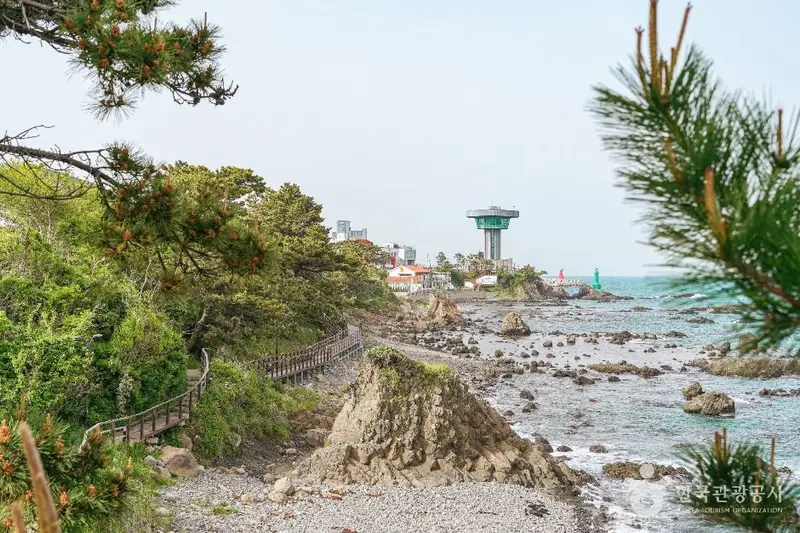
Basalt columns along about 1.7 km of shore between Eupcheon Port and Haseo Port, standing upright, tilted, lying flat and, most unusually, spread out in the shape of an open fan, a form rarely seen anywhere in the world. A natural monument since September 2012, the same year an army unit at Eupcheon-ri pulled out and the shore was opened to visitors. The Padosori-gil (Sound of Waves Trail) is a deck path along the whole stretch, with pavilions, benches and a suspension bridge. The observatory, opened in October 2017, stands above the fan-shaped joints, with exhibits on the geology and geology guides on duty.
- The trail
- Open at all times, every day. About 1.7 km from Eupcheon Port to Haseo Port; the Mulbit Sarang-gil, about 1 km more, goes on from Haseo Port to Haseo Coastal Park
- Observatory hours
- 9:00 to 18:00, last entry 17:00. Closed Mondays
- Midday at the observatory
- The city lists no lunch break, but the observatory's Naver Map listing shows a break from 12:00 to 13:00. Call ahead if you plan to arrive at midday
- Admission
- Free
- Phone
- 054-775-6366 (observatory)
- Parking
- Eupcheon Port public parking lot, free
Foreigner access
Google Maps for Yangnam Columnar Joints and the Padosori-gil Naver Map for Yangnam Columnar Joints and the Padosori-gil- Korean name
- 경주 양남 주상절리 전망대
- Booking
- No booking; free entry
- English
- Signs: unconfirmed · Staff: unconfirmed
Eupcheon Port and Mural Village
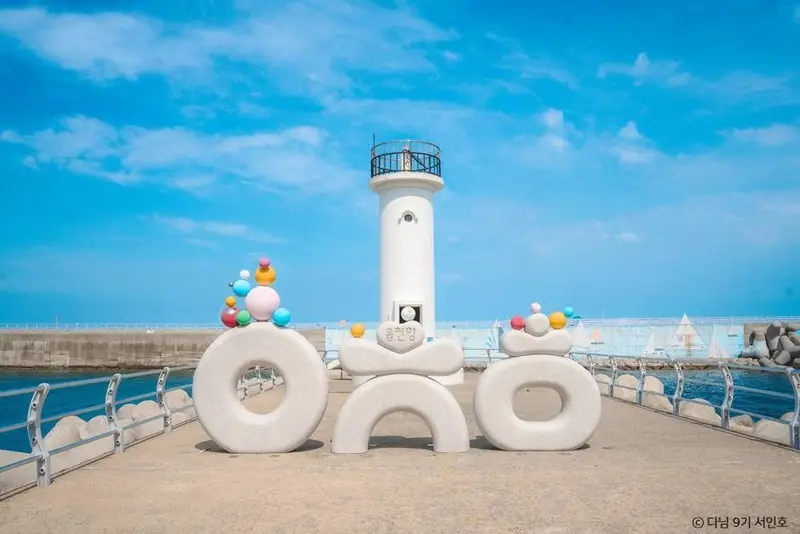
A small fishing port at the north end of the Padosori-gil, where the trail starts. A lighthouse shaped like Cheomseongdae stands at the end of the breakwater, and a sculpture of the port's initials in Korean letters makes a photo spot, with a small park and public toilets by the water. There is also a suspension bridge and a cove shaped like a heart. Facing the sea, the trail goes off to the right and the mural village to the left: its walls were painted in five mural contests held by the Wolseong nuclear power headquarters from 2010 to 2014, 217 murals in all, including trick-art murals.
- Hours
- Open at all times, every day
- Admission
- Free
Foreigner access
- Korean name
- 읍천항
Foreigner access details not yet confirmed
7 Gongju Ssal Kkwabaegi
A small shop at Eupcheon Port selling twisted doughnuts made with rice flour (ssal kkwabaegi), including one with rock seaweed (dolmiyeok) from the local coast, and chewy glutinous rice snacks (jjonjjoni). A snack before or after the Padosori-gil. Closed on Mondays.
- Hours
- 10:30 to 19:00. Closed Mondays
- Prices
- Rock seaweed rice doughnut, glutinous rice jjonjjoni or chlorella jjonjjoni 1,500 won each; 4 for 5,000 won
Foreigner access
- Korean name
- 7공주쌀꽈배기
- Booking
- Walk-in
- English
- Menu: unconfirmed · Signs: unconfirmed · Staff: unconfirmed
Bonggil, Daebon and Gameunsa
Tomb of King Munmu (Daewangam) and Bonggil Beach
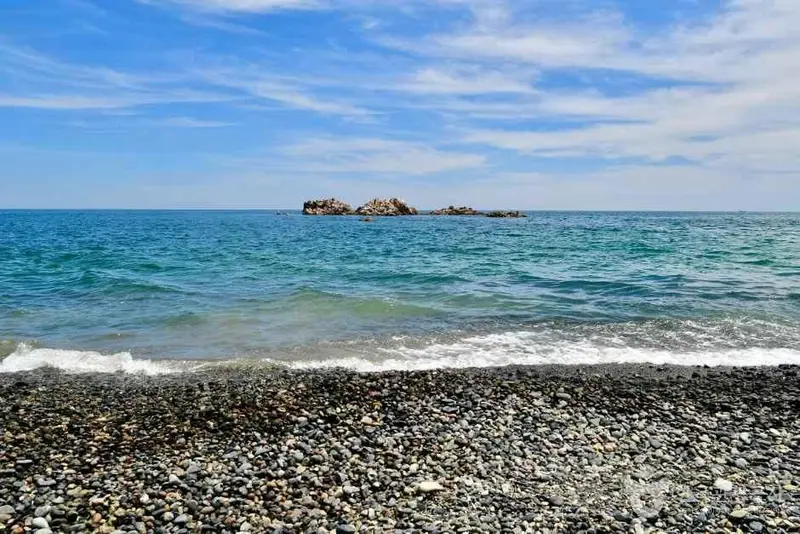
The underwater tomb of King Munmu (reigned 661 to 681), who completed Silla's unification of the Three Kingdoms, on a rocky islet about 200 m off the beach at Bonggil-ri. According to the Samguk Sagi, he asked to be cremated and buried in the East Sea so that he could become a dragon and guard the country against Japanese raiders. The rock is called Daewangam; you see it from Bonggil Beach, about 500 m long, with showers and toilets.
- Hours
- Open at all times, every day
- Admission
- Free
- Parking
- Free
Foreigner access
Google Maps for Tomb of King Munmu (Daewangam) and Bonggil Beach Naver Map for Tomb of King Munmu (Daewangam) and Bonggil Beach- Korean name
- 경주 문무대왕릉
Foreigner access details not yet confirmed
Igyeondae
A pavilion at the spot with the best view of Daewangam, King Munmu's tomb in the sea, on the coast road north of Bonggil Beach. King Sinmun, Munmu's son, built a structure here in 681, and the story goes that a dragon appeared here and gave him a jade belt and a bamboo flute, Manpasikjeok. The name comes from a line in the I Ching about a flying dragon. The present pavilion was built on the site found in excavations, in a style based on Silla buildings. Nearby is a memorial stone to Go Yu-seop, set up by his students in 1985.
- Hours
- Open at all times, every day
- Admission
- Free
- Parking
- Its own parking lot
- Getting there
- Bus 700 to the Igyeondae stop (이견대), four times a day. Buses 150 and 1150 do not stop here: get off at the Munmuwangneung, Bonggil Beach stop and check the walk in a map app
Foreigner access
- Korean name
- 경주 이견대
Foreigner access details not yet confirmed
King Munmu Maritime History Museum
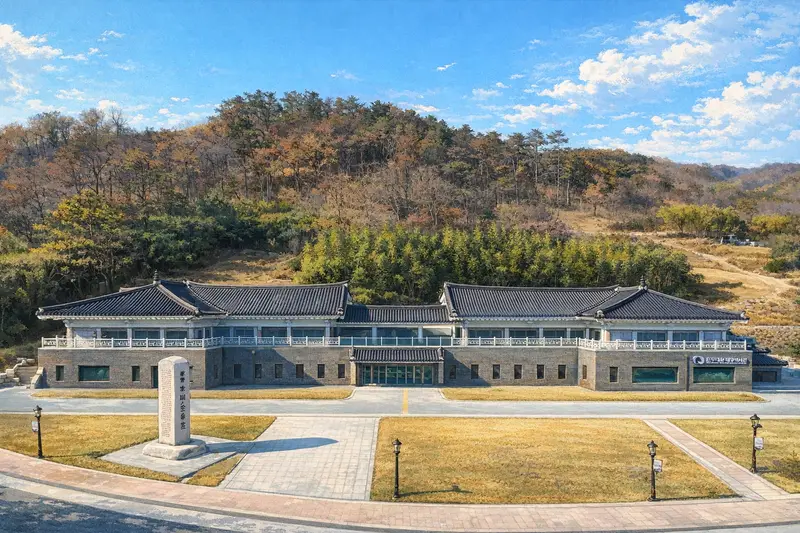
A museum opened in 2026 on the site of the former Daebon Elementary School, in a hanok-style building on a slope above the sea at Daebon-ri, next to Igyeondae. Upstairs, a history gallery shows an immersive film three times an hour (on the hour, at 20 and at 40 minutes past), and a Silk Road gallery covers sea trade, the Manpasikjeok legend and Jang Bo-go. Downstairs are a special exhibition room and a room remembering the school. Free until December 31, 2026. An indoor stop for a rainy day.
- Hours
- March to October 10:00 to 18:00; November to February 10:00 to 17:00. Closed Mondays, January 1, and Seollal and Chuseok days
- Admission
- Free until December 31, 2026. The regular fee is 3,000 won for adults, 2,000 won for teenagers and soldiers and 1,000 won for children
- Rules
- No pets. Flash and tripods are restricted
- Phone
- 054-741-0331
Foreigner access
- Korean name
- 문무대왕 해양역사관
- Booking
- Walk-in. Groups book ahead
- English
- Signs: unconfirmed · Staff: unconfirmed
Gameunsa Temple Site
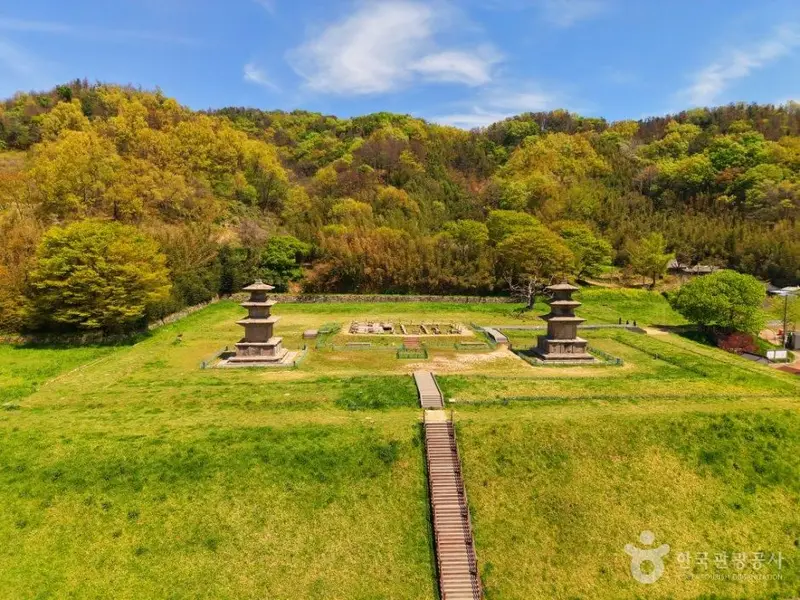
The site of a temple that King Munmu began, to guard the country against Japanese raiders through the power of the Buddha, and that his son King Sinmun completed in 682; its name means a temple of gratitude. Two three-story stone pagodas of the same size and design stand in front of the foundations of the main hall, the largest three-story pagodas in Gyeongju and a national treasure. Under the hall is a drain facing the sea; legend says Munmu, as a dragon, came and went through it.
- Hours
- Open at all times, every day
- Admission
- Free
- Guides
- The city lists culture and tourism guides on site from 10:10 to 16:30 (to 17:00 in the high season), without saying in which languages
- Parking
- Free
Foreigner access
- Korean name
- 경주 감은사지
Foreigner access details not yet confirmed
Euna Hoetown
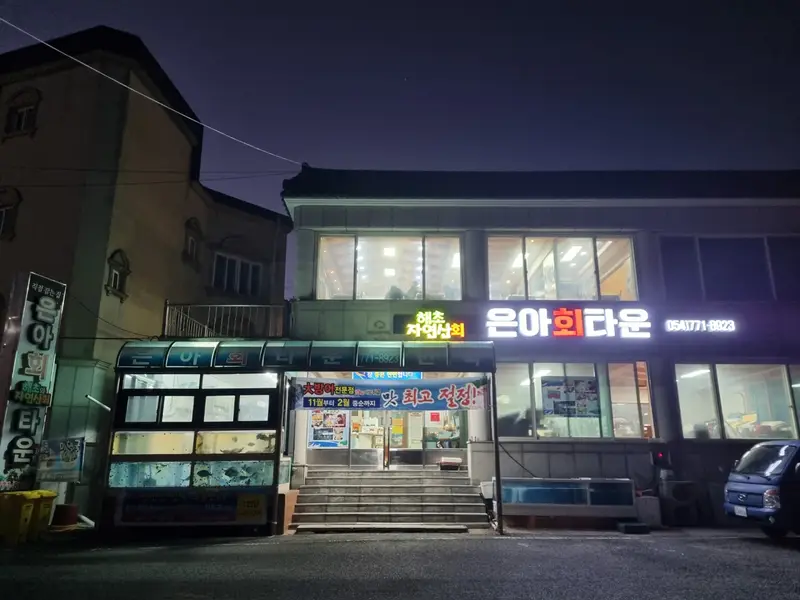
A raw fish restaurant on Daemit-gil by Igyeondae, across from King Munmu's tomb. The restaurant says its fish are caught by its own boats. For lunch there is mulhoe (cold raw fish soup) or hoedeopbap (raw fish on rice); for a group, platters of assorted raw fish. Open every day. It also lets rooms with dinner and breakfast (minbak).
- Hours
- 9:00 to 20:00, daily
- Prices
- Mulhoe or hoedeopbap 18,000 won, Euna special mulhoe 25,000 won, abalone porridge 20,000 won, grilled rockfish 30,000 won, assorted raw fish 65,000 to 120,000 won
- Phone
- 054-771-8923
Foreigner access
- Korean name
- 은아회타운
- Booking
- Walk-in. Reservations by phone, in Korean
- English
- Menu: unconfirmed · Signs: unconfirmed · Staff: unconfirmed
Gampo Igyeondae Hoetjip
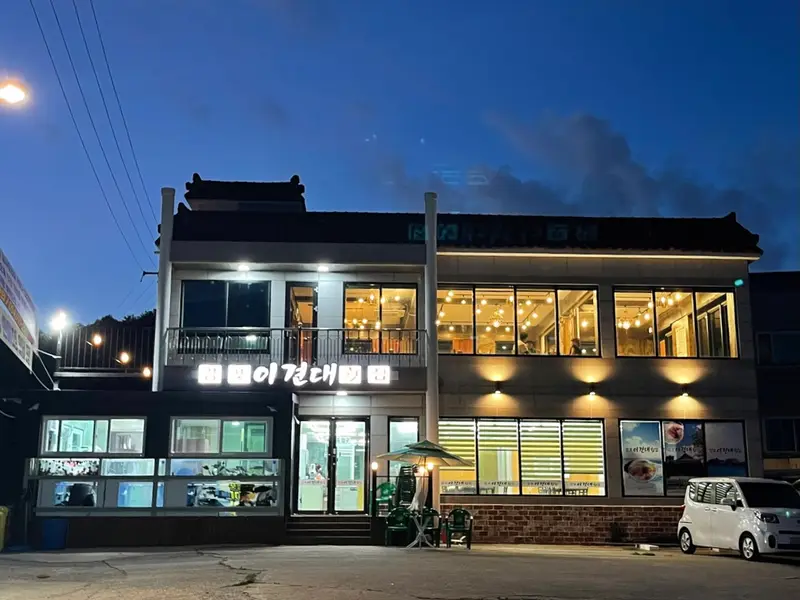
A raw fish restaurant on the coast road beside Igyeondae. The menu runs from mulhoe made with chamgajami, the small flatfish Gampo is known for, to set meals of raw fish with abalone porridge, fried dishes and spicy fish stew (hoe jeongsik), and grilled mackerel for a cheaper meal. Closed on Mondays, with a short break in the afternoon.
- Hours
- 10:00 to 21:00, break 15:00 to 15:40, last order 19:00. Closed Mondays
- Prices
- Grilled mackerel set 13,000 won, hoetbap (raw fish rice bowl) 18,000 won, mulhoe 20,000 won, chamgajami mulhoe 25,000 won, abalone mulhoe 30,000 won, hoe jeongsik 25,000 won, set courses from 40,000 won
- Phone
- 0507-1388-2506
Foreigner access
- Korean name
- 감포이견대횟집
- Booking
- Walk-in. Reservations by phone, in Korean
- English
- Menu: unconfirmed · Signs: unconfirmed · Staff: unconfirmed
Gampo Hoetjip
A raw fish restaurant on Daemit-gil by Igyeondae that sells assorted raw fish by the person, so one or two people can order it: a plate of raw fish with seaweed for wrapping, rice to make your own sushi and spicy fish stew. Mulhoe and hoedeopbap for a quicker meal. Closed on Sundays and Mondays.
- Hours
- Tuesday to Saturday 10:00 to 19:30, last order 18:30. Closed Sundays and Mondays
- Prices
- Assorted raw fish 35,000 won per person, mulhoe or hoedeopbap 18,000 won, abalone porridge 15,000 won, monkfish stew 15,000 won, grilled rockfish 20,000 won; flounder and mugwort soup (dodari ssukguk) 20,000 won in spring only
- Phone
- 0507-1339-7810
Foreigner access
- Korean name
- 감포횟집
- Booking
- Walk-in
- English
- Menu: unconfirmed · Signs: unconfirmed · Staff: unconfirmed
Gampo
Gampo Port
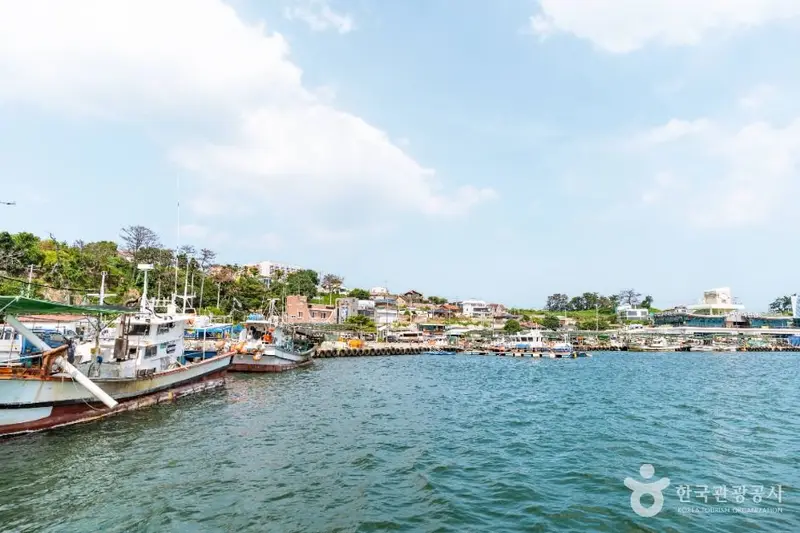
The largest port in Gyeongju, which marked 100 years since it opened in 2025. Fish are auctioned at the live fish market every day, and the restaurants around the port serve chamgajami, the small flatfish that Gampo is known for, as raw fish. Gampo Marine Park, laid out in 2018, has a waterside deck, a pinwheel hill and, on the breakwater, a lighthouse carved with a picture of the Gameunsa pagodas.
- Hours
- Open at all times, every day
- Admission
- Free
- Parking
- Public parking lot, free
Foreigner access
- Korean name
- 감포항
Foreigner access details not yet confirmed
Gampo Haeguk-gil
The lanes of the village at the mouth of Gampo Port, painted with haeguk, the pale purple sea asters that grow on the coast. One stairway is painted with sea asters from top to bottom and is the place for photos. Dozens of Japanese-style houses (jeoksan gaok), built and lived in by Japanese residents during the colonial period, still stand along the lanes. It is part of the fourth section of the Gampo Kkakji-gil walking route, about 300 m and 5 minutes on foot from Gampo Port.
- Hours
- No set hours
- Admission
- Free
- Parking
- Free at Gampo Public Market or the Gampo-eup community center
Foreigner access
- Korean name
- 감포해국길
Foreigner access details not yet confirmed
Songdaemal Lighthouse
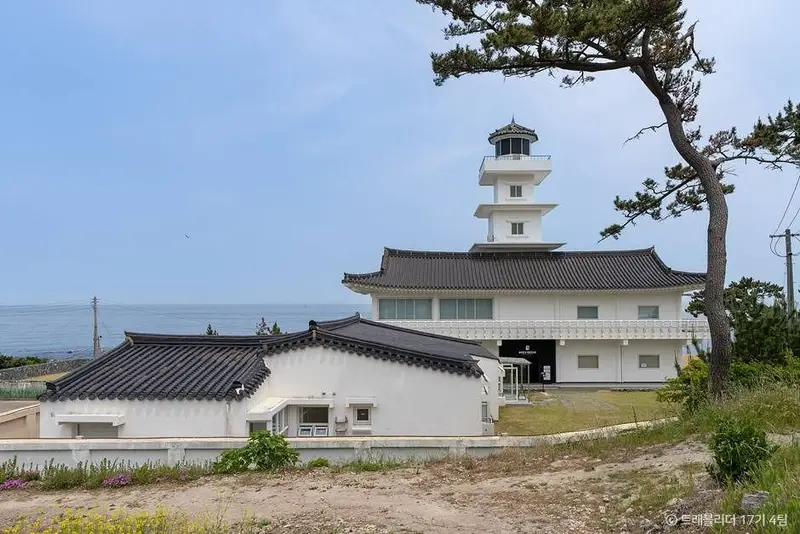
Two lighthouses on the rocky shore at the end of a grove of old pines, north of Gampo Port; Songdaemal means the end of the pine grove. The white lighthouse was put up in 1955, unmanned, to guide ships past the many reefs off Gampo, and in 2001 a hanok-style lighthouse modeled on the Gameunsa pagodas was built beside it. There is a viewing deck in front, and next to it a free light gallery with digital media exhibits on the history of Gampo Port and the lighthouse and hands-on light displays.
- Lighthouse and deck
- Open at all times
- Light gallery
- 9:00 to 18:00, last entry 17:00. Closed Mondays
- Admission
- Free
- Phone
- 054-773-8755 (gallery)
- Parking
- Park at the Gampo Port public lot. The open ground in the pine grove is private land, and the city asks drivers not to park there
Foreigner access
- Korean name
- 송대말등대
- Booking
- No booking; free entry
- English
- Signs: unconfirmed · Staff: unconfirmed
Gampo Public Market
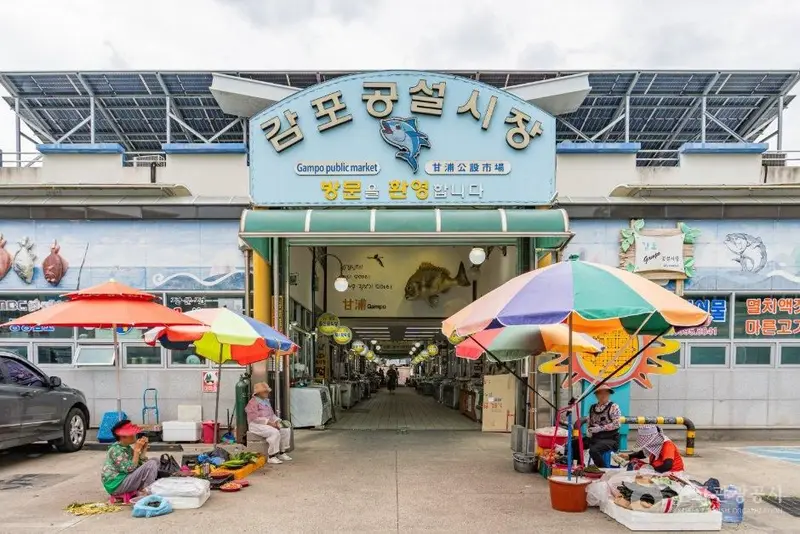
A market beside Gampo Port selling local seafood and dried fish, including chamgajami and dolmiyeok (rock seaweed), Gampo's two local specialties. On days ending in 3 or 8 a five-day market sets up as well. City buses and intercity buses to Ulsan stop in front.
- Hours
- Each shop sets its own hours and closing days
- Market days
- The 3rd, 8th, 13th, 18th, 23rd and 28th of each month
- Parking
- Free
Foreigner access
- Korean name
- 감포공설시장
Foreigner access details not yet confirmed
Pureun Bada Hoe Center
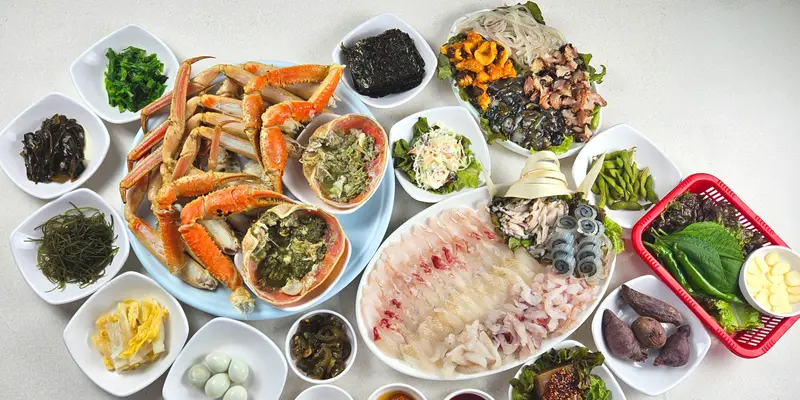
A raw fish restaurant on the breakwater at Gampo Port, the second shop from the end. Wild raw fish from the local sea, mainly chamgajami and dodari (flounder), comes as a plate for two with spicy fish stew. For one person there are mulhoe and hoedeopbap sets with rice and refills of the stew. Closed on Thursdays.
- Hours
- 10:00 to 20:30, last order 19:00. Break 15:00 to 17:00 on Mondays, Tuesdays, Wednesdays and Fridays; no break at weekends. Closed Thursdays
- Prices
- Mulhoe set or hoedeopbap set (one person) 20,000 won, abalone porridge 20,000 won, wild raw fish for two 70,000 won, farmed raw fish (three kinds) 60,000 won, special set of wild raw fish, snow crab and abalone for two to three 180,000 won
- Phone
- 0507-1356-4334
Foreigner access
- Korean name
- 푸른바다회센타
- Booking
- Walk-in. Reservations by phone, in Korean
- English
- Menu: unconfirmed · Signs: unconfirmed · Staff: unconfirmed
Namhae Sikdang
A plain Korean restaurant next to Gampo Public Market that cooks the local flatfish (gajami) in several ways: grilled, three or four fish depending on size, with seaweed soup; in seaweed soup (gajami miyeokguk); braised or in a stew. It opens at 6:30 every day, so it works for breakfast before an early bus. The stews and braised dishes are sold for two or more.
- Hours
- 6:30 to 20:00, daily; last order 19:00
- Prices
- Flatfish seaweed soup 10,000 won, grilled flatfish 15,000 won, hoedeopbap or hoe guksu 15,000 won, mulhoe 18,000 won. Braised flatfish, flatfish stew or sandfish (dorumuk) stew 15,000 won, snow crab soup 25,000 won (each two servings or more)
- Phone
- 054-744-6889
Foreigner access
- Korean name
- 남해식당
- Booking
- Walk-in
- English
- Menu: unconfirmed · Signs: unconfirmed · Staff: unconfirmed
Dahae Sikdang
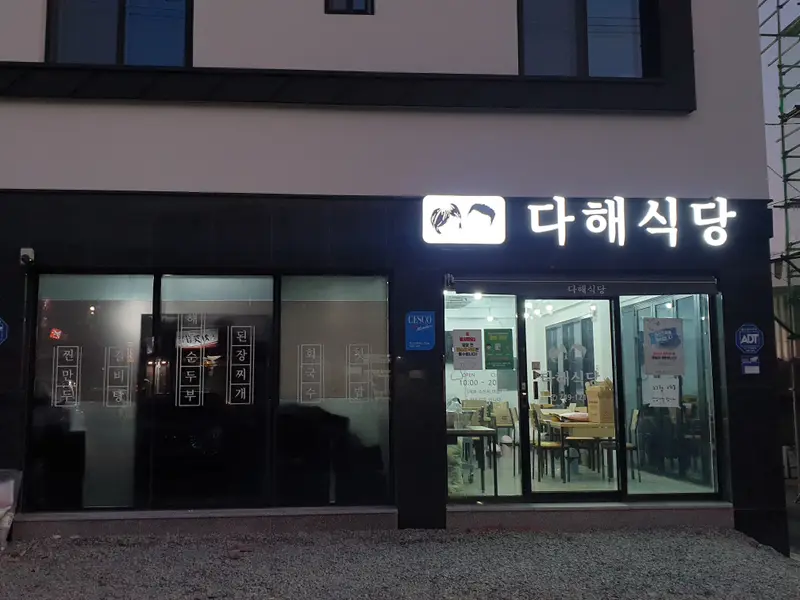
A small restaurant in Gampo town whose hoetbap, raw fish over rice, is made only with wild chamgajami, according to the menu. There are also flatfish seaweed soup, seafood soft tofu stew and dumplings. Closed on Tuesdays and Wednesdays, and it closes early when the fish run out.
- Hours
- 10:00 to 20:00, last order 19:30. Closed Tuesdays and Wednesdays. Naver Map also shows it closed on November 19 and 20, 2026
- Prices
- Hoetbap 15,000 won, flatfish seaweed soup or seafood soft tofu stew 12,000 won, hoe guksu 15,000 won (two or more), hoe muchim (spicy raw fish salad) 30,000 won, dumplings 6,000 won
- Phone
- 054-749-1214
Foreigner access
- Korean name
- 다해식당
- Booking
- Walk-in
- English
- Menu: unconfirmed · Signs: unconfirmed · Staff: unconfirmed
Icheon Sikdang
A Korean home-style restaurant (baekban) in Gampo town, open only in the morning and at lunchtime. The everyday meal is a set of pollack stew (dongtae jjigae) with rice and side dishes; it also serves chamgajami as raw fish, raw anchovies (myeolchi hoe, a seasonal dish) and raw herring. No takeout, and it closes when the food runs out.
- Hours
- 9:30 to 14:00. Closed Thursdays
- Prices
- Pollack stew set 10,000 won, chamgajami raw fish 25,000 won, raw anchovies 30,000 won (small) or 50,000 won (large), raw herring 30,000 won
- Phone
- 054-744-3113
Foreigner access
- Korean name
- 이천식당
- Booking
- Walk-in
- English
- Menu: unconfirmed · Signs: unconfirmed · Staff: unconfirmed
Yeonhui Bapsang
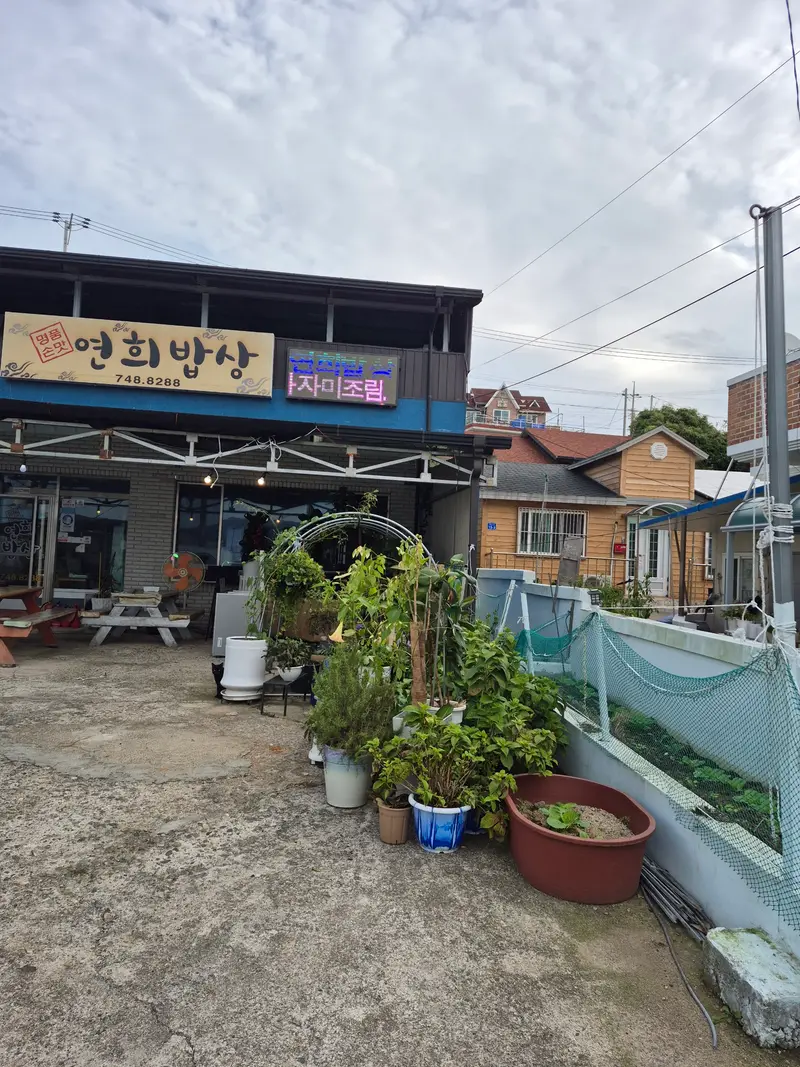
A Korean restaurant in a lane behind the fisheries center in Gampo, open from 8:00. The menu has flatfish stew, braised cutlass fish stew (its most popular dish), fresh monkfish soup, a mulhoe and raw fish rice bowl (mulhoe hoetbap), and larger dishes for sharing such as spicy chamgajami raw fish salad. On Wednesdays it closes at 14:00. The restaurant asks drivers to park at the fisheries center, about 50 m away.
- Hours
- 8:00 to 20:00; Wednesdays 8:00 to 14:00
- Prices
- Chueotang (loach soup) 10,000 won, flatfish stew, fresh monkfish soup, mulhoe hoetbap or hoe guksu 15,000 won, braised cutlass fish stew 17,000 won, spicy chamgajami raw fish salad 40,000 to 60,000 won
- Phone
- 0507-1472-5964
Foreigner access
- Korean name
- 연희밥상
- Booking
- Walk-in
- English
- Menu: unconfirmed · Signs: unconfirmed · Staff: unconfirmed
Daerim Mulhoe
A lunch-only mulhoe restaurant at Jeonchon, on the coast road just south of Gampo, using flatfish or starry flounder that the owner farms. Choose bibim mulhoe, mixed with spicy sauce, or yuksu mulhoe in the owner's broth made with fresh fruit. Orders are for two or more, and it closes early when the fish run out.
- Hours
- 11:00 to 15:00, daily
- Prices
- Bibim mulhoe or hoedeopbap 16,000 won, yuksu mulhoe 18,000 won. Spicy rockfish stew, and in winter snailfish (mulmegi) and monkfish soup, at market price
- Phone
- 054-775-3345
Foreigner access
- Korean name
- 대림물회
- Booking
- Walk-in
- English
- Menu: unconfirmed · Signs: unconfirmed · Staff: unconfirmed
Hotels
Experiences
Sources
- Korea Heritage Service: Gyeongju Munmudaewangneung (Tomb of King Munmu), historic site (Korean)(accessed 2026-11-14)
- Korea Heritage Service: Gyeongju Igyeondae, historic site (Korean)(accessed 2026-11-14)
- Korea Heritage Service: Gyeongju Gameunsaji Temple Site, historic site (Korean)(accessed 2026-11-14)
- Korea Heritage Service: East and West Three-story Stone Pagodas at Gameunsaji Temple Site, national treasure (Korean)(accessed 2026-11-14)
- Korea Heritage Service: Columnar Joints in Yangnam, Gyeongju, natural monument (Korean)(accessed 2026-11-14)
- Gyeongju City tourism: bus 150 tour of the east coast (stops, walking times, coastal paths; Korean)(accessed 2026-11-14)
- Gyeongju City tourism: bus 100 tour to Gampo (stops, walking times; Korean)(accessed 2026-11-14)
- Gyeongju City tourism: a slow walk by the sea at Gampo (distances, Songdaemal Lighthouse, parking; Korean)(accessed 2026-11-14)
- Gyeongju City tourism: Gameunsa Temple Site (hours, guides, parking; Korean)(accessed 2026-11-14)
- Gyeongju City tourism: Tomb of King Munmu (Korean)(accessed 2026-11-14)
- Gyeongju City tourism: Bonggil Daewangam Beach (Korean)(accessed 2026-11-14)
- Gyeongju City tourism: Yangnam columnar joints observatory (hours, fees, phone; Korean)(accessed 2026-11-14)
- Gyeongju City tourism: Gampo Port (Korean)(accessed 2026-11-14)
- Gyeongju City tourism: Gampo Public Market (market days; Korean)(accessed 2026-11-14)
- Gyeongju City tourism: Songdaemal Lighthouse light gallery (hours, fees, phone; Korean)(accessed 2026-11-14)
- Gyeongju City tourism: Gampo Haeguk-gil (Korean)(accessed 2026-11-14)
- Gyeongju City tourism: Yangnam columnar joints (trail length, hours, parking; Korean)(accessed 2026-11-14)
- Gyeongju City tourism: Igyeondae (Korean)(accessed 2026-11-14)
- Gyeongju City tourism: King Munmu Maritime History Museum (Korean)(accessed 2026-11-14)
- King Munmu Maritime History Museum: visitor information (hours, fees, free until December 31, 2026; Korean)(accessed 2026-11-14)
- King Munmu Maritime History Museum: home page (galleries, film times; Korean)(accessed 2026-11-14)
- Gyeongju City webzine vol. 149: Eupcheon mural village and the observatory (Korean)(accessed 2026-11-14)
- Gyeongju City Transportation Information Center: bus fares (Korean)(accessed 2026-11-14)
- Gyeongju City Transportation Information Center: routes and stops for buses 100, 150, 700, 1100 and 1150 (Korean)(accessed 2026-11-14)
- Saecheonnyeon Miso (bus operator): bus 150 and 150-1 timetable (Korean)(accessed 2026-11-14)
- Saecheonnyeon Miso (bus operator): buses 100, 100-1 and 1100, timetable from February 19, 2026 (Korean)(accessed 2026-11-14)
- Saecheonnyeon Miso (bus operator): express bus 1100 to Gampo, timetable from February 19, 2026 (Korean)(accessed 2026-11-14)
- Saecheonnyeon Miso (bus operator): express bus 1150 to Yangnam (Korean)(accessed 2026-11-14)
- Saecheonnyeon Miso (bus operator): bus 700, timetable from March 31, 2023 (Korean)(accessed 2026-11-14)
- Korea Tourism Organization (TourAPI): Yangnam columnar joints observatory, columnar joints, Padosori-gil, Eupcheon Port, Tomb of King Munmu, Bonggil Daewangam Beach, Gameunsa Temple Site, Igyeondae, Gampo Port, Songdaemal Lighthouse and light gallery, Gampo Public Market (Korean; search by name)(accessed 2026-11-14)
- Naver Place: Yangnam columnar joints observatory (hours)(accessed 2026-11-14)
- Naver Place: Songdaemal Lighthouse light gallery (hours)(accessed 2026-11-14)
- Naver Place: King Munmu Maritime History Museum (hours)(accessed 2026-11-14)
- Naver Place: Pureun Bada Hoe Center (hours, menu)(accessed 2026-11-14)
- Naver Place: Namhae Sikdang (hours, menu)(accessed 2026-11-14)
- Naver Place: Dahae Sikdang (hours, closures, menu)(accessed 2026-11-14)
- Naver Place: Euna Hoetown (hours, menu, rooms)(accessed 2026-11-14)
- Naver Place: Gampo Igyeondae Hoetjip (hours, menu, rooms)(accessed 2026-11-14)
- Naver Place: Gampo Hoetjip (hours, menu)(accessed 2026-11-14)
- Naver Place: Daerim Mulhoe (hours, menu, orders for two or more)(accessed 2026-11-14)
- Naver Place: Icheon Sikdang (hours, menu, no takeout)(accessed 2026-11-14)
- Naver Place: Yeonhui Bapsang (hours, menu, parking)(accessed 2026-11-14)
- Naver Place: 7 Gongju Ssal Kkwabaegi (hours, prices)(accessed 2026-11-14)
- Naver blog: Songdaemal Lighthouse, Gameunsa, King Munmu's tomb, the Yangnam columnar joints and Padosori-gil (2026-09-02)(accessed 2026-11-14)
- Naver blog: Eupcheon Port and the observatory, Gameunsa, Gampo Haeguk-gil, the maritime museum, King Munmu's tomb (2026-09-22)(accessed 2026-11-14)
- Naver blog: Gameunsa, King Munmu's tomb, the columnar joints (2026-05-06)(accessed 2026-11-14)
- Naver blog: Bulguksa, Hwangnidan-gil, King Munmu's tomb, the Yangnam columnar joints (2026-05-06)(accessed 2026-11-14)
- Naver blog: Gameunsa, King Munmu's tomb and Bonggil, Padosori-gil, the observatory (2026-08-31)(accessed 2026-11-14)
- Naver blog: Gampo Port, Songdaemal, Gampo Haeguk-gil, Eupcheon Port, the observatory (2026-04-28)(accessed 2026-11-14)
- Naver blog: grilled and braised flatfish at Namhae Sikdang (2026-10-18)(accessed 2026-11-14)
- Naver blog: Dahae Sikdang, flatfish seaweed soup and chamgajami hoetbap (2026-11-08)(accessed 2026-11-14)
- Naver blog: mulhoe for lunch at Euna Hoetown (2026-11-01)(accessed 2026-11-14)
- Naver blog: dinner at Gampo Igyeondae Hoetjip (2026-10-15)(accessed 2026-11-14)
- Naver blog: Gampo Hoetjip (2026-11-14)(accessed 2026-11-14)
- Naver blog: Daerim Mulhoe (2026-10-29)(accessed 2026-11-14)
- Naver blog: Icheon Sikdang (2026-06-04)(accessed 2026-11-14)
- Naver blog: rice doughnuts at Eupcheon Port (2026-05-21)(accessed 2026-11-14)
